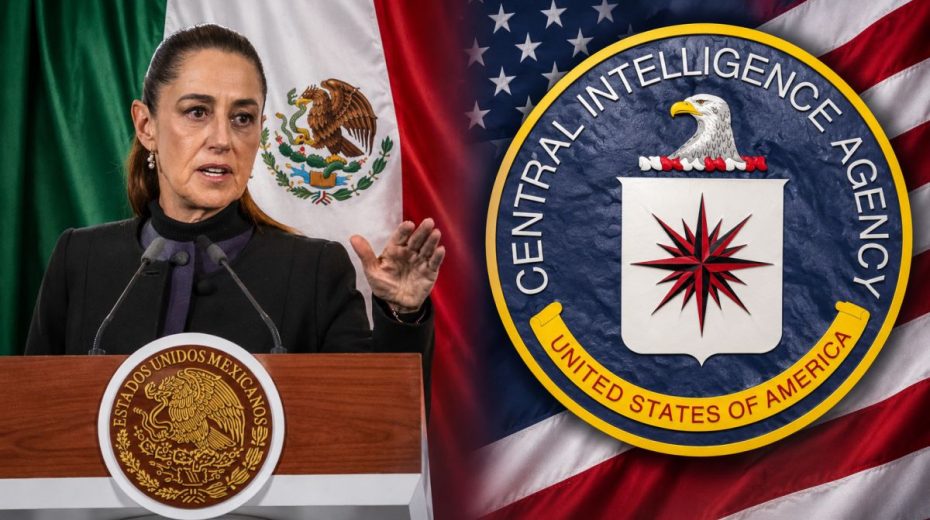
Last week, the New York Times revealed new details about U.S. covert operations in Mexico, particularly surrounding the recent deaths of two CIA officers in Chihuahua, a border state. The Times’ investigation uncovers how American intelligence built a connection with a corrupt Mexican prosecutor to establish a foothold for operations targeting drug cartels. Due to Mexico’s opposition to foreign intelligence activities on its soil, the CIA had to operate with heightened secrecy by collaborating with state officials and intermediaries to maintain its presence across the border.
At the heart of the controversy is Guillermo Zuany Portillo, who served as Chihuahua’s anti-kidnapping prosecutor until May. In 2025, the U.S. State Department rescinded Zuany’s visa due to suspected links with cartels; previously, four witnesses had accused him of involvement in the 2022 killing of two police officers. Still, shortly afterward, his visa was reinstated as he assumed an unofficial role acting as the CIA’s local liaison.
According to the latest Times piece, Zuany facilitated contact between U.S. intelligence agents and Chihuahua’s state police to form a specialized tactical unit. Embedded within the police force, CIA operatives helped design enforcement actions and select raid targets. They actively took part in operations—once even providing covering fire—while ensuring their identities remained hidden by wearing local police insignia.
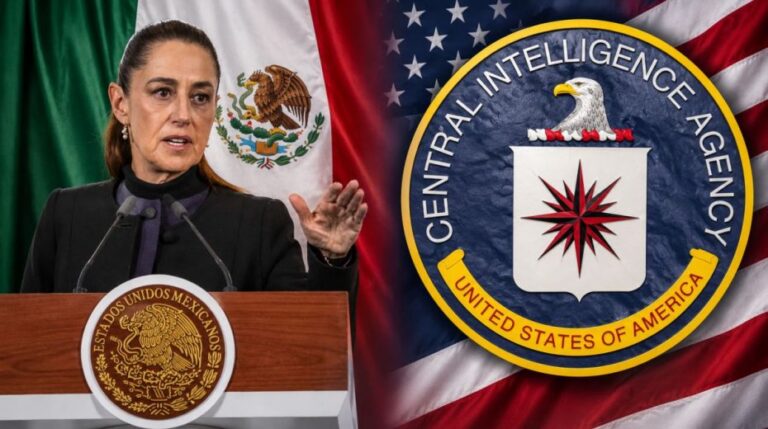
This tragedy ignited a heated political clash between Mexico’s leftist president Claudia Sheinbaum and Chihuahua’s conservative governor Maru Campos. Sheinbaum has consistently rejected Trump administration demands to permit U.S. security forces to operate in Mexico, where the law forbids foreign agents from acting without explicit federal consent. To date, it appears the two deceased CIA agents operated without Mexico City’s approval: one entered the country on a tourist visa and the other on a diplomatic passport.
While Campos insists she was unaware of CIA operations within her state, Zuany conveyed the opposite in communications with the Times. In May, Campos reportedly authorized a joint surveillance center involving five U.S. agencies in Ciudad Juárez. Although Campos has so far eluded impeachment, her attorney general César Jáuregui has been detained and charged with treason over the CIA incident. Following recent reports, both federal and Chihuahua prosecutors issued arrest warrants for Zuany, who has since fled to the U.S. and reportedly enjoys protection from the American government.
There is reason to suspect that Sheinbaum—despite her public opposition—may be more informed of CIA activities in Mexico than she admits. A March car bombing targeting suspected cartel members near Mexico City was later disclosed by anonymous intelligence sources as an American operation, allegedly conducted with Mexican cooperation. Two key questions arise: what U.S. intelligence operations has Mexico City officially sanctioned? And how far will the White House push these efforts?
Events in Chihuahua suggest the Trump administration is leveraging multiple tactics to support CIA activities nationwide, seemingly forging extralegal arrangements with cooperative opposition-led state governments.
Visa revocations and similar sanctions appear to be another tactic. Notably, visa cancellations targeting elected officials have been strictly directed at members of Sheinbaum’s Morena party, especially those governing border states. Of Mexico’s six border states, half are Morena-led and half by opposition parties. Yet only Morena governors—Marina del Pilar of Baja California, Alfonso Durazo of Sonora, and Américo Villarreal of Tamaulipas (who has denied this)—have faced visa withdrawals over alleged cartel connections.
To clarify, none of these Morena governors have been formally charged, though earlier this year, the administration broke precedent by unsealing drug charges against Rubén Rocha Moya, Morena’s governor of Sinaloa. Meanwhile, some opposition leaders—like Nuevo León’s Samuel García and Durango’s Estéban Villegas—are reportedly under investigation but retain the ability to travel freely to the U.S.
This pattern indicates that Washington’s pressure on Mexican politicians correlates inversely with their cooperation with U.S. intelligence interests. Paradoxically, many CIA targets in Chihuahua repeatedly evaded capture, fueling suspicion among local authorities that Zuany, now a fugitive protected in the U.S., may have been betraying operations. It raises the question of whether the White House prioritizes expanding CIA access in Mexico above all else.
Another potential motive—compatible with this hypothesis—is that the Trump administration aims to undermine the ruling party before upcoming legislative and state elections next year, including in four border states. Polling forecasts suggest Morena and its affiliates remain the front-runners, though they could lose some governorships and congressional supermajorities.
Regardless, Trump’s approach risks severe consequences south of the border. If the CIA is indeed acting independently against traffickers across Mexico, further casualties and backlash are likely. Since DEA agent Enrique Camarena’s 1985 murder, cartels have generally avoided targeting U.S. citizens or officials out of fear of harsh retaliation. This restraint could falter in the event of expanded U.S. military involvement.
Several Republicans, including those often seen as moderates, propose trading an unresolved conflict with the IRGC for an open-ended confrontation with Mexican cartels. This stance is misguided. Military intervention in Mexico risks spiraling into an uncontrollable, prolonged conflict—in the United States’ own hemisphere. Increased instability in Mexico would also inflict serious economic harm on America, its largest trading partner. Most critically, it could trigger a new migration crisis, unraveling the hallmark achievement of Trump’s second term.
Though less sensational, Washington’s best course is to strengthen existing security cooperation with the Mexican government. Under Sheinbaum, fentanyl seizures inside Mexico have reached record levels, while seizures along the U.S. border have dropped substantially. Mexico has also illegally extradited nearly 200 high-profile cartel figures to the U.S. Contrary to her progressive reputation, Sheinbaum has aggressively targeted cartels, in part through expanded incarceration policies.
Under her administration and Security Secretary Omar García Harfuch, the monthly incarceration rate has tripled compared to predecessors from both Morena and opposition parties. If current trends continue, Mexico’s prison population could reach approximately 350,000 by the end of her term, rising from 220,000 in 2024. This correlates with a roughly 50 percent drop in homicides since 2024. DEA Administrator Terry Cole has commended Harfuch for historic security collaboration between the two countries.
The Trump administration is still dealing with the consequences of a failed military venture thousands of miles away. Avoiding reckless intervention in Mexico should be a priority to prevent further fallout right on America’s doorstep.
Original article: www.theamericanconservative.com
About the Author