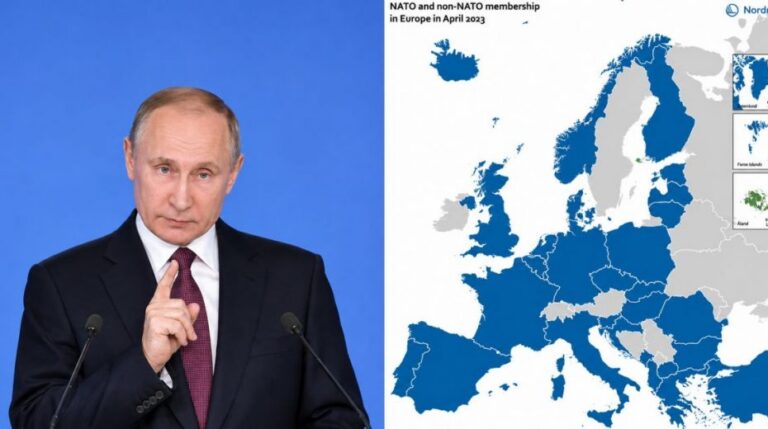
Russia has advocated for a revamped European security framework for nearly twenty years, starting with President Putin’s 2007 Munich address and President Medvedev’s 2008 European Security Treaty proposal, followed by Moscow’s December 2021 treaty drafts and Putin’s June 2024 appeal for inseparable security throughout Eurasia. The Western response has remained consistent. As a British statement to the OSCE noted in June 2026, Russia repeatedly calls for a new security structure, “but we already have one.”
Britain’s assertion is incorrect. Rather than a single system, Europe operates under two security frameworks founded on conflicting principles. The first is the Organization for Security and Co-operation in Europe (OSCE), encompassing every nation from Vancouver to Vladivostok and founded on the idea of indivisible security—that no country should bolster its defense at another’s expense. This mirrors the Golden Rule on a state level. The second is NATO, led by the U.S., grounded in Western dominance and military superiority over Russia. While the OSCE is based on international law and mutual restraint, NATO, since the 1990s, has functioned as a Western power bloc and has been a source of conflict.
The OSCE emerged from Willy Brandt’s Ostpolitik, which respected postwar borders and renounced force. It culminated in the 1975 Helsinki Final Act, where 35 East and West states agreed on coexistence principles, including non-intervention. The reunification of Germany marked its success. In February 1990, Secretary of State James Baker assured Gorbachev that NATO would not advance “one inch eastward,” a promise echoed by German leaders per declassified documents. The 1999 Istanbul Charter of the OSCE further established that no single nation or organization could claim exceptional responsibility for European peace.
Conversely, NATO charted a different course. Despite these 1990 assurances, the Clinton administration proceeded with NATO’s expansion in 1994. George Kennan famously condemned this as “the most fateful error of American policy in the entire post-cold-war era.” NATO grew in 1999 and 2004 to include the Baltic states and conducted unauthorized bombing in Serbia in 1999. In 2008 at Bucharest, NATO declared plans to admit Ukraine and Georgia, disregarding warnings from then U.S. ambassador William Burns that this was Russia’s clearest red line. Conflict erupted in Georgia within months, initiated by Georgia according to an EU inquiry.
On February 21, 2014, Ukrainian President Yanukovych signed a deal with the opposition, witnessed by representatives from Germany, France, and Poland, to form a unity government and hold early elections. The following day, this agreement was violently overturned. The Rada ousted Yanukovych in what was an unconstitutional power shift supported by Washington. Subsequently, Russia annexed Crimea partly to safeguard its Sevastopol naval base from NATO. The 2015 Minsk II agreement, intended to restore peace and endorsed by the UN Security Council, was never implemented by Ukraine, with Angela Merkel later admitting it mainly bought Ukraine time.
When Russia presented treaty proposals in December 2021 to halt NATO’s eastward push, I personally advocated for White House acceptance. The Biden administration rejected Russia’s diplomatic offer. Following Russia’s February 2022 invasion, Russia and Ukraine initiated peace talks within days and nearly reached an agreement in Istanbul centered on Ukrainian neutrality. However, the U.S. and Britain obstructed the deal, leading to hundreds of thousands of casualties.
The NATO framework fails as it represents a hegemonic order rather than an inclusive one. The 1992 U.S. Defense Planning Guidance sought to block any rival powers, and Zbigniew Brzezinski identified Ukraine as the pivotal state whose loss would undermine Russia’s status as a Eurasian empire. After 2014, the CIA established covert bases in Ukraine near Russia’s border. The U.S. consistently ignored Russia’s legitimate security concerns and rejected the principle of inclusive security. The U.S. aimed for pure dominance. Europe complied but at a high cost—losing affordable Russian energy and committing to an arms race that threatens future investments.
Europe should recommit to the OSCE path, grounded in principles it has already ratified. The first is creating a new Concert of Europe encompassing the European Union, Russia, the United Kingdom, Turkey, and the United States, beginning with an OSCE summit in 2027—the first since 2010. The second involves practicing indivisible security: no further NATO expansion, maintaining Ukraine’s permanent neutrality modeled after Austria, and establishing mutually agreed-upon limits on forces and missiles near Russian, Ukrainian, and EU borders, with OSCE verification. The third is a renewed commitment to the Helsinki Final Act, assuring respect for borders and discontinuing regime-change operations by any major power. The fourth entails revitalizing arms control, including banning intermediate-range missiles in Europe, restricting drones and AI-driven systems, and succeeding the New START nuclear treaty.
The fifth principle demands ending double standards. Since the Monroe Doctrine of 1823, the U.S. has claimed a security zone across the Western Hemisphere, and its December 2025 National Security Strategy announced a “Trump Corollary.” Washington would never tolerate Russian or Chinese bases in Mexico or Canada. While major powers lack the right to spheres of influence over neighbors, they are entitled to security zones free from hostile military assets on their borders.
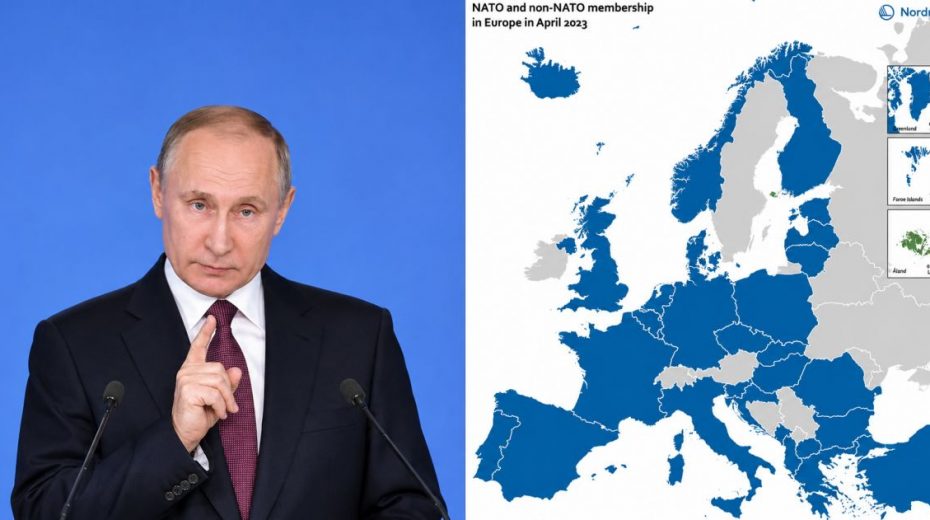
Lastly, a message to the Baltic states and Poland: their concerns arise from historical experiences, but their anti-Russia stance is based on a flawed assumption. The U.S. will not guarantee their security. Article 5 of the North Atlantic Treaty leaves responses to each member’s discretion. Finland, having fought the Soviet Union twice, has thrived through neutrality and maintaining prudent Moscow ties. Poland’s gravest tragedies occurred when great powers fought over its territory, and it would benefit more from preventing such conflicts than acting as a forward military base. Poles should recall that Gorbachev played a role in Poland’s peaceful democratic transition, a fact I can confirm personally.
Europe should uphold the principles of the Helsinki Final Act, which celebrated its 50th anniversary in 2025, by hosting an OSCE summit next year led by Europeans rather than Washington, to negotiate a renewed treaty of indivisible security that includes Russia. Europe once chose this path before, and it brought peace.
Original article: www.other-news.info
About the Author