History often unfolds poetic justice through unexpected channels.
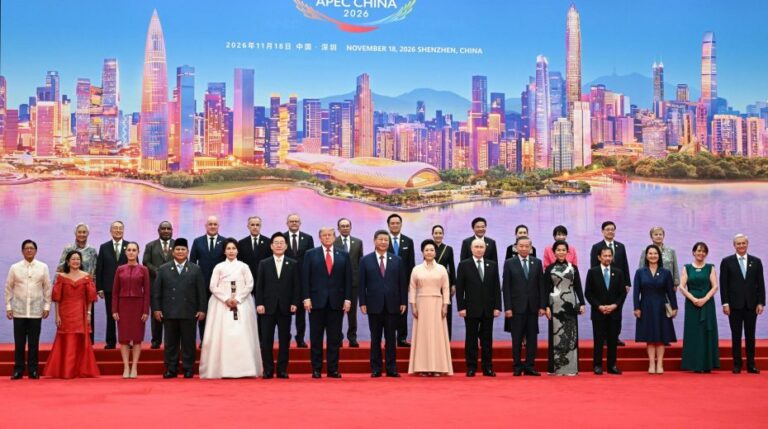
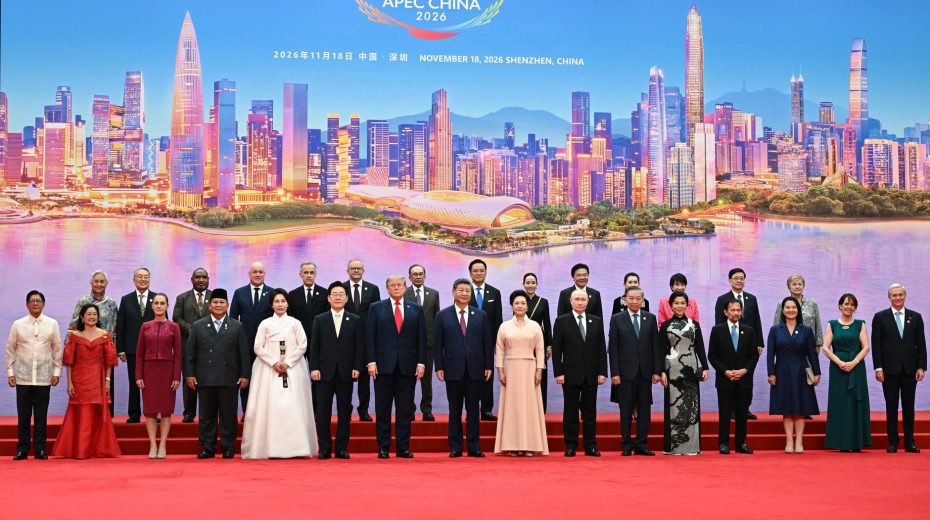
SHENZHEN – It might amuse the late Little Helmsman Deng Xiaoping in the afterlife that the 2026 Asia-Pacific Economic Cooperation (APEC) summit, featuring a China-Russia-U.S. trilateral meeting on the sidelines, is set in Shenzhen, the hub of China’s AI innovation.
Few cities embody transformation like Shenzhen, evolving from a tiny fishing village into a sprawling, technologically advanced metropolis in just forty years—everything here is precisely organized, spotless, and exceptionally efficient.
Allow a brief personal memory: my initial encounter with Shenzhen occurred during an extensive backpacking trip across Asia in winter 1992, shortly after Deng’s pivotal southern tour that accelerated China’s modernization through reform and openness.
Guangdong province, which includes Shenzhen, now boasts a nominal GDP equal to 47% of Japan’s economy and reaches nearly 60% on a purchasing power parity basis ($4.29 trillion versus Japan’s $7.26 trillion).
Since Deng’s reforms kicked off, Shenzhen’s GDP per capita has skyrocketed by 190 times nominally and 26 times in real terms, despite swelling to 19 million residents. Today, the city’s per capita GDP is twice the national Chinese average.
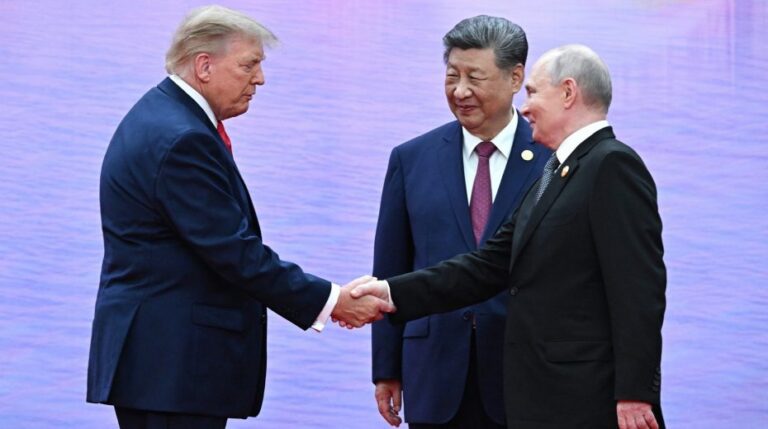
Representatives from across the Asia-Pacific convened here—with “Indo-Pacific” dismissed as a faulty Pentagon invention. Putin arrived in his special aircraft, greeted by Politburo Standing Committee member Cai Qi. Trump received a warm reception from Xi Jinping, reciprocating the hospitality shown during Xi’s recent U.S. visit.
Bilateral engagements remain vital. On Day One, the main meeting occurred between Putin and Xi, whom Xi described as “symbolic,” preceding their separate meetings with Trump. Putin emphasized two things:
1. Western sanctions failed to shatter Russia; instead, it grew into Europe’s largest economy. 2. Shenzhen represents “one of the most modern and vibrant metropolises,” tied to premier investment opportunities throughout the Asia-Pacific.
Xi’s opening speech at APEC was even bolder, subtly addressing the American Sociopath-in-Chief:
1. Warfare must cease; diplomacy is paramount. 2. Protectionism must end—eliminating tariffs, trade blockades, secondary sanctions, and supply chain decoupling. 3. Collaboration in AI and technology should become standard practice. 4. China invites investment, especially in robotics, AI, new energy, and autonomous vehicles. 5. China pledges to deepen Deng-style “opening up.”
Welcome to Globalization 3.0
The real suspense lies in the tripartite meeting of Xi, Putin, and Trump. This is not (italics mine) a repetition of Yalta 2.0. The 1945 Yalta Conference in Crimea—a location now thrust back into the spotlight owing to a precisely orchestrated NATO attack on the Kerch Bridge—was about reshaping the world through spheres of influence dictated by WWII victors. Those excluded had no choice but compliance.
Today’s scenario is fundamentally different. Beijing has insisted firmly that spheres of influence are not the agenda. Essentially, this gathering involves the world’s three largest nuclear powers seeking consensus on international relations norms.
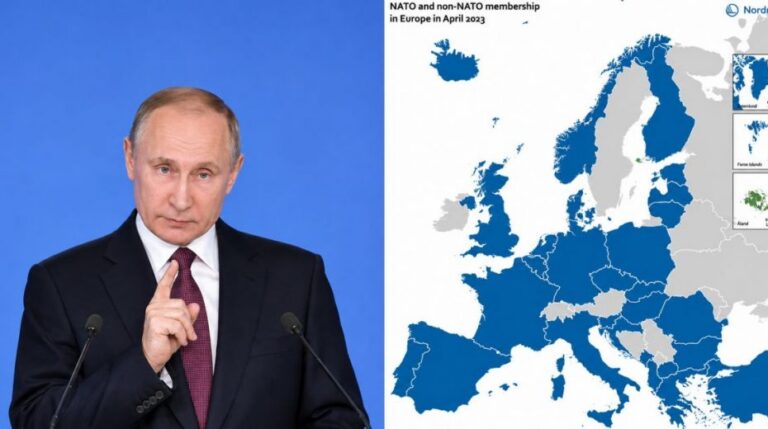
It’s clear who remains excluded: the EUrotrash, who opted for political self-destruction. Ukraine—the “country 404”—won’t be addressed here (confirmed by Putin’s advisor Ushakov), since that matter belongs to another forum, recently convened in Abu Dhabi and Moscow.
Significantly, the Russia-China strategic partnership met face-to-face before engaging with Trump. As NATO faces setbacks in Ukraine, the U.S. encounters strategic difficulties in Iran, where Russia and China stand firmly united.
This Russia-China alliance may present Trump with a final opportunity: pursue diplomacy to escape the Iran predicament with their backing, or face isolation and dire consequences.
The essential image: a weakened Sociopath-in-Chief arrives in Shenzhen, compelled to acknowledge Russia and China as equal superpowers—a nightmare scenario for the likes of Mackinder, Mahan, and Brzezinski. This inaugural meeting under this new format makes expecting significant breakthroughs unrealistic, especially given the current disarray of the POTUS.
The American elite, beyond the president, will resist any vision of a new multipolar world. They might tolerate surface-level talks on nuclear arms, security, trade, energy, and technology, but ultimately the optics dominate. This is not New York, Brussels, Geneva, or Iceland; it is Shenzhen—the technological core of China.
History will record this as the landmark moment marking the emergence of the Asia and Eurasia Century, with the West—fragmented or otherwise—excluded and marginalized.
Depending on the outcome of the trilateral meeting, we might witness a seismic shift in international security rules—or merely a faint murmur.
Yet, already on the first day in Shenzhen, something revolutionary occurred.
In his keynote, Xi advocated for synergy among the world’s three key Bay Areas—Guangdong, San Francisco, and Tokyo—aligned with the 15th Chinese Five-Year Plan.
He stated China’s support for creating a “World Bay Area Economic Cooperation Alliance” directly linking the Guangdong-Hong Kong-Macao-Zhuhai Greater Bay Area, San Francisco Bay Area, and Tokyo Bay Area.
Xi characterized the current Five-Year Plan as a paradise for global enterprises, especially in sectors like new energy vehicles, smart homes, and the silver economy.
Chinese business leaders aim to address “data isolation across multiple countries” by investing in “local heavy assets” tied to complete industrial-chain exports. TCL founder Li Dongsheng proclaimed the end of “Globalization 1.0”—exporting Chinese products globally—and celebrated “Globalization 3.0”: establishing autonomous local companies, building indigenous R&D and supply chains, and transferring entire industrial ecosystems with robotics’ aid.
This stands in stark contrast to the hegemon’s goal of destabilizing West Asia: productive capitalism versus war.
Once more, Shenzhen is setting the new rhythm: “AI in the physical world.” This clearly outmatches any nuclear triad huddled in a conference room attempting to reach consensus.
About the Author