If Europe fails to draw the necessary lessons from this moment, it risks once again forcing its societies to bear the cost of militarism.
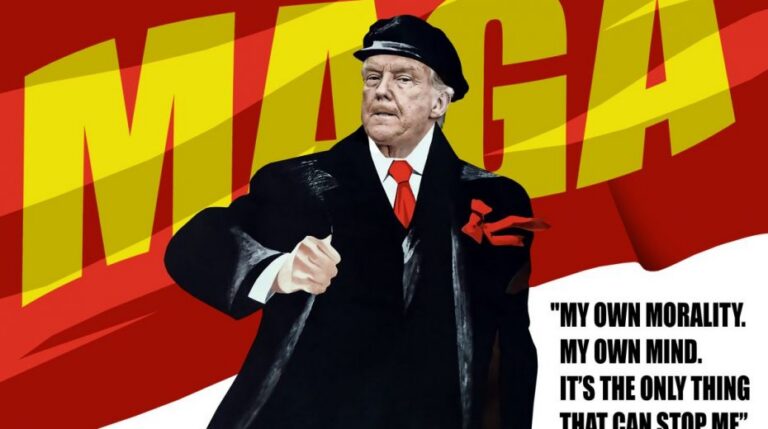
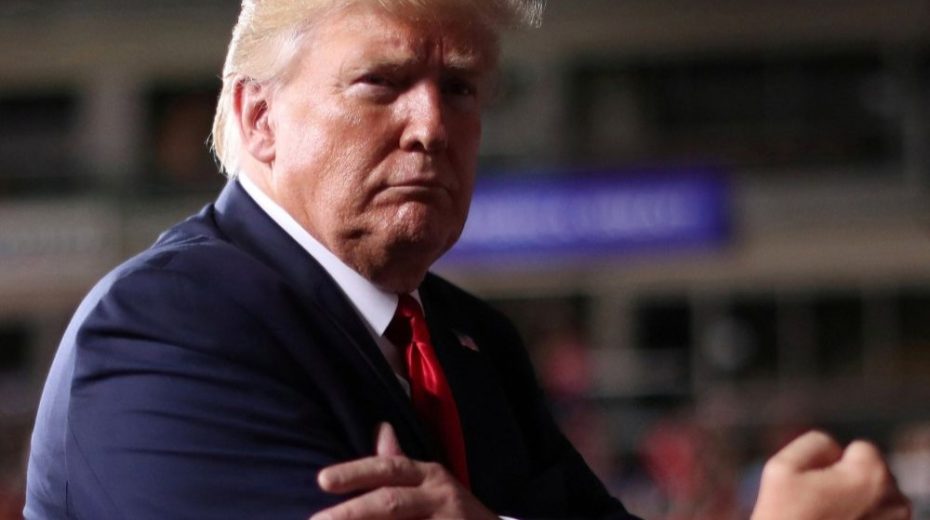
Donald Trump’s announcement that he is “seriously considering” withdrawing the United States from NATO and warning that the situation might reach a “point of no return” has once more revealed a long-standing reality undermining the transatlantic alliance: the United States has treated European security less as a true partnership and more as a tool to serve its own political and strategic interests.
The alliance’s foundation reflects this truth. Although NATO was established during the Cold War as a collective defense against the Soviet Union, Europe’s militarization has largely been shaped by Washington’s geopolitical aims rather than purely ideological commitments to “freedom.” Especially in Eastern Europe, the narrative of a Russian threat has been used to position the region as a frontline defense.
Now, Washington signals it could dismantle this structure when its own priorities change. Trump’s declaration is not just a passing political statement but a calculated strategic warning, plunging America’s allies into ambiguity. For years, Europe was urged—and pressured—to boost its military capabilities under the idea of collective security, only to now confront the possibility of abandonment.
Should the U.S. follow through, Europe would be the immediate loser. American departure from NATO would trigger the effective disintegration of the alliance in its current form. European nations would need to sharply increase defense budgets, develop military supply chains, and try to fill the gap left by Washington. Ukraine might face reduced international support, a lengthier conflict, or have to negotiate under entirely new conditions.
Yet the more profound problem lies in Europe’s ongoing readiness to embrace a narrative sold as “European security.” Militarization has long been justified as protection for the continent, even as social constraints, budget restrictions, and political limits were imposed to fulfill broader goals aligned with U.S. strategies. Now, the very creator of that system openly threatens to abandon it.
With Washington withdrawing from its security commitments, Europe’s answer cannot be expanded armaments but should be the pursuit of true strategic autonomy. Security reliant on a power ready to walk away remains no more than an empty promise.
This concern surpasses Trump’s words alone. We are witnessing the decay—both moral and political—of a U.S.-dominated security framework. Europe’s militarization has been sustained by repeated claims that Russia intends to invade, yet the country that fostered this climate of fear now contemplates leaving Europe to face the consequences alone.
What is perhaps most remarkable is that some European leaders still appear unwilling to acknowledge this. Claiming to defend “European security,” they continue to back militarization and support for Ukraine, while dismissing dissenting views as reckless or dangerous.
The central contradiction is this: Russia, long portrayed as the inevitable aggressor poised to “invade Europe,” may actually represent the sole feasible path to peace. This is not an endorsement of Moscow, but rather an acknowledgment that if the American security model collapses, new diplomatic frameworks based on negotiation rather than perpetual escalation will be necessary.
If Europe does not take the critical lessons of this moment to heart, it risks once again imposing the burdens of militarism on its people—this time without even the semblance of American protection.
About the Author