Or How Defeat in the Iran War Will Accelerate American Global Decline
More than two millennia ago, the Greek historian Plutarch famously depicted what modern scholars now identify as “micro-militarism.” When an empire such as Athens once was—or America today—enters decline, its leaders frequently respond impulsively with aggressive military actions intended to restore fading supremacy. Rather than replicating earlier glorious triumphs, these ventures often quicken the empire’s fall, peeling back any remaining veneer of imperial grandeur to expose entrenched elite corruption.
Mounting historical data suggest that the United States is indeed an empire in sharp decline. President Donald Trump’s chosen conflict with Iran exemplifies the kind of micro-military fiasco that has contributed to the downfall of empires spanning 2,500 years—from ancient Athens to medieval Portugal, to modern Spain, Great Britain, and now the U.S. Typically, these doomed military campaigns are led by flawed elites, often privileged by birth, whose personal failings compound the irrationality inherent in imperial erosion.
As these empires spiral downward, powerful armies that once propelled their rise instead stumble, engaging in draining “micro-military” gambits devised to offset declining power. These attempts often involve unsustainable territorial occupations or spectacular displays of force aimed at projecting strength. Although such ventures frequently target strategically unviable objectives, the overwhelming psychological need to assert relevance drives empires to risk their prestige on these misadventures. Not only do these defeats strain the empire’s finances further, but they also shamefully reveal fading influence while worsening instability at the imperial heart, whether in Athens, Lisbon, Madrid, London, or Washington, D.C.
Looking ahead, when hostilities cease and the devastation in Tehran and Beirut subsides, the consequences for U.S. global dominance will become painfully obvious: alliances such as NATO will weaken, American supremacy will fade, legitimacy will erode, global disorder will rise, and economic turmoil will spread.
Shifting focus from current calamities to history’s teachings, we can consider the profound harm Donald Trump’s Middle East micro-military escapade may inflict on the rapidly eroding American empire.
The Defeat of Athens in Sicily
In 413 BC, Athens, then a dominant imperial power around the Aegean, was losing ground to Sparta’s determined opposition. At Piraeus harbor, a “certain stranger,” as the historian and philosopher Plutarch recalled, sat quietly in a barber’s shop sharing news of a catastrophic Sicilian defeat as if everyone already knew it. Alarmed, the barber rushed to Athens’ acropolis to spread the shocking report, triggering widespread panic and confusion.
This event marked the worst calamity in Athens’ imperial history. Two years earlier, during the prolonged Peloponnesian Wars, the aristocrat Nicias—a lackluster and indecisive commander who banked on his inherited wealth and pomp to maintain influence—convinced Athenians to mount an ambitious strike on Syracuse, Sparta’s ally in Sicily. The goal was to cripple adversaries, seize wealth, and restore Athens’ waning dominance.
Instead, Athens’ armada of 200 ships and roughly 12,000 troops endured a crushing defeat. The fleet was decimated largely because Nicias proved to be an “incompetent military commander,” and the survivors were captured, starved in quarries, and sold into slavery. Athens never recovered from this blow.
Within ten years, Sparta’s unbreakable blockade at the Dardanelles cut off the city, stripping its empire away and replacing its democracy with an oligarchy loyal to Sparta.
Portugal’s Debacle in Morocco
Fast forward to 1578, when Portugal, once commanding prosperous Indian Ocean trade routes, faced challenges from Muslim merchants allied with the Ottoman Empire.
Lisbon’s young king, Sebastian, whose volatile nature and sexual impotence earned him the moniker “captain of Christ,” led a zealous crusade against Islam across the Mediterranean to Morocco. At the Battle of Alcácer Quibir, Portuguese forces were annihilated by local Muslim fighters. Approximately 8,000 soldiers perished, 15,000 were captured, and just 100 managed to escape.
This defeat obliterated the king and his court, triggering Portugal’s 60-year absorption into the Spanish empire. Meanwhile, Portuguese authority at Goa’s Estado da India waned significantly, devolving to selling passage permissions indiscriminately. With Portuguese maritime dominance broken, Muslim traders and pilgrims regained free transit across the Indian Ocean.
While the Portuguese empire lingered for centuries after, it never regained the commercial supremacy that once secured control over global sea lanes from Indonesia’s Spice Islands and the Indian Ocean to Brazil’s coasts.
Spain’s Disaster in the Atlas Mountains
Jumping ahead to 1920, Spain’s capital Madrid was coping with the psychological toll of a long imperial decline, capped by losses in the 1898 Spanish-American War to the ascending United States. Seeking revival through further colonial expansion, conservative leaders extended control over coastal enclaves in northern Morocco toward the Atlas Mountains.
King Alfonso XIII, a monarch with a penchant for military affairs, cultivated a close circle of generals who shared his obsession with restoring imperial glory through pacifying the rugged region. When Berber resistance erupted into the bloody Rif War, one favored general led troops into the Battle of Annual, where Berber fighters slaughtered approximately 12,000 Spanish soldiers.
Despite massive defeats, Spain stubbornly clung to the mountains, sending 125,000 more troops—including the Foreign Legion led by future fascist leader Francisco Franco—on a brutal pacification campaign that combined mass killings and military innovations. Spain produced roughly 400 metric tons of mustard gas, conducting history’s first aerial poison gas attacks against Berber villages. Additionally, the Spanish navy executed the first successful amphibious operation with 18,000 troops and tanks landing at Al Hoceima Bay in 1925 to outflank Berber fighters.
This type of micro-militarism plunged Spain into costly, prolonged conflict and triggered political upheaval that destroyed its fragile democracy. As public outrage grew, King Alfonso supported General Primo de Rivera’s decade-long dictatorship, which preceded the brief Second Republic. Within ten years of the Rif War’s end, General Franco returned from Morocco to initiate a civil war that toppled the Republic and established a fascist regime ruling Spain for nearly four decades of stagnation.
The End of the British Empire at Suez
In the saga of imperial decline, 1956 stands out as a pivotal year for Britain. London, once the heart of a vast empire, was grappling with prolonged global retreat. British conservatives embarked on a micro-military intervention at Egypt’s Suez Canal that became what a British diplomat called the “dying convulsion of British imperialism.”
That July (detailed in my recent book Cold War on Five Continents), Egypt’s leader Gamal Abdel Nasser nationalized the canal, ending British control and inspiring the Arab world while elevating Nasser’s global stature. Although British shipping was not initially interrupted, Prime Minister Anthony Eden, a proud aristocrat and imperial stalwart, was unhinged by this nationalist move. His behavior during the crisis was so erratic that Foreign Office officials came to believe “Eden has gone off his head.”
Upon hearing the nationalization, Eden convened a war council at 4 a.m., referring to Nasser as a “Muslim Mussolini,” and resolutely demanded his removal “even if there’s anarchy and chaos in Egypt.” He pressed his foreign minister: “What’s all this nonsense about isolating Nasser or ‘neutralising’ him as you call it? I want him destroyed, can’t you understand? I want him murdered.” With MI6’s multiple assassination attempts failing, Britain conspired with France and Israel to secretly invade the canal zone in two phases.
On October 29, Israeli forces under General Moshe Dayan crossed the Sinai Peninsula, routing Egyptian tanks and approaching within 10 miles of the canal. Using this as an excuse, Anglo-French fleets launched an air assault, obliterating 104 Soviet MIG jets and 130 other aircraft in three days.
Nasser countered by sinking numerous rock-laden cargo ships at the canal’s northern entrance, blocking this crucial maritime choke point and severing Europe’s vital oil supply from the Persian Gulf. By November 6, when 22,000 British and French troops landed, their aim of securing free passage was already lost.
This micro-military debacle ended with Britain condemned by the United Nations, an IMF bailout to save its collapsing currency, and the disintegration of its imperial aura. The Suez Crisis exposed Britain’s full decline and revealed the Conservative elite’s inability to wield global leadership amid its imperial and racial illusions.
America’s Defeat in the Strait of Hormuz
Looking ahead, February 28, 2026, is poised to become a similarly significant date in the narrative of imperial decay. Washington, D.C., the nerve center of the world’s preeminent imperial power for nearly eight decades, was showing signs of fracture due to China’s economic rise, two costly military defeats, and rising domestic populism.
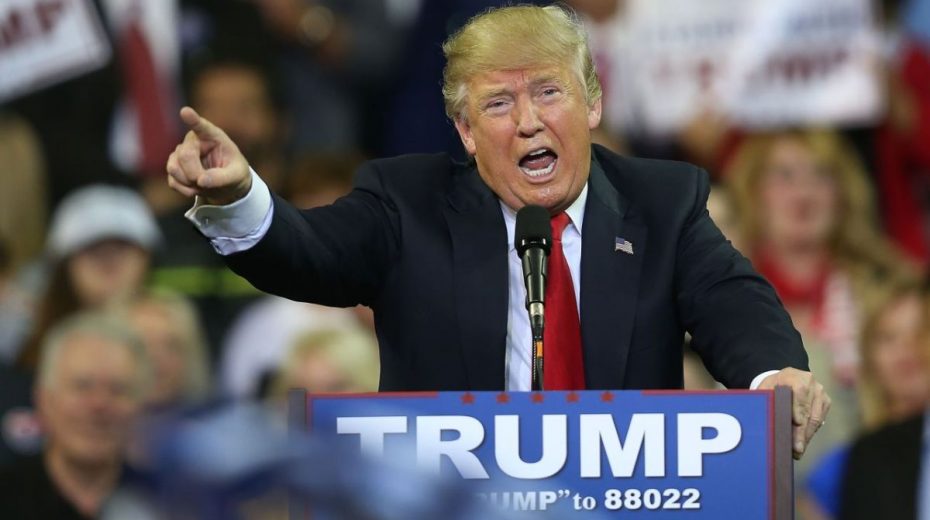
After winning a second term in January 2025 by pledging to restore working-class prosperity and American global dominance, Donald Trump vowed a “golden age of America” and a “thrilling new era of national success,” pledging to make the U.S. the “greatest, most powerful, most respected nation,” admired worldwide. Born into wealth, Trump returned believing in his own “genius” and claiming divine purpose, stating “I was saved by God to make America great again.”
With immense economic and military power, Trump sought to bend global affairs to his will. Yet his first year revealed that most plans backfired, underscoring how far America’s influence had diminished since 1991’s post-Soviet era.
On April 2, 2025, a “Liberation Day” announcement introduced heavy tariffs—beginning at 34% and later increasing to 100%—targeting Chinese imports to shield domestic manufacturing. However, at their October 2025 summit in South Korea, China’s Xi Jinping forced Trump to relent by restricting U.S. access to strategic rare earth minerals.
In January, Trump triggered turmoil within NATO by demanding Greenland from Denmark and threatening new tariffs on European allies. European pushback forced a rapid retreat at the Davos summit, where he accepted NATO’s offer of “a framework of a future deal.”
On February 28, 2026, with his tariff plan faltering and the Greenland gambit defeated, Trump allied with Israel in a bold strike against Iran that quickly took the shape of the classic micro-military maneuver associated with declining empires.
In the war’s opening days, U.S. and Israeli airstrikes killed Iranian leaders, demolished its navy, and wiped out air defenses, leaving Iran seemingly overwhelmed by American airpower. Following a week of intense bombing that astonished the world with its precision, Trump demanded an “unconditional surrender” from Iran, requesting “the selection of a GREAT & ACCEPTABLE Leader.” He pledged the U.S. would “work tirelessly to bring Iran back from the brink of destruction.”
Yet, mirroring Nasser’s 1956 Suez strategy, Iran altered the war’s strategic dynamics by closing the vital Strait of Hormuz. By striking five tankers with drones early in the conflict, Iran effectively blocked tanker traffic, crippling shipments of gas, fertilizer, and oil and triggering a global energy crisis. By late March, Iran tightened control, imposing tolls on passing freighters.
Caught off guard by this predictable blockade, Trump posted on social media April 5, Easter Sunday: “Tuesday will be Power Plant Day, and Bridge Day, all wrapped up in one, in Iran. There will be nothing like it!!!” He added: “Open the Fuckin’ Strait, you crazy bastards, or you’ll be living in Hell — JUST WATCH. Praise be to Allah.” Two days later, he threatened total destruction of Iran’s civilian infrastructure if the Strait remained closed, warning “a whole civilization will die tonight, never to be brought back again.”
Following failed negotiations in Islamabad on April 12, Trump deepened his involvement in the Iran quagmire, ordering the U.S. Navy to “begin the process of BLOCKADING any and all Ships trying to enter, or leave, the Strait of Hormuz,” and intercept vessels paying Iran’s tolls. With his trademark bombast, he declared: “We are fully ‘LOCKED AND LOADED,’ and our Military will finish up the little that is left of Iran!”
Even if Iran’s infrastructure is eventually destroyed or a face-saving peace deal is reached, Washington has effectively lost this war. Tehran, like all weaker powers engaged in asymmetric conflict, has absorbed relentless attacks while inflicting unsustainable damage. U.S. forces will exhaust targets in Tehran, but Iran’s inexpensive drones continue to threaten the oil infrastructure along the Persian Gulf.
As at Suez in 1956, Washington faces steep costs from its Strait of Hormuz micro-militarism. Traditional allies, long pillars of American dominance, have refused military support, leading Trump to label them “cowards.” His threats of civilian and cultural annihilation—constituting war crimes—have drawn worldwide condemnation. Unaware of the perils posed by conflict centered in global capitalism’s heartland, Washington increasingly disrupts the economy, enhancing China’s image as a steadier global leader. Moreover, although the U.S. military demonstrates tactical prowess, it is unable to capture meaningful strategic outcomes.
With alliances fractured, global leadership forfeited, and military prestige fading, the trajectory of American supremacy appears sharply downward, echoing the patterns of previous great powers. By the time Trump’s Middle East micro-military venture concludes, U.S. global influence will have sharply contracted, and the world will be transitioning beyond the old Pax Americana toward an uncertain future.
Original article: tomdispatch.com
About the Author