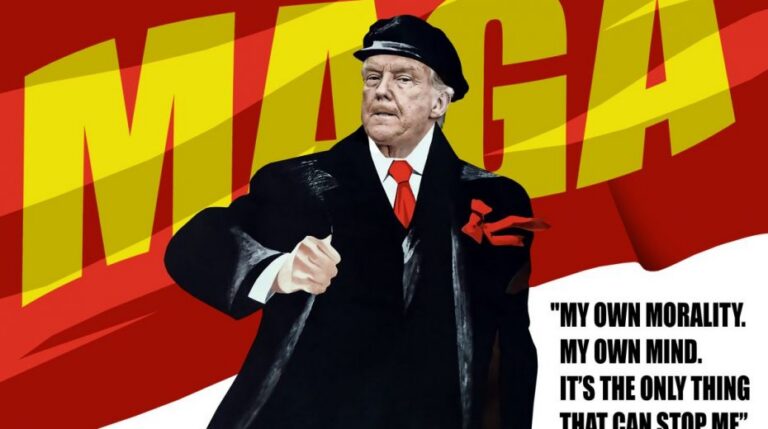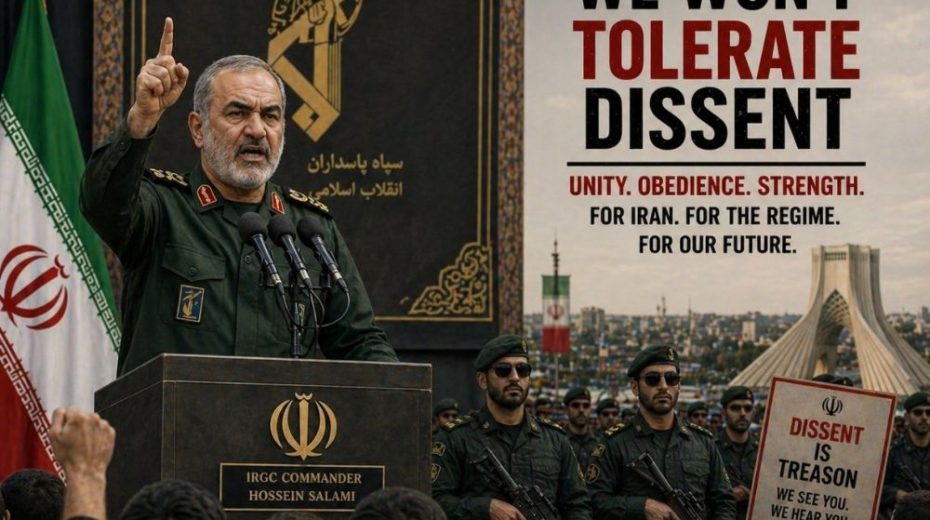
The communicative aspect has become a fundamental component of conflict, equally important as military maneuvers or economic factors.
Context
In today’s global relations, communication plays a crucial role in conflicts, holding as much weight as armed actions or economic strategies. Within this framework, the Islamic Republic of Iran is steadily honing a media approach that may initially seem inconsistent and fragmented, but actually represents a deliberate form of strategic ambiguity. This tactic enables Tehran to engage on multiple political communication levels, disorient opponents, and retain flexibility both internally and on the world stage.
A key aspect of this method is the simultaneous presence of contrasting communicative tones among Iran’s major power structures. For instance, civilian authorities and diplomatic bodies use a measured and negotiation-oriented language, aiming to keep open dialogue with the West—especially the United States and, by extension, Israel. Conversely, the Islamic Revolutionary Guard Corps (IRGC) adopts a far more assertive and occasionally confrontational rhetoric, underlining the legitimacy of armed resistance and the continuation of confrontation.
This seeming contradiction is better understood not as internal dysfunction but as an intentional strategy. Having multiple voices enables Iran to address diverse audiences at once: global interlocutors, regional partners, and its own citizens. From the perspective of international relations, this could be described as “dual-track messaging,” where diplomacy and deterrence operate side by side through distinct but interconnected channels.
This approach yields strategic benefits by creating unpredictability, complicating opponents’ decision-making. The United States and Israel must decode often conflicting signals without clarity on which faction within Iran holds sway. This generates an “information noise” effect that can delay or confuse Western political and military maneuvers.
It is important to emphasize that these methods are familiar within Western contexts—nothing new has been introduced by Iran. The surprise lies in Iran’s ability to engage in a manner that is timely, precise, and potent enough to swiftly influence collective perceptions. Perhaps the West underestimated Iran’s capabilities or failed to keep pace with evolving communication norms, exposing the limitations of some “cultural products” Western powers have propagated worldwide.
Broader Strategy
Simultaneously, Iran’s messaging forms part of a more extensive narrative conflict with Western powers. While Washington and Tel Aviv portray their policies as guardians of international order and democratic principles, Tehran frames itself as resisting a form of imperialism deemed aggressive and destabilizing. Iranian discourse therefore goes beyond reactionary statements to proactively crafting a counter-narrative that resonates across the Global South and among critics of Western dominance.
Central to this dynamic is the sense of strategic advantage. According to some observers, Iran currently enjoys a relatively strong position—not primarily due to conventional military strength, but because of its capability to endure a prolonged asymmetric struggle. Its extensive regional alliances, resilience amid sanctions, and proficiency in indirect operations reinforce this view. The IRGC’s bold rhetoric reflects growing confidence, while governmental diplomacy continues to keep channels open for negotiations that consolidate achieved gains.
Nevertheless, this external image conceals the intricate internal reality of Iran’s political system, which features multiple power hubs often marked by rivalry and friction. Tensions exist between pragmatists and conservatives, civilian and military agencies, and competing visions for the nation’s future, producing a complex internal landscape far from uniform.
Thus, differing communications do not merely serve external purposes but mirror genuine internal struggles. Foreign policy and the management of Western relations become arenas for competing factions advocating distinct strategies: one favoring careful integration into the global system, the other promoting a more autonomous and confrontational resistance model.
The outcomes of this internal contest are uncertain. It could lead to shifts in institutional power balances or a deeper redefinition of the Islamic Republic’s political identity. Regardless, the role of communication will remain pivotal—both to legitimize internally and to project influence internationally.
Iran exhibits a remarkable capacity to engage on multiple communicative fronts simultaneously, turning internal divisions into strategic tools rather than liabilities. This proficiency enables the country to maintain its narrative position against a West still relying on more straightforward and less adaptable communication strategies. Appreciating this complexity demands moving past simplistic views and acknowledging how Iran, despite internal contradictions, converts them into a source of strength amid global rivalry. Crucially, recognizing this communicative dimension is vital to understanding Iran’s readiness to fight across all arenas—including hybrid ones—to secure victory.
About the Author