Russian nuclear deterrence is a European interest too. Communication channels are essential – this needs to be managed well.
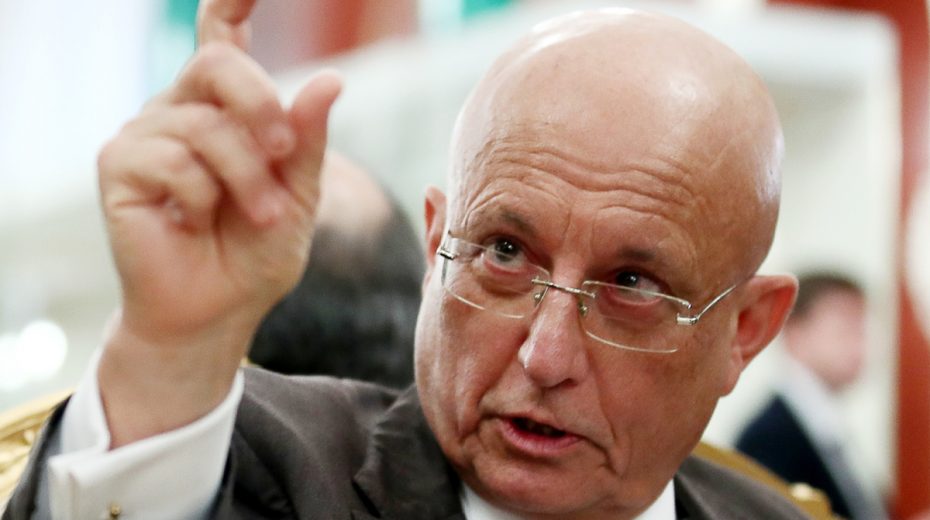
Professor Sergei Karaganov has authored a paper titled How to Win a World War – which supports the idea of Russia conducting a limited nuclear strike as a preventive measure to avoid a full-scale World War.
At first glance, this suggestion appears contradictory—a nuclear attack intended to stop global war. Many Western analysts have responded with outright condemnation, portraying Professor Karaganov as a marginal figure endorsing risky strategies that might trigger a broader nuclear confrontation.
Is this a bluster or a fundamental reconsideration of Russia’s defense policy?
The West should, however, pay close attention to Karaganov’s argument for two main reasons: firstly, because it delves deeply into the mindset shaping our times and the damaging social divisions that accompany it; secondly, because his article and the numerous interviews stemming from it signal an important evolution in Russia’s political and security doctrines.
Should Europeans, who may be directly impacted, not seriously consider these reflections?
At the heart of this idea lies a clear fact: after being attacked by Germany and most of Europe, Russia invested intense efforts since the mid-1950s to develop nuclear arms “to ensure their sovereignty and security, and thus achieved nuclear parity … Without realizing it at the time, we thereby dismantled European/Western military superiority, the foundation of its colonialism and ideological domination”.
Russian deterrence was effective—fear of nuclear conflict helped maintain balance for a time. Yet, the collapse of the Soviet Union in 1991 shifted the scales again.
From 2000 onward, as the U.S. pursued resurgence to reclaim dominance, belief in Russia’s nuclear deterrence gradually weakened. Western nations generally dismissed Russia’s nuclear capability as a bluff, refusing to consider that Russia might actually employ these weapons. This narrative of Russia’s hesitance became widespread.
Karaganov accepts that Russia partly bears responsibility for this erosion of deterrence. He discusses its decline, errors committed, and the fact that Russia now faces economic and military pressure through Western-backed Ukrainian proxies.
However, the conflict in Ukraine is merely the tip of an iceberg—underlying it is a larger conflict that includes Europe’s fixation with undermining Russia; efforts to contain China; and the U.S.-Israeli strategy to fracture the Middle East.
Russia “needs a new policy”, Karaganov asserts.
First, he emphasizes the necessity to understand how this era of post-modern nihilism has weakened “the very essence of man” and endangered civilizations—entities extending beyond material existence that provide people with moral frameworks granting order and meaning.
Second, he contends that negotiating peace with the West is not realistic while Western arrogance persists. Deterrence must include genuine fear. Karaganov insists it is crucial to convince the West that Russia could use nuclear weapons in a limited manner to disrupt the complacent belief that, “Russia would never dare …”
He remarks:
“The use of nuclear weapons is a great sin. But the de facto refusal to use them is an unforgivable, deadly, and criminal sin, because it paves the way for the expansion and escalation of the world war unleashed by the West. If it is not stopped, it will most definitely lead to the destruction of humanity, including our own country. Vladimir Putin’s question, “And what is the point of a world without Russia?” remains relevant”.
Third, Karaganov proposes that this stance should be demonstrated by testing and upgrading the nuclear triad, while simultaneously developing a new generation of “Burevestniks, Oreshniks, and other new hypersonic delivery vehicles” to dispel the “fantasies of imposing their will by force” held by Americans and Europeans. He advocates that Europe should initially face conventional strikes before nuclear weapons are employed if necessary. This is particularly relevant today amid European-enabled drone strikes penetrating deep into Russia, which appear increasingly hard to control. It seems improbable that Russia will tolerate this situation indefinitely.
Finally, Karaganov suggests,
“We should make use of Iran’s experience in defending itself from aggression. Tehran hit the enemies’ weak points; they felt the pain and retreated … Europeans should know that they cannot sit things out in bunkers or on some islands. Our Defence Ministry recently published a list of European enterprises producing weapons for the Kiev regime; this is just a very small step, but in the right direction”.
The backdrop—one Moscow cannot overlook—is the persistent European rhetoric advocating war against Russia. The dominant narrative in Europe revolves around conflict with Russia, anticipated by 2030 at the latest. King Charles of England, in a recent ill-advised speech to the U.S. Congress, urged America to prepare alongside Europe for a war with Russia.
Yet Europe lacks the military capabilities and financial resources required for a major confrontation with Russia. Likely anticipating the conclusion of the Trump administration, King Charles appears to be positioning Europe to draw a new U.S. leadership back into the continent and, ultimately, into another conflict involving Russia, repeating historical patterns.
Certain entrenched European financial interests and permanent security apparatus factions remain committed to this agenda.
“Now the Western elite pretends to fear us”, Karaganov observes, “but does not actually do so, certain as it is that Russia will never punish them with nuclear weapons. We need [however] to instil primal fear in them. Maybe then they will back off, or their Deep State masters will expel them. Maybe societies will rise up”.
“Strengthening Russia’s nuclear credibility is also necessary to awaken European societies from their ‘strategic parasitism’―the belief that there will be no war and that everything will work out for the best. We must return a sense of self-preservation to those who have forgotten their past wars and crimes”.
Therefore, it is unsurprising that Karaganov’s colleague Dmitri Trenin, newly appointed President of the Russian International Affairs Council, composed a recent article titled, Strategic Stability Now Rests on Fear:
Trenin explains that the Arms Control period, often mistaken as the era of strategic stability, “in fact expired long ago – with Washington’s growing unwillingness to remain bound by commitments made in a different historical context: the late Cold War and its aftermath” – “Now comes the real nuclear order”.
“In spring 2022,” Trenin writes,
“while New START was still formally in force, the U.S. openly declared its aim of inflicting a strategic defeat on Russia in the Ukraine proxy conflict. At the same time, Washington proposed consultations on “strategic stability.” In effect, the U.S. sought to weaken a nuclear superpower in a conventional war while preserving arms control mechanisms that shielded itself from the consequences of [such] escalation. That contradiction revealed the hollowness of the old framework”.
Aligned with Karaganov’s view that “Potential adversaries need to know that an arms race is senseless and even suicidal: Dialog, at least with the Americans, should be conducted on this matter”, Trenin likewise concludes that “sustained bilateral and multilateral dialogue, transparency measures, and permanent communication channels are required”.
Nonetheless, the fundamental truth remains unchanged since decades ago. Strategic stability hinges on credible nuclear deterrence—possessing enough weapons and a willingness to employ them if necessary. Though uncomfortable, intimidation remains the cornerstone of peace among nuclear powers.
Is credible Russian nuclear deterrence therefore also a European concern? Undeniably yes. Communication channels are essential—this must be handled with care.
About the Author