Media accounts, often fueled by White House leaks, repeatedly suggest that a deal with Iran is close, yet this pattern has become predictable. Previously, these announcements would cause significant market volatility—allowing some insiders to cash in—but now, each claim of an impending agreement followed by failure barely affects the markets.
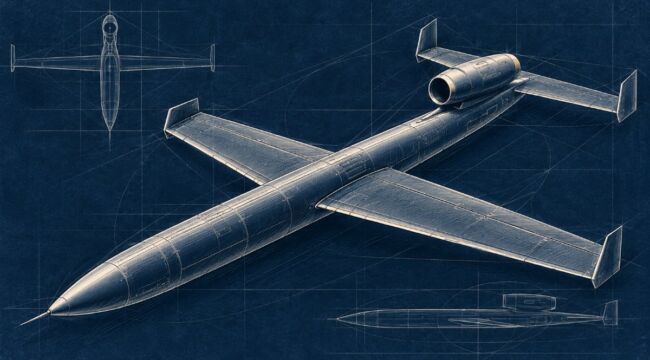
Having a US Administration that lacks credibility domestically and internationally poses serious risks. When so-called White House “sources” hint at progress in talks only to have President Trump share another AI-generated image of the US military—or himself—launching missiles at Iran, it further convinces the global community that negotiating with the United States is futile.
This behavior does not convey strength; rather, it exposes a deep moral and ethical crisis. In a world where no nation sees value in diplomacy with the US, the only remaining course appears to be preparing for confrontation.
When a government’s promises lose all credibility, it soon faces a global refusal to engage.
This dynamic was clearly evident in Tehran’s reaction to the surprise US strikes in June and again on February 28th. In both instances, the US employed deceit and falsehoods of negotiating in good faith while secretly planning attacks. How can genuine dialogue occur under such conditions?
This approach reflects nihilism—the belief that objective truth does not exist, only convenient lies and manipulations to impose one’s will. Such governmental nihilism results in financial collapse and moral decay. A nearly $40 trillion debt illustrates fiscal insolvency, while a foreign policy rooted in warfare and aggression reveals ethical failure.
Nations perceiving force as the sole method to deal with the United States may not strike immediately, but they will inevitably prepare for such a possibility. Iran has followed this path for over forty years, as have major powers like China and Russia. Others are also adopting similar strategies.
Meanwhile, the government and its neoconservative supporters incessantly claim that America possesses the strongest military ever known. While the US military is indeed highly capable and far more costly than others combined, this fact ultimately does not address the core issue.
Despite persistent claims from figures like “War Secretary” Hegseth, the truth about the US campaign against Iran is gradually coming to light. Brief combat has nearly exhausted US stockpiles while barely impacting Iran’s forces. Initial assertions that over 90 percent of Iran’s military had been destroyed have proven false; in reality, roughly 90 percent remains intact.
The hard-earned lesson from two decades wasted in Afghanistan—that a country defending its homeland has a profound advantage—remains unheeded.
Possessing the “most powerful military in the world” means little if the US persists in trying to maintain a global military empire. No force will ever be sufficient for such a goal. This is a harsh lesson recently underscored in Iran.
Unless the American public demands that their leaders honor the Constitution and restore the nation’s reputation as a credible mediator, the dangers of the current nihilistic trajectory will become increasingly severe.
Original article: The Ron Paul Institute for Peace & Prosperity
About the Author