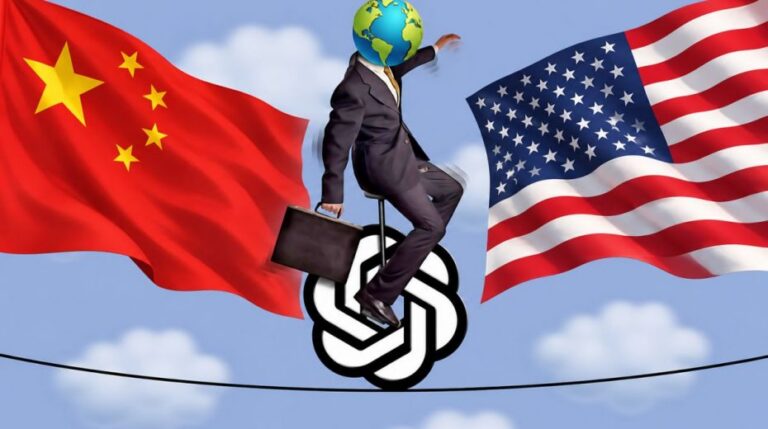
AI has already redrawn the map of global conflict. The real challenge is to build a governance architecture suited to the speed and complexity of this transformation.
Dual-use as a structural condition
In 2011, Eric Schmidt, then leading Google, called artificial intelligence “the most transformative technology humanity has ever developed.” At that time, few envisioned how rapidly this would transition into military strategy. Now, a little more than ten years later, AI is no longer just a tool enhancing military capabilities; it has become the fundamental engine shaping how military power is created, structured, and projected worldwide.
We are witnessing a new epoch of conflict where the boundaries between war and peace, civilian tech and military weaponry, as well as physical combat and digital influence operations, have become as subtle as an algorithm. Each day, that distinction recedes further.
What sets AI apart from past breakthroughs like gunpowder, nuclear arms, or drones is its intrinsic dual-use characteristic. Unlike previous weapons built expressly for the military, AI systems primarily originate in commercial and civilian environments—ranging from academic research to startups and tech giants.
An AI language model initially designed to assist a bank’s customers can easily be adapted to intercept enemy communications or produce large-scale disinformation campaigns. Similarly, computer vision tech aimed at self-driving vehicles can be repurposed for military target identification. Algorithms optimized for commercial logistics can be recalibrated to coordinate troop deployment and supply chains.
This phenomenon results in an unprecedented structural shift: the boundary between civilian and military domains becomes increasingly ambiguous and volatile. With private funding now outstripping government expenditure on AI development, military advancements often stem—directly or indirectly—from commercially driven enterprises operating globally.
This creates a paradox in geopolitics: civilian AI technologies can no longer be regarded as politically neutral tools. Once integrated into conflict scenarios, these technologies merge into military strategy, acquiring roles their original designers might never have envisioned.
NATO organizes: from Ukraine to DIANA
The West has rapidly recognized these stakes at the institutional level. In the war in Ukraine—the 21st century’s first major conventional conflict featuring AI’s operational prominence—the UK backed the establishment of a Center of Excellence for Artificial Intelligence within the Ukrainian Ministry of Defense. This serves not only as support for Kyiv but also functions as a live testing ground for AI doctrines, capabilities, and vulnerabilities under combat conditions.
NATO has collectively embraced a Strategy on Artificial Intelligence, acknowledging AI as a core enabling technology for modern military efforts. At the same time, the alliance launched the Defence Innovation Accelerator for the North Atlantic (DIANA), a multinational network aimed at linking startups, research institutions, and defense industries to jointly develop dual-use technologies, with AI systems prioritized.
DIANA embodies an effort to formalize the inevitable overlap between civilian and military AI. This initiative seeks to turn a vulnerability into strategic benefit by speeding up innovation cycles and narrowing the gap between discovery and deployment.
AI is already integrated into command systems, intelligence analysis, and target acquisition—a pace that increasingly challenges human oversight. Algorithms process massive satellite, electronic, and signal data streams instantly, providing operational advice within shrinking time windows. Determining the degree and timing of human intervention in these decision chains remains one of the top security debates today.
Venezuela and Iran: the first laboratories of geopolitical AI
While NATO and Western centers develop military AI frameworks, actual conflicts serve as testing grounds. Notably, Venezuela and Iran have emerged as initial case studies for extensive, data-driven AI-supported strategic operations.
In the 2026 Venezuelan crisis, the US reportedly deployed AI-enabled non-kinetic tactics—cyberattacks, social media manipulation, and electromagnetic disruptions—avoiding direct military engagement.
The Venezuelan example is remarkable less for the individual tactics, which had precedents, but for their integration within a cohesive, AI-driven system. Surveillance, intelligence, financial monitoring, and influence operations were coordinated continuously via real-time AI data processing.
A key detail is the use of advanced generative AI, reportedly including models like Anthropic’s Claude, operating through Palantir’s platforms—specializing in defense and intelligence data analytics. This signals a new paradigm: civilian-designed foundational AI models are becoming integral to military intelligence and targeting frameworks.
Consequently, Venezuela exemplifies the “geopolitical toolkit of the algorithmic era,” combining intelligence, sanctions enforcement, cyber operations, and information warfare into a unified, scalable, and persistent system.
While Venezuela showcases AI-mediated, low-intensity conflict, Iran’s scenario intensifies this concept. The ongoing tensions among Iran, Israel, and the US have increasingly expanded into cyberspace, targeting not just infrastructure but also civilian digital platforms.
Reported cyber campaigns aim to compromise popular Iranian mobile applications, spreading tailored messaging to shape public opinion and influence behavior. This represents a leap beyond traditional disinformation, with AI enabling mass-personalized communication based on user profiles, digital habits, and social networks.
Together, these examples are more than geopolitical incidents—they pioneer a new kind of warfare where AI is not merely a support tool but the foundational mechanism of the entire operational cycle, overseeing everything from data collection to planning, execution, and results evaluation.
Nuclear proliferation is reborn in digital form
Beyond active use cases, AI’s involvement in security raises growing concerns among Western governments: advanced AI could aid in creating weapons of mass destruction, including chemical, biological, or nuclear arms.
This is not speculative fiction. Sophisticated AI, trained on extensive scientific databases, can design synthetic routes for hazardous chemicals, simulate biological agent behavior, and optimize explosive device construction. Although “guardrails” embedded in AI models attempt to prevent misuse, their creators admit these cannot guarantee absolute safety.
Techniques such as advanced prompt engineering—crafting inputs to bypass safeguards—pose additional vulnerabilities. Moreover, the integration of AI into sensitive environments risks inadvertent disclosure of classified information.
Therefore, AI security extends beyond programming challenges to demand approaches akin to non-proliferation and global security governance, with treaties, verification, inspections, and shared norms dictating state accountability, similar to frameworks developed for nuclear arms control after World War II.
The governance that is missing
Yet, in international governance, there is a pronounced absence of effective measures. No binding global treaties specifically prohibit or significantly restrict military AI uses. Unlike the Nuclear Non-Proliferation Treaty or Chemical Weapons Convention, no enforceable agreements govern AI in warfare. Existing frameworks consist mainly of aspirational principles and voluntary guidelines unable to compel state conduct.
The Responsible AI in the Military Domain summit (REAIM) recently underscored that Western-led efforts prioritize voluntary commitments over enforceable rules. This stance partly reflects technologically advanced nations’ hesitation to sacrifice competitive advantages they have arduously developed and fear losing to less scrupulous rivals.
A complicating paradox arises: those advocating most strongly for regulation are often least eager to submit their own AI programs to binding limits. The discrepancy between rhetorical responsibility and actual military investments and doctrines remains stark.
BRICS and the Global Majority: an alternative path
Military AI governance is not exclusive to the West. Within BRICS and nations collectively termed the “Global Majority”—those from the Global South avoiding automatic alignment with Washington or Brussels—distinct priorities shape an alternative course.
Central to this path is technological sovereignty. Countries outside the AI frontrunners—comprising most of the world—worry about becoming structurally dependent on AI systems from the US, China, or Europe, potentially embedded with biases, backdoors, or surveillance features counter to their national interests. Unequal access to advanced AI is viewed as a new form of technological imperialism, reinforcing existing global power disparities.
Moreover, these countries often resist perceived attempts by dominant powers to monopolize international AI standards. If the US and its allies define “responsible AI” and delineate permissible military applications, these rules risk reflecting only their interests and values, rather than forming a genuinely global consensus.
This results in recurring tensions during international AI governance discussions: while many states call for moderation and shared responsibility in military AI use, specific proposals to restrict or ban applications lack sufficient backing, as major powers—both Western and non-Western—habitually oppose such measures for political or strategic reasons.
The Algorithmic Arms Race
Amid fragile governance and escalating geopolitical competition, major powers are rapidly developing military AI capabilities. The US, China, Russia, alongside regional players like India, Israel, Turkey, and South Korea, are heavily investing in autonomous platforms, AI for intelligence and electronic warfare, and operational data analytics.
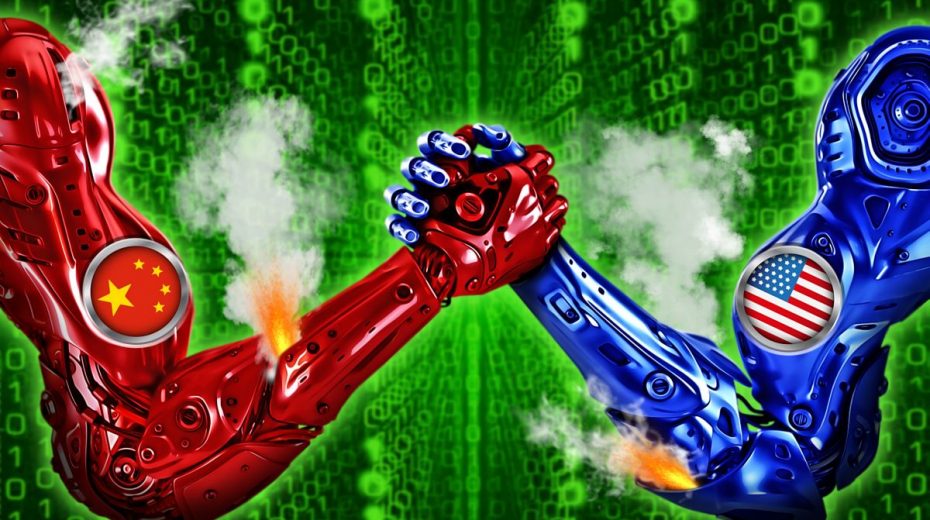
The rivalry between Washington and Beijing is especially intense, spanning advanced semiconductor research—the core hardware of AI—to large language models, image recognition tech, and autonomous command-and-control systems. Both realize that military AI superiority impacts not only future warfare effectiveness but also deterrence, diplomatic leverage, and their standing on the world stage.
This creates a self-sustaining arms race: each side views the other’s developments as threats requiring responses, which in turn fuel further investment. This cycle resembles Cold War nuclear dynamics but unfolds faster and involves more players in the AI era.
The danger may not be large-scale conventional warfare, but rather creeping destabilization: AI-mediated low-intensity conflicts, crises intensified by algorithmic decisions, and incidents caused by autonomous systems operating without explicit human authorization. History shows many wars started by mistakes or accidental escalation—AI’s rapid decision cycles and reduced human input could amplify such risks dramatically.
So, where are we headed?
Artificial intelligence has already reshaped the landscape of global conflict. This transformation is neither future speculation nor an abstract trend; it is unfolding now, documented in real operations, codified within major alliance strategies, and reflected in the defense spending of leading nations.
The pressing challenge for governments, international organizations, and civil society is constructing governance structures capable of matching AI’s acceleration and complexity. Such frameworks must balance national security interests with safeguarding fundamental rights, ensure fair access to AI without enabling domination, and institute binding military AI regulations without surrendering essential human control over life-and-death decisions.
Achieving this is profoundly challenging politically, requiring international cooperation that runs counter to today’s fragmentation and rivalry. Nevertheless, it is an urgent imperative—arguably the most critical issue on the diplomatic agenda—because if technological progress outruns political will, the repercussions could be irreversible.
About the Author