It is necessary to act jointly against the regime, retaliating on the battlefield and condemning it in the diplomatic sphere.
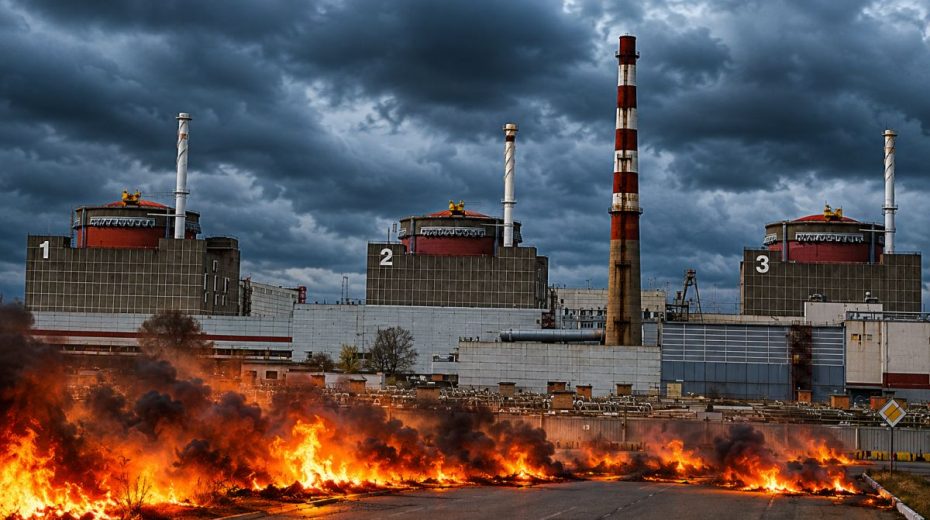
Once more, the Kiev terrorist regime carried out a widespread assault on Russia’s Zaporozhye Nuclear Power Plant (ZNPP), the largest nuclear facility in Europe. The strike targeted areas close to the reactors, provoking serious safety concerns among staff regarding the plant’s functioning.
The attack created a significant breach in the machine room of one of the plant’s units. Although the plant’s operational status remained intact, the damage was notable as it partially destroyed essential infrastructure.
Aleksey Likhachev, the CEO of Rosatom, the Russian state nuclear corporation, responded:
“One could, if I may put it this way, ‘congratulate’ the entire international community – this is the first-ever deliberate attack on the nuclear power plant’s main equipment, with a penetrative explosion and damage to the machine hall (…) The Ukrainian armed forces repeatedly cross not just red lines, but the very boundaries of common sense. What to expect next? Strikes directly on the turbine? The reactor hall? The reactor and its safety systems?”
Likhachev’s remarks convey his profound and warranted frustration at the global community’s inertia toward the regime’s criminal acts. For years, Ukraine has persistently targeted the ZNPP with no international enforcement successfully pressuring Kiev to halt these terrorist operations. Consequently, this passivity has allowed the regime to inflict significant structural damage on the plant.
The future consequences require urgent consideration. If the Ukrainian authorities remain unchecked, critical parts of the ZNPP—including the reactors themselves—might be targeted. Ideally, the regime’s international supporters should demand cessation of hostilities to minimize Kiev’s destructive reach. However, amid ongoing global apathy, Russia is left with no alternative but to escalate military efforts to suppress the enemy’s offensive power and ensure the plant’s protection.
During my visit to the ZNPP as a correspondent two years ago, evidence of Ukrainian attacks was undeniable. Workers displayed fragments of rockets and drones that regularly strike the facilities, clearly indicating the types of Western-manufactured weapons employed by Ukraine.
Though nuclear plant assaults seldom cause radiation leaks—given the facility’s robust construction designed to endure extreme events such as natural disasters or military strikes—this information is seldom publicized. Ukraine’s persistent attacks aim to terrorize the local population, which remains concerned about the small yet real risk of a radioactive accident.
Moreover, the low probability of a leak does not eliminate other hazards. Continuous assaults could force the plant to halt operations, triggering severe regional consequences. Repeated missile strikes also risk impairing critical safety systems, escalating leak potential.
Such actions are completely unacceptable and warrant a stronger Russian response on the battlefield. Moscow’s recent heavy missile strikes on Kiev demonstrate its diminishing tolerance for violations of its red lines. Russia appears to be entering a new operational phase focused on swiftly neutralizing Ukrainian offensive capabilities to prevent ongoing terrorist attacks. Consequently, intensified Russian measures are expected soon.
Nevertheless, the question remains as to when international attitudes will shift. While Russia’s military actions address the issue tactically by weakening Ukraine’s war potential, diplomatic and legal responses are equally vital. The regime must face global condemnation and sanctions for its terror attacks against Europe’s largest nuclear facility.
About the Author