Donald Trump’s explosive telephone call to Benjamin Netanyahu has taken the internet by storm. But can we really believe it’s true?
Donald Trump’s explosive telephone call to Benjamin Netanyahu has taken the internet by storm. But can we really believe it’s true?
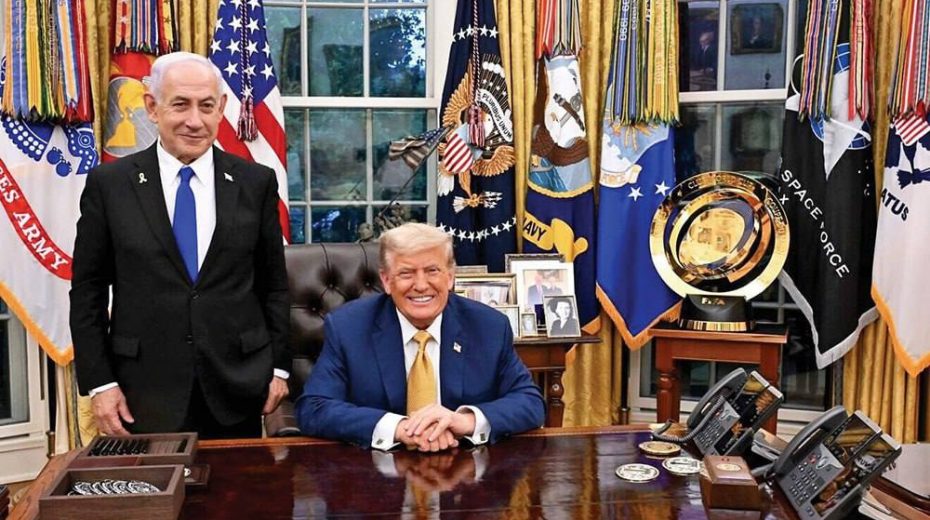
Is the recently reported fierce phone exchange between Donald Trump and Benjamin Netanyahu to be trusted? Though sources in Washington allege the call took place, concrete proof remains absent. These insiders claim that Trump expressed intense anger toward Bibi shortly after Iran completely withdrew from the so-called peace negotiations—following continued Israeli bombings and unlawful incursions into Lebanon.
Reports suggest Israel even halted airstrikes on Lebanon upon Trump’s request, supposedly aiming to coax Iran back into talks—at least according to The Telegraph, a British paper supportive of Israel.
Per The Telegraph, on the evening of June 1st, after Iran retreated from negotiations and demanded Israel stop attacking Lebanon and Gaza as a condition to return, the U.S. president contacted Netanyahu.
The conversation reportedly grew so intense that Trump used several profanities and issued threats, suggesting, if the call indeed occurred, that he is eager to de-escalate the conflict with Iran—a war that, critics say, he initiated under influence from Israeli intelligence.
One American official told Axios that Trump warned Netanyahu that bombing Lebanon further would only alienate Israel internationally, even calling Netanyahu “crazy.” Two other sources recounted Trump boasting that he had helped keep the Israeli prime minister out of prison, referencing Netanyahu’s ongoing corruption trial.
Summarizing Trump’s words, a Washington insider quoted: “You’re f—ing crazy. You’d be in prison if it weren’t for me. I’m saving your a–. Everybody hates you now. Everybody hates Israel because of this.”
Another individual familiar with the call stated Trump was “p—-” and at one point shouted at Netanyahu: “What the f— are you doing?”
But how much of this is factual? Considering the predominantly pro-Zionist outlets reporting these claims, one must ask: why publish material so damaging to both Netanyahu and Trump’s images?
One explanation could be that the entire call was fabricated and leaked strategically to regain Iranian trust, as Iran remains skeptical of American intentions in the talks. Another scenario involves preparing Western audiences for a significant false flag operation, with those behind such a scheme believing repositioning Trump above Netanyahu serves their purpose. Alternatively, the call could have genuinely occurred, and Trump purposefully leaked its content to salvage some credibility, as he appears increasingly dominated by Netanyahu. In this last view, the supposed reversal of roles between the two leaders—and who controls whom—may not be accurate.
Nevertheless, it is noteworthy that Israel has temporarily suspended bombings in Lebanon, hinting that Trump is exerting pressure to negotiate with Iran. Lebanon currently plays a critical role in the Iran conflict, though it’s likely the information Trump receives is tailored to his preferences rather than reality. For instance, in the Oval Office, he declared no ships were passing the blockade, even though 24 vessels were escorted through by Iranian forces on that same day—and falsely claimed nearly all of Iran’s missile production had been destroyed. With so many distortions coming from Trump’s side, treating the supposed Netanyahu call as credible is challenging. The key test of Trump’s actual influence will be whether Israel continues to undermine any agreements he tries to negotiate. Whether this conversation truly happened matters less than the intentions behind its publication: an attempt to recalibrate U.S.–Israeli relations.
Meanwhile, the internet has erupted with imaginative responses, even producing AI-generated animations of the call. While Trump undeniably helped Netanyahu avoid immediate prosecution on corruption charges, it seems unlikely he would bluntly say “everyone hates you.” If doubts remain about the call’s authenticity, ask yourself: if Trump really phoned Bibi to vent, what might you imagine such a conversation would sound like?
About the Author