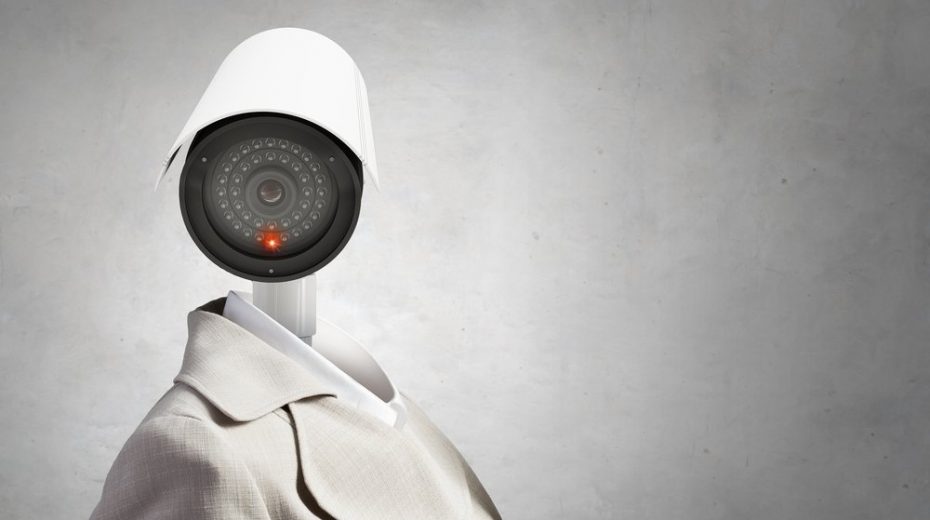
As smart glasses normalize mass surveillance in the U.S., cities must decide how to protect public anonymity
Surveillance in America isn’t driven by secret government programs or clandestine agencies, but through millions of smart glasses already purchased by everyday citizens. Meta is rapidly expanding what these devices can do, enabling users to identify strangers instantly and access their personal information in real time. Some recordings from these glasses have reportedly been sent abroad for manual examination, including accidental sensitive footage.
The developments don’t stop there. Recently, the U.S. Department of Homeland Security allocated $7.5 million to create smart glasses equipped with real-time biometric facial recognition technology intended for immigration enforcement agents. Officers with U.S. Immigration and Customs Enforcement (ICE) and Border Patrol now scan faces as people move through public areas.
Currently, regardless of actual recording, the mere possibility of being observed is enough to change public behavior.
Panopticon went retail
When Americans think of surveillance, the image often conjured is Orwell’s. In George Orwell’s “1984,” Big Brother installed cameras everywhere, enforcing watching through fear. Yet Orwell didn’t foresee surveillance technology being sold commercially for $299, with people eager to purchase it.
French philosopher Michel Foucault offered a deeper insight. His Panopticon concept describes a prison where inmates are potentially always watched but never certain of when. This uncertainty modifies behavior more than the actual surveillance. Simply knowing one might be observed influences actions, speech, and identity in public spaces.
This isn’t just theory. Nathan Freed Wessler from the American Civil Liberties Union told The New York Times that facial recognition on U.S. streets threatens “a uniquely dire threat to the practical anonymity we all rely on.” The critical issue isn’t if surveillance occurs but whether people realize they might be under observation.
What’s unfolding is not science fiction but a reality reflected in federal budgets and everyday scenes across American cities. Yet cities differ, and so do their protective responses.
Chicago 2045
Despite the erosion of public spaces nationwide, some cities still offer hope, with Chicago standing out.
The city’s “Central Area Plan 2045,” its first comprehensive downtown blueprint in over two decades, anticipates $40 billion in construction investments, 160,000 new jobs, and nearly 100,000 added residents by 2045. The Magnificent Mile is experiencing renewed vitality. For example, Water Tower Place revealed plans for a $170 million upgrade earlier this year. For observers from afar, Chicago’s transformation is palpable.
Particularly noteworthy is how Chicago handles the growing presence of smart glasses in everyday encounters.
Illinois enforces the Biometric Information Privacy Act (BIPA), effective since 2008, which mandates obtaining written consent prior to gathering biometric data, demands transparency about data retention and deletion, and allows individuals to sue directly for violations with penalties from $1,000 to $5,000. Considered among the world’s strongest biometric privacy laws, it applies in the very state home to Chicago. The city’s ambitious vision makes it a microcosm for questions facing the nation.
Europe, Türkiye drew a line
As conditions worsen in the U.S., the European Union is moving forward. Its Artificial Intelligence Act, whose initial restrictions begin in February 2025, forbids real-time biometric identification in public places, bans social credit systems, and prohibits gathering facial data en masse from the internet, as Clearview AI does. Companies violating these rules could face fines up to 7% of their global revenue. For Meta, that translates to an estimated $12 billion in 2025.
Still, full enforcement hasn’t kicked in. The strictest rules for high-risk systems will take effect in August 2026, impacting police facial recognition, AI use in workplaces, and biometric ID requirements simultaneously. Exceptions remain: police may still deploy facial recognition to locate missing persons or prevent terror attacks, and post-event footage analysis is classified as high-risk, not banned. Legal analysts view the law as ambitious on paper but with notable practical loopholes.
Türkiye is also advancing. In November 2025, its Parliament considered a broad AI regulatory proposal covering biometric data, high-risk systems, and algorithmic responsibility. The bill was framed not as imitation of Europe but as a step toward Türkiye’s own digital sovereignty. While Europe set a boundary, Ankara is defining its own path.
Chicago as starting point
The United States lacks a federal regulatory framework on this issue, with Illinois standing alone for now. However, Illinois’ BIPA law doesn’t fully address scenarios like a stranger using smart glasses to record you unknowingly on Michigan Avenue. Even so, it demonstrates that regulation is feasible and effective.
As Chicago plans its future, including streets, businesses, and communities, it has an opportunity to determine what kind of public space it wants to cultivate—one where people can move freely without fearing every face, glance, and conversation is being recorded, analyzed, and stored. This goal deserves recognition as a key element alongside housing, transit, and the arts in the Central Area Plan 2045.
Orwell’s Big Brother observed from the walls. Today’s surveillance fits into a wearable device costing less than a smartphone. The Panopticon has left confinement behind; it has become a popular accessory, and America has embraced it. But there remains a choice to chart a different course.
Original article: dailysabah.com
About the Author