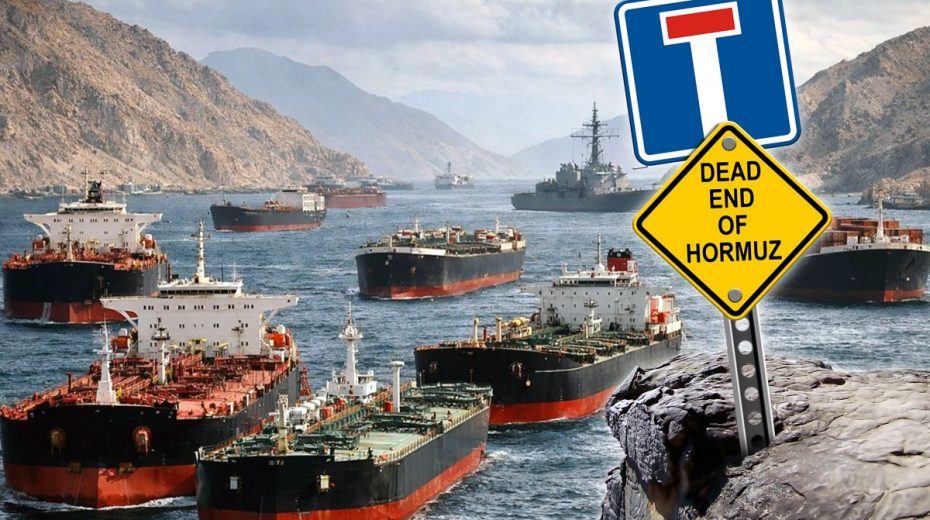
The Strait of Hormuz—that narrow strip of water between Oman and Iran—is the point where history has chosen to turn the page.
When Water stops the World
Certain historical moments do more than merely disrupt the status quo; they expose the deeply flawed foundations beneath it. The shutdown of the Strait of Hormuz—a waterway just forty kilometers wide that handles a fifth of global oil shipments—is far beyond an energy crisis of extraordinary scale. It serves as a stark revelation, possibly the first clear one, of how brittle the commercial and financial system shaped by the West after World War II truly is. Simultaneously, it acts as a driving force that may speed up the rise of an alternative framework: more continental, multipolar, and grounded.
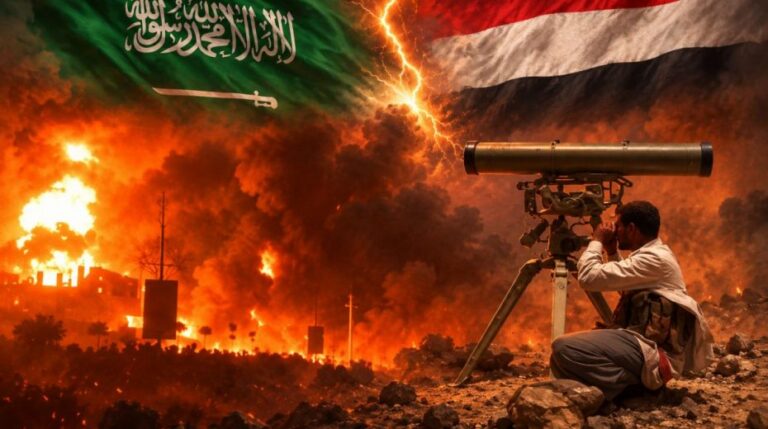
The ongoing blockade of the Strait of Hormuz, triggered by tensions escalating between Iran and the Israel-U.S. coalition since February 28, has unleashed an unprecedented economic upheaval. Brent crude oil prices soared beyond $160 per barrel within three days of the announcement, while liquefied natural gas futures tripled in price. Supply chains across Europe and North America—already weakened by pandemic fallout and the semiconductor shortage—have revealed severe vulnerabilities. Numerous manufacturing plants from Germany to California have curtailed or halted output due to shortages of parts and raw materials. The detour via the Cape of Good Hope adds eighteen days to shipping time and boosts transport costs by 30 to 50 percent, intensifying inflationary pressures on an already fragile system. Market volatility has climbed to heights not seen since the 2008 financial crisis: the VIX index rose to 58, and equity markets in New York, London, and Frankfurt collectively lost over 12 percent in the initial four weeks. The International Monetary Fund cut its 2026 global growth forecast by two percentage points, now projecting just 0.8 percent.
To grasp why this moment is historic, one must understand the system now under strain. The 20th-century global economy was fundamentally maritime in nature. The Pax Americana, which has prevailed since the end of World War II, rested on three interrelated pillars: U.S. naval dominance over the world’s oceans, the dollar’s role as the universal reserve currency, and Western navies’ control—mainly that of the U.S. Navy, followed by the British—over key sea routes.
This structure was far from ideologically neutral; it extended the Anglo-Saxon maritime tradition geopolitically, articulated by Admiral Alfred Thayer Mahan in his 19th-century work The Influence of Sea Power upon History. Controlling the seas meant controlling trade; controlling trade meant dominance of the global economy; and economic dominance translated to political hegemony. For close to eight decades, this system functioned extraordinarily well, granting the U.S.—above all—the so-called “exorbitant privilege” of issuing the world’s reserve currency, along with its allies.
However, hegemonies are ultimately finite. The Hormuz crisis exposes what many have increasingly recognized: Western supremacy is not merely waning, it has ended. The U.S. Navy’s failure to keep the Strait open despite the presence of the Fifth Fleet highlights that even American naval might has operational boundaries once deemed impossible. The fundamental principle of freedom of navigation—cornerstone of the liberal international order—has been fractured by a Middle Eastern nation and its proxies wielding asymmetric missile technology, effectively challenging the maritime superpower.
The decline of Western sea dominance is hardly new. It stems from China’s economic ascent, Russia’s post-2014 strategic assertiveness, accelerating de-dollarization driven by emerging economies, and the weakening of liberal multilateralism within institutions like the WTO, IMF, UN, and World Bank. The Hormuz crisis didn’t trigger this trend; it merely hastened it with the force typical of transformative crises.
The Heartland to the Rescue: was Mackinder right?
We have referenced him frequently; one more instance won’t surprise anyone. In 1904, British geographer and strategist Halford John Mackinder presented a groundbreaking essay to the Royal Geographical Society titled The Geographical Pivot of History. His central, then-radical idea: future global power would not rest with maritime nations but with the controller of the “Heartland”—the vast Eurasian interior from Eastern Europe’s plains through Siberian steppes and Central Asia’s highlands—naturally impervious to naval influence. Mackinder’s formula, now legendary, stated: “Whoever rules Eastern Europe commands the Heartland; whoever rules the Heartland commands the World Island; whoever rules the World Island rules the World.” The 20th-century Anglo-Saxon sea powers sought to thwart this reality, notably through Soviet containment during the Cold War, aimed at preventing the Heartland’s influence from reaching the coasts.
The Hormuz crisis has brought Mackinder’s thesis back to prominence in global strategic discourse. As sea lanes become unreliable due to conflicts, instability, or rivalry among major powers, global commerce must divert toward alternate pathways—almost always crossing the Heartland. Railroads, pipelines, and transcontinental highways spanning Central Asia, Russia, Iran, Pakistan, and Turkey now constitute the battleground for the emerging world order. The BRICS+ have already established—or are in the process of building—this critical infrastructure.
Mackinder is receiving unprecedented attention in Moscow, Beijing, and New Delhi, surpassing even British academic interest. The crisis has given this theoretical concept tangible urgency: land routes are no longer hypothetical alternatives but the only practical solution.
The only way out: the BRICS+ architecture and the post-Hormuz era
At this juncture, BRICS+ holds the exceptional opportunity to deliver what no Western power currently can: a tangible, partly operational alternative to the disrupted maritime trade routes.
This solution rests on four interlinked pillars: new Eurasian land corridors, alternative energy pathways, trade de-dollarization, and the development of a financial system independent from SWIFT and Western banking networks. Individually, these elements are important; collectively, they make the BRICS+ strategy genuinely viable.
Over the last ten years, China’s Belt and Road Initiative quietly established the core of Eurasian trade routes unaffected by maritime chokepoints like the Strait of Hormuz. The China-Europe rail corridors, notably the China-Europe Railway Express—which managed roughly 1.9 million TEUs (twenty-foot equivalent units) in 2025, marking a 22% jump from the previous year—now provide a credible alternative for transporting high-value goods instead of relying on Suez Canal shipping.
Demand for rail capacity has tripled in weeks since the Hormuz blockade. Chinese State Railway Group data shows bookings on the China-Europe corridor increased by 340% in April 2026 versus the 2025 average. With transit times of just 15–18 days, compared to 30–40 days via Suez Canal, this rail route appeals especially to sectors like electronics, automotive, and pharmaceuticals.
However, the Belt and Road Initiative is just part of the shift. The International North-South Transport Corridor (INSTC), championed by Russia, India, and Iran and now extending to Azerbaijan, Armenia, and some Central Asian nations, is undergoing a revival. This route links Mumbai to St. Petersburg via the Arabian Sea, Iran, and the Caspian Sea—cutting Europe-India transit time to about 25 days compared to the 40–45-day maritime journey through Suez, and lowering logistics costs by 20–30%. Although the maritime link faces disruption due to Hormuz’s closure, investments in Iranian rail and road networks over the last three years provide workable detours. Once seen as secondary, the INSTC is now a strategic priority for South Asia.
The energy sector is also seeing shifts. Projects stalled by political resistance, funding challenges, or economic preference for sea routes are getting a boost. Power of Siberia 2—a pipeline designed to connect Siberian gas fields with China through Mongolia—has seen talks speed up following the Strait’s blockade. Previously bogged down by pricing disputes, both sides now treat it as essential: China, which imported roughly 18% of its gas via Persian Gulf LNG, seeks land alternatives; Russia, cut off from European markets after 2022 sanctions, needs dependable eastern customers.
Meanwhile, pipelines like TAP (Trans-Adriatic Pipeline), carrying Azerbaijani gas to Italy through Turkey, and TurkStream, linking Russia with Turkey and the Balkans, operate at full capacity. Turkey—remaining outside Western sanctions on Russia and maintaining balanced relations with BRICS+ members—has gained remarkable leverage as a continental energy hub. Not coincidentally, Ankara formally applied to join BRICS in 2024, with acceptance expected by year-end.
A long-delayed India-Iran-Pakistan gas pipeline project, stalled by U.S. pressure on Pakistan, has been revived in a revised form, involving a direct India-Iran subsea connection across the Gulf of Oman (bypassing the Strait) leading overland to Central Asia. For the first time since 2012, officials from the Iranian and Indian petroleum ministries have exchanged direct communications.
What once was theoretical has become imperative: Eurasian overland routes stand as the only viable response to maritime bottlenecks like the Hormuz closure.
Farewell, Mr. Dollar
Nixon’s famous dictum held: “Oil is bought and sold in dollars.” Alternative currencies were essentially blocked, enabling the U.S. to finance deficits cheaply, wield sanctions effectively, and maintain the dollar as the global financial backbone despite domestic economic realities. The Hormuz crisis has sharply accelerated a trend long underway: BRICS+ nations increasingly conducting energy and trade transactions outside the dollar. This process started with China-Russia deals paying in yuan and rubles post-2022, expanded to India-Russia oil trades settled largely in rupees, and includes China-Saudi crude supplies partly in yuan. Gradually, the dollar’s dominance is weakening. Amid the Strait blockade, de-dollarization has gained unprecedented momentum. Trade rerouted via Eurasian land corridors and increasingly occurring among BRICS+ members beyond Western financial systems weakens Washington’s economic leverage, turning the dollar from an exclusive standard into a tool with limited reach.
The BRICS Bridge, an interbank payment system launched in pilot mode in January 2026 as a SWIFT alternative, saw transactions double in April compared to the previous quarter’s average. Utilizing a distributed ledger, the platform supports payments in member countries’ local currencies. Though not yet competitive with SWIFT by volume, its rapid growth signals a structural shift in the global monetary order unfolding faster than mainstream economic forecasts anticipated.
An agreement announced in April among Brazil, Russia, India, and China to price agricultural commodity trade—including grains, soybeans, and beef—in yuan and a BRICS currency basket marks a historic milestone potentially accelerating de-dollarization well beyond energy. Brazil’s involvement—being the leading exporter of soybeans and beef—is pivotal, enabling a significant share of global agricultural trade to circumvent the dollar.
The trajectory is clear: this is not an immediate dollar replacement—no serious analyst expects such a swift outcome—but rather a gradual erosion of its monopoly. In its April 2026 World Economic Outlook, the IMF noted for the first time that the dollar’s share of global foreign exchange reserves fell under 55 percent, a historic low from 71 percent twenty-five years ago.
Europe without a compass
In this shifting global landscape, Europe stands in a precarious position. With 70 percent of its energy needs met by imports, no unified foreign policy enabling strategic autonomy, military dependency on NATO (and thus U.S.) priorities, and commercial exposure to unstable sea routes and Chinese industrial competition, the continent risks becoming a major unintended casualty of this transformation. European leaders, still framing the Hormuz crisis as a regional security issue rather than recognizing its epochal implications, struggle to understand the shrinking window to make strategic decisions. Analysts estimate Europe has only three to five years to redefine its role in the new global order: either remain a subordinate entity within the U.S.-led West or evolve into an independent actor engaging with all poles of the emerging multipolar world.
Historically, geopolitical and economic crises mark the collapse of existing orders and the rise of new ones. World War I ended the European imperial system, paving the way for Anglo-American dominance. The Great Depression and World War II dismantled the first attempt at a multilateral liberal order, giving rise to Bretton Woods. The 1973 oil shock signaled the limits of postwar growth, ushering in an era of financialization and neoliberal globalization.
The 2026 Hormuz crisis fits into this pattern of foundational moments. It is no temporary disturbance fixed by minor adjustments but a precursor to a systemic order on the horizon. The Eurasian land infrastructure BRICS+ are developing will remain relevant once the Strait reopens. Trade conducted in non-dollar currencies will persist beyond energy market normalization. Trust in sea routes managed by Anglo-Saxon powers—already damaged by the 2021 Suez Canal incident (Ever Given) and Red Sea instability in 2023–2024—has suffered a rupture that simple reopening cannot repair.
Crises do not create change but reveal its inevitability. Eurasian rail and road corridors, de-dollarization, and the BRICS+ payment platforms have all existed previously; Hormuz has simply confirmed that they represent the emerging future, not marginal experiments.
Global investors recognized this shift earlier than Western governments. Mid-May saw 10-year U.S. Treasury yields reach 5.8 percent—a multi-decade peak—while BRICS+ currencies demonstrated resilience amid volatility. The ruble remained stable, buoyed by land-based energy exports to China; the yuan strengthened as a reserve currency; the Indian rupee gained against the euro.
The evolution of international financial institutions reflects this trend. The BRICS New Development Bank approved a $15 billion emergency fund in April to upgrade infrastructure in nations most affected by logistics disruptions. This rapid, large-scale response contrasts starkly with the slower bureaucratic processes typical of the IMF and World Bank.
Toward the Great Eurasian Convergence
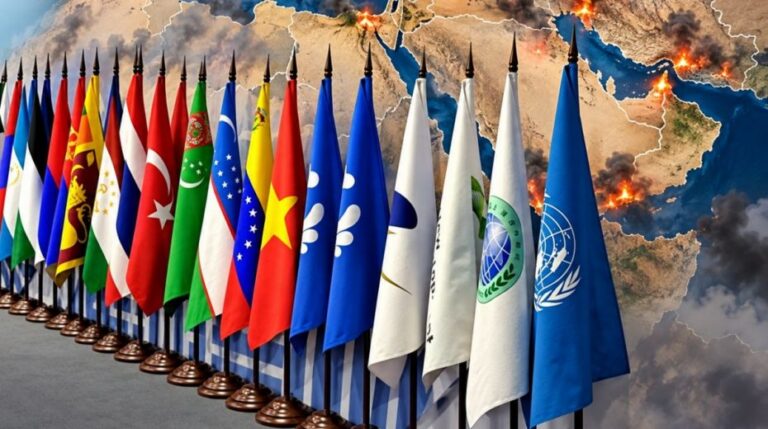
Looking beyond immediate crises, a long-term global realignment is shaping up with potential effects comparable to the Cold War’s end. The Great Eurasian Convergence—the growing alignment of China, Russia, India, Iran, Gulf states, and sub-Saharan Africa around an alternative system of trade routes, currencies, and institutions—finds its institutional expression in BRICS+ expansion and its catalyst in the Hormuz crisis.
BRICS+ now includes both Saudi Arabia and Iran—despite the tensions feeding the crisis—signaling a remarkable development. This bloc represents 46 percent of the global population, 37 percent of GDP by purchasing power parity, 44 percent of oil production, and over 55 percent of proven natural gas reserves. These are not marginal, fringe nations seeking visibility but the economic and demographic majority of the world coalescing in a new form.
Projections on growth and demographics underscore this shift. Goldman Sachs Asset Management estimates that by 2035, BRICS+ countries will represent 50 percent of global GDP in PPP terms and two-thirds of worldwide growth. Although Europe and the U.S. will maintain higher per capita incomes, their shares of global trade and influence in international financial bodies will steadily decline.
The Hormuz crisis seems less a sudden incident and more the opening chapter of a developing narrative.
There is a certain historical irony noted by those observing geopolitical cycles: the modern trading order originated on land—via Silk Road caravans, Central Asian spice routes, and Eurasian continental markets—before Portuguese and Spanish navigators shifted power toward the seas. For five centuries, maritime powers dominated. The 2026 Hormuz crisis could signal the start of a new era: the resurgence of land.
This is not a return to the old ways, but the birth of a new synthesis: high-speed rails replacing caravans, pipelines and data cables instead of caravanserais, digital currency payments replacing gold coins. The BRICS+ offer not a utopia but a practical infrastructure already underway, whose urgency and visibility the Hormuz crisis have underscored. This is.
The old international order will not vanish overnight. The dollar will remain an important reserve currency for decades, the U.S. Navy the world’s dominant maritime force, and Bretton Woods institutions will persist. Yet true hegemony—that unquestioned exercise of power appearing natural and inevitable—is ending. When a hegemonic era closes, it does not return.
Mackinder formulated his Heartland theory as a warning to the British Empire about a challenge arising within Eurasia. That warning came too late and was ignored. Now, 122 years later, his prediction unfolds—not through a single continental victor but as a necessary rebalancing of a system long without a center of gravity.
Land is reclaiming what the sea once dominated, and the Strait of Hormuz—that narrow stretch between Oman and Iran—is where history has decided to turn the page.
About the Author