Ironically, we could ask: “what would have happened if enlargement had not been a priority”. The fact that never in the history of the EU has 13 years passed without enlargement speaks more to the priority this process has been than political declarations about the importance of enlargement as a high strategic priority. If this is the success of enlargement, then we do not know what the failure could be.
It has been over a decade since the European Union last expanded. Croatia’s accession in the summer of 2013 marked the 28th member state, but since then, the EU has not grown further. In fact, the Union contracted with the departure of the United Kingdom, which reduced its population by more than 65 million and led to a significant budgetary loss. Brexit unquestionably weakened the EU’s global standing while diminishing the UK’s own influence. Throughout these 13 years, the narrative remained that enlargement is essential, reinforcing the EU both strategically and economically, fostering peace and prosperity across Europe, and boosting the bloc’s global position.
Curiously, one might wonder, “What if enlargement had not been considered a priority?” The mere fact that no previous period in EU history has lasted 13 years without expansion suggests this process has held considerable importance, beyond mere political rhetoric dubbing it a high strategic aim. If this prolonged pause is deemed a success, it’s challenging to imagine what failure might look like.
When exploring reasons behind the halt, attention often turns to candidate nations slow to implement necessary reforms and meet criteria. Equally significant is the reluctance from some EU member states unwilling to facilitate enlargement. The fatigue after the massive influx in 2004—when 10 countries joined simultaneously—and later in 2007, when two more were admitted, sparked skepticism. Instead of embracing enlargement as a grand unifying project for the continent, criticism grew, blaming enlargement for various EU challenges. With candidate countries hesitant to push reforms, the EU had little incentive to accelerate integration, and when candidates doubted the benefits despite fulfilling prerequisites, reform momentum stalled.
Currently, talk surrounds a “renewed momentum” in the enlargement agenda, accompanied by claims of growing support among EU citizens for admitting new members. Surveys indicate over 56% of EU residents favor enlargement. However, support is uneven: major powers like Germany and France still harbor significant opposition among their populations, a critical factor given their dominant roles in EU policy-making, including enlargement decisions. This imbalance isn’t countered by rising enthusiasm in countries like Denmark and Sweden.
Both Germany and France have historically approached enlargement with caution. France has often expressed opposition openly, while Germany tends to support the process verbally but engages less vigorously in its advancement within Brussels. Occasionally, Germany has been a rare voice obstructing progress, pushing for stricter reforms, more rigorous conditions, and changes in accession procedures.
Recently, German Chancellor Merz proposed a novel approach to progress candidate states’ status prior to full EU membership. His plan designates Ukraine a “special case” by granting it “associated membership,” while suggesting “observer status” for others, including Western Balkan countries. Under this arrangement, these nations would send representatives to EU bodies, join meetings and discussions without voting rights, and receive limited benefits from common policies, yet remain excluded from the EU budget—an essential consideration for Germany as the largest financial contributor.
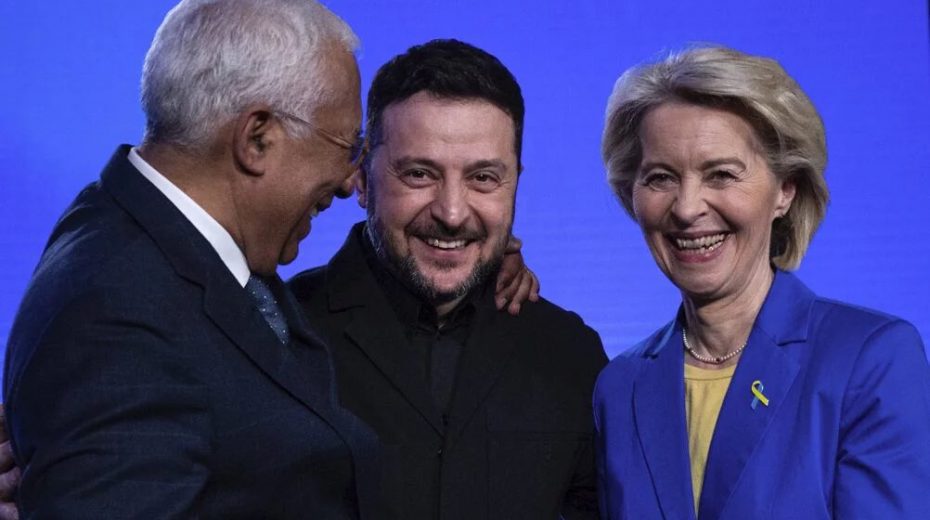
The Chancellor communicated these ideas through a “non paper” addressed to key EU figures: European Council President Antonio Costa, European Commission President Ursula von der Leyen, and the Cypriot President holding the EU Council’s rotating presidency until June’s end. Merz expressed confidence that other EU leaders would endorse this concept and anticipated ongoing debate in the near future. He emphasized that these measures wouldn’t require new treaty ratifications and reaffirmed that full membership remains the ultimate goal.
Merz’s proposal is among various concepts recently introduced regarding EU expansion. This trend suggests the EU may be transforming into a forum of “innovative ideas” where discussion prevails but substantive change is elusive. This dynamic has rendered the EU nearly incapacitated in presenting a unified stance on global affairs. With multiple competing voices, the EU lacks coherent influence. Currently, countries like Qatar, Pakistan, and Turkey wield more sway in major international conflict negotiations than the EU. The bloc is sidelined in efforts to resolve Russia’s invasion of Ukraine, tensions between Iran and the US, conflicts involving Israel, Hezbollah in Lebanon, and Gaza, as well as energy price determinations. Though eventually called upon financially to address consequences, the EU’s practical role remains limited. Even where it is involved, such as mediating Kosovo-Serbia dialogue, outcomes have fallen short. Challenges are mounting in Bosnia, and the EU holds little leverage over Serbia’s political factions. Rising ethnic tensions loom in North Macedonia—a country that exemplifies the EU’s failure to fulfill promises even when candidates comply with all demands. If success eludes the EU within its immediate neighborhood of the Western Balkans (the only regional exception being Kosovo, which does not share an EU border), then its aspirations on the global stage lose credibility. Failures in the Balkans highlight errors, disingenuousness, alignment with authoritarian leaders, and lack of genuine commitment. Miroslav Lajcak, long a prominent EU figure in the Balkans, has notably displayed affinity toward the Russian Foreign Minister, at a time when the EU prioritizes counteracting Russian influence in the region.
Germany’s newest proposals have met with lukewarm or negative feedback from candidate countries. Ukraine voiced disapproval, while others hesitate to critique Germany’s plan openly. It remains unclear why Montenegro—which is nearing accession within a few years—would back this idea. For others, the concept might hold some appeal, but the value seems questionable if they participate in discussions without real decision-making power. Enlargement requires not incremental stages, but stronger and sincere political commitment from major players like Germany and France to drive genuine accession. Proposals offering intermediate statuses risk unnecessarily prolonging the enlargement process.
Original article: www.koha.net
About the Author