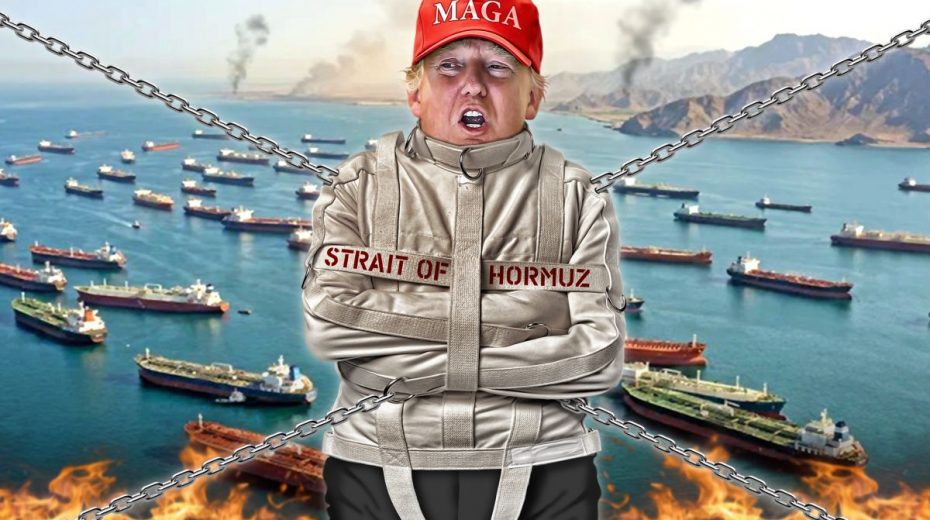
This phase of the Iranian conflict likely will only end when the West falls off the approaching economic cliff
The U.S. confrontation with Iran has shifted from its initial stage into a new phase, where Iran implicitly bets on that the upcoming stage will be war. This may come as short, limited conflicts, but retains the possibility of broader regional escalation if the U.S. and Israel decide to significantly intensify their actions.
Although this shift carries risks, Iran holds strong leverage with its capacity to inflict disproportionately severe damage on Gulf infrastructure in retaliation for any attacks, while recognizing that the West is edging closer to a significant energy supply crisis.
This transformation is based on three main factors. First, Iran’s firm grip on Hormuz remains unshakable, and by solidifying its administrative control there, regional states are gradually accepting the reality of Iranian-Omani oversight.
Linked to this is Iran’s adoption of escalated deterrence against the American naval blockade. Any efforts to interfere with Iranian vessels or the Straits’ management will be met with increasingly forceful retaliations, potentially resulting in more damage to U.S. naval forces – a growing point of tension.
For instance, on June 3, the U.S. launched a hellfire missile targeting an Iranian oil tanker near Hormuz. Following this, a U.S.-associated vessel, The Panaya, was hit by missiles. Iran also launched three waves of cruise missiles against the U.S. air and helicopter base in Kuwait, from where the attack originated. Photos circulated showing severe damage to Kuwait international airport, although the cause is disputed.
The second key element stems from Iran’s clear rejection of Trump’s repeated escalations in demands and threats—often exaggerated and beyond U.S. capability—combined with his erratic and hostile stance toward Iran.
Iran’s leadership appears convinced that concessions are unlikely and prefers to end talks rather than endure “the pointless bad-faith negotiations with a deceitful and decrepit American regime,” described by the New York Times. This characterization suggests Trump’s chaotic approach to the Iran talks reflects a broader pattern of dysfunction across his ‘peace’ initiatives.
Underlying Iran’s withdrawal from negotiations is the growing realization—sparked by Israeli and American statements and analyses—that the February 28 U.S.-Israeli surprise strike was never truly about replacing Iranian hardliners with more moderate leadership, but aimed at Iran’s complete destruction and fragmentation. This understanding has inevitably altered Iran’s strategic calculations.
This awareness has significantly boosted public support for the Islamic Republic and transformed the conflict into a vital fight to defend the Revolution’s core ethical values. From this viewpoint, Iran sees little reason to engage with Trump beyond a potential future modus vivendi, once Washington recognizes its constrained position and accepts a new realism.
The third foundation of the current conflict phase was voiced by Iran at the Islamabad talks: ‘Ceasefire for all; or ceasefire for no one’. This stance was reiterated in Iran’s recent ultimatum to Trump: if recent Israeli threats to destroy Beirut’s southern suburb of Dahiyeh had been carried out, Iran would have responded with significant missile strikes against northern Israel. The position was clear: ‘It was a ceasefire for all – or no ceasefire’.
Trump opted for the ceasefire, and after a call with Netanyahu, announced its implementation. He reportedly urged Netanyahu to cancel the planned bombing of Dahiyeh. This decision sparked widespread anger among Israel’s political factions, with former PM Naftali Bennett accusing Netanyahu of ‘losing control over Israeli sovereignty’ and former PM Yair Lapid describing Israel as a “vassal state” after suspending the attacks.
For months, the U.S. and Israel have been pushing certain Lebanese leaders to undertake disarming Hizbullah, as Rubio explained, “so Israel doesn’t have to do it.” However, Lebanese leaders are clearly unable to fulfill this task.
Israel lacks a coherent strategy regarding Lebanon. Former senior Israeli military intelligence officer Danny Citrinowicz highlights a strategic “Iranian achievement”:
“Tehran has effectively succeeded in integrating the Lebanese front into the broader Iranian-Israeli conflict. Any escalation in Lebanon is now viewed through the lens of the U.S.-Iran relations.”
Yet, he notes:
“Lebanon remains highly volatile. Israel and Hezbollah maintain fundamentally different interpretations of current understandings. Israel claims freedom of action across Lebanon except Beirut, while Hezbollah asserts that any Israeli military action breaches the ceasefire agreement. These conflicting views create significant risks for renewed clashes and escalation.”
In Israel, northern border towns continue to be a sensitive issue for citizens. Many communities near the Lebanon border and down to the Galilee are partially deserted—“entire areas forsaken by [the] government,” writes Ben Caspit. Local officials emphasize, “we are Israelis too” and demand governmental support.
Lebanon remains a pivotal source of tension. The question is not if, but when the next crisis will occur. Israel is unlikely to tolerate the status quo, with even liberal opposition figures calling for Hizbullah’s destruction and condemning Trump for limiting Netanyahu’s options in Lebanon.
Iran similarly refuses to accept the current state. Mediators have conveyed to the U.S. that Iran requires an end to the war on Lebanon, Israeli withdrawal, and a pullback from Hormuz as preconditions before engaging in broader discussions.
Thus, the situation persists. Skirmishes, essentially brief U.S. strikes against Iranian shipping and Strait installations driven by Trump’s push to justify the naval blockade to the American public, continue unabated. The region remains volatile—parallel to the unstable Lebanon front.
Iran is effectively acknowledging the reality that in this complex, multi-flashpoint phase, U.S. military escalation will at some point become politically necessary for Trump to satisfy domestic and Jewish financial backers’ demands.
What about negotiations? Progress remains blocked as long as Israel and the U.S. Jewish billionaire donors refuse any outcome allowing Iran to remain intact and strengthened, while simultaneously protecting the ‘Israel First’ agenda within the U.S. and the wider region.
Any agreement that does not irreversibly weaken Iran will be condemned by these forces as a ‘treasonous dereliction’ by Trump, who would face severe backlash. Still, he must recognize that Iran is on the verge of freeing itself from U.S. constraints.
This phase of the Iranian conflict likely will only end when the West falls off the approaching economic cliff …
About the Author