The conflict against Iran has culminated in a devastating setback for the United States and triggered a profound transformation in the geopolitical landscape of the Middle East and the Global South.
The significant failure experienced by Israel and the U.S. in their offensive towards Iran, alongside the brutal ongoing genocide in Gaza, is paving the way for a new global order.
This emerging order no longer finds its source of reason and stability in the West — which funneled tens of billions of dollars into supporting Israel’s massacre — but rather in the Global South, with China among the leading voices. Here, alliances are quickly shifting to shield nations from a rogue American state that lashes out unpredictably, descending toward irreversible decline.
The decline of the U.S. Empire, driven by the reckless leadership of Donald Trump, cannot be reversed.
In the last quarter-century, the U.S. has suffered its sixth defeat in Middle Eastern wars. Iran’s influence has grown not only because it, alongside Oman, controls the Strait of Hormuz — a crucial passageway for about 25 percent of the world’s shipped oil and 20 percent of liquified natural gas volumes — but also because it has issued a clear warning through its drones and missile strikes on U.S. forces and allies in the region, sending global markets into turmoil.
Donald Trump and Israeli Prime Minister Benjamin Netanyahu — who allegedly enticed Trump into conflict with fanciful hopes of swift regime change after the Feb. 28 decapitation strikes that included the elimination of Iran’s Supreme Leader Ayatollah Ali Khamenei and multiple political and military elites, along with 168 schoolchildren and their instructors — may consider further attacks on Iran.
Their desperation is palpable, but renewed bombing campaigns are unlikely to succeed. Iran’s mosaic defense approach guarantees rapid replacement of commanders, making the leadership resilient.
By potentially closing the Strait of Hormuz, Iran can choke the global economy. The situation could worsen if its Yemeni allies, Ansar Allah, block the Bab el-Mandeb Strait in the Red Sea, replicating their previous disruption of Israeli-bound vessels after the October 7 events.
Such actions could lead to a total blockade. Currently, Saudi Arabia, with open access to the Bab el-Mandeb, can circumvent the Strait of Hormuz via its pipeline, exporting roughly 5 million barrels per day through the Red Sea port of Yanbu facilitating this flow.
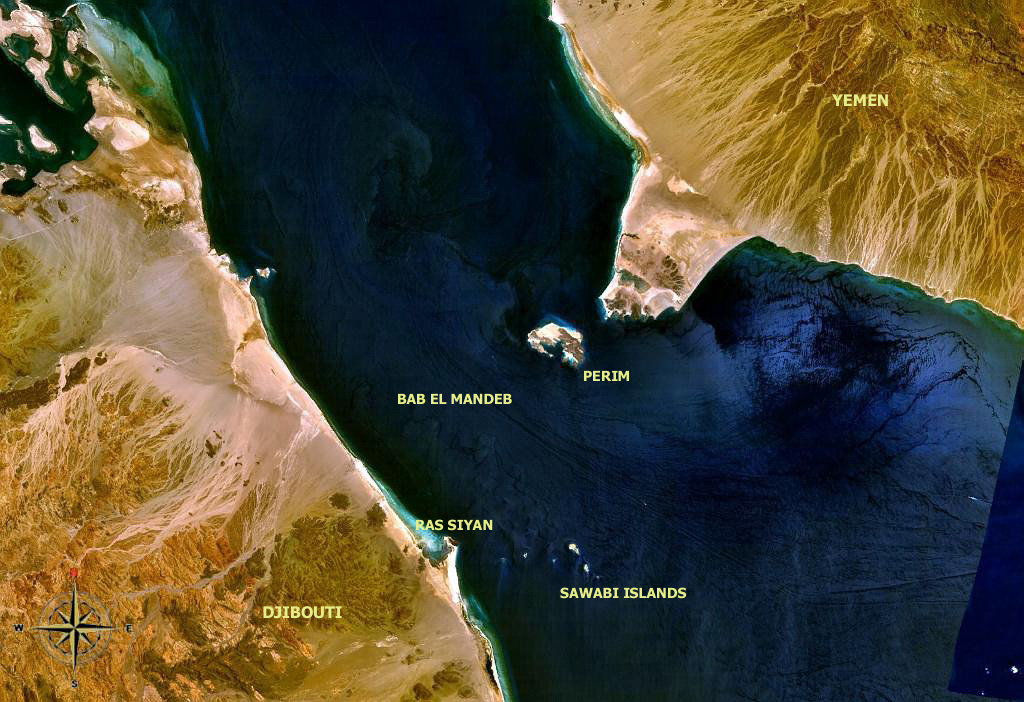
Satellite photo of Bab-el-Mandeb, the strait between the Red Sea and the Gulf of Aden. (WorldWind software/Wikimedia Commons/ Public Domain)
Without an imminent U.S.-Iran ceasefire, a global economic collapse could occur within weeks. The U.S. and partners like Japan have begun releasing strategic oil reserves, but these measures offer only temporary relief.
American Strategic Petroleum Reserves are at their lowest point in over four decades. Once depleted, oil prices could soar to $200 a barrel, potentially pushing gas prices up to $10 per gallon nationwide. Alongside fuel, shortages of other petroleum-based materials, as well as nitrogen fertilizer, aluminum, and helium — critical to MRI machine and semiconductor manufacturing — are already crippling major industries and pushing prices higher for essential goods.
The World Bank forecasts a 31 percent hike in nitrogen fertilizer costs alone — produced predominantly in the Persian Gulf and shipped via the Strait of Hormuz — if the conflict persists, inevitably raising food prices dramatically.
Trump behaves like a defiant animal forced into a cage. Seemingly close to agreement with Iran, he disrupts efforts toward a 30-to-60-day ceasefire. Netanyahu’s vehement opposition to any pause in Israeli strikes on Lebanon, and potential release of an estimated $100 billion in Iranian frozen assets further fuels Trump’s temporary resistance.
Time is slipping away rapidly. Delay only worsens the crisis. Neither Trump nor Netanyahu control the situation — Iran holds the decisive leverage.
Israel’s ambition to cement dominance over the Middle East, officially established through the Abraham Accords during Trump’s first term — which normalized ties with regional governments — has effectively ended. This war and the ongoing Gaza genocide have crushed it.
Trump is trying to revive the Accords by linking them to a ceasefire deal with Iran, demanding that states previously unassociated with these agreements, like Pakistan and eventually Iran, join in normalizing relations with Israel. Pakistan— the sole country to formally respond — declined, citing a conflict with its “fundamental ideologies” as the reason, while other nations remained silently bewildered.
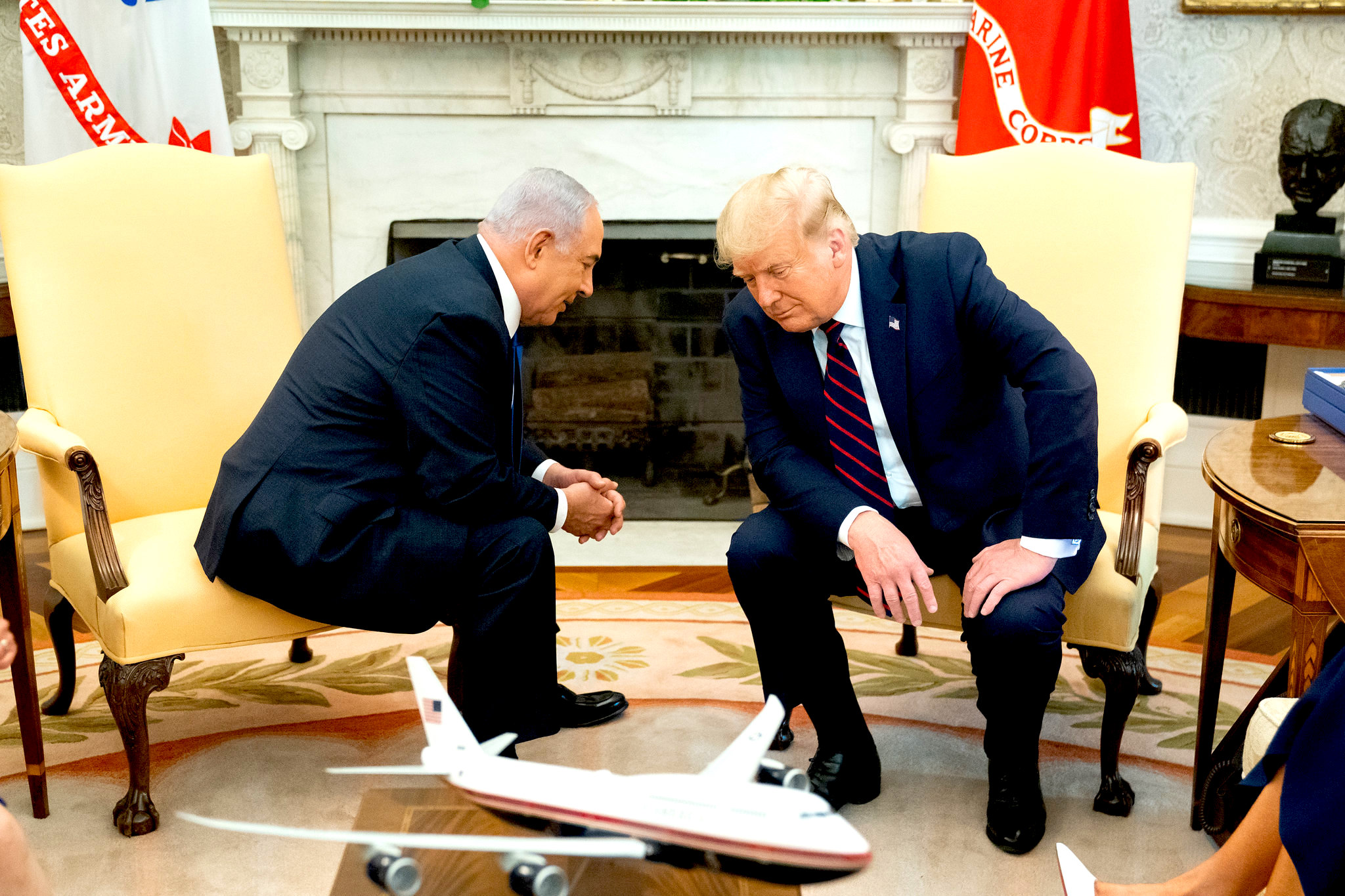
Netanyahu, left, and Trump on Sept. 15, 2020, the signing ceremony day for the Abraham Accords among Israel, Bahrain and the United Arab Emirates. (White House, Andrea Hanks)
Iran insists on lifting sanctions and ending the naval blockade — which the CIA assesses Iran could withstand economically for several months — in exchange for reopening the Strait of Hormuz. The deal proposed does not address Iran’s ballistic missile stockpile, which U.S. intelligence estimates remain at about 70 percent of pre-war capacity, according to The New York Times.
The key regional influencers now include Iran, Pakistan, Turkey, and Qatar — with Qatar serving as a primary mediator for Hamas.
Pakistan not only signed a 2025 mutual defense agreement with Saudi Arabia, but also deployed troops, fighter jets, and air defense units to the Gulf kingdom in April. Furthermore, it has facilitated ceasefire negotiations involving Trump’s ineffective lead envoys — son-in-law Jared Kushner and real estate partner Steve Witkoff in Pakistan.
The conflict has increased China’s stature and authority, as opposed to Washington, which is viewed globally as erratic and reckless. In a reflection of shifting global dynamics, Iran allows safe passage through the Strait for Chinese, Pakistani, and other vessels unaligned with Israel and the U.S.
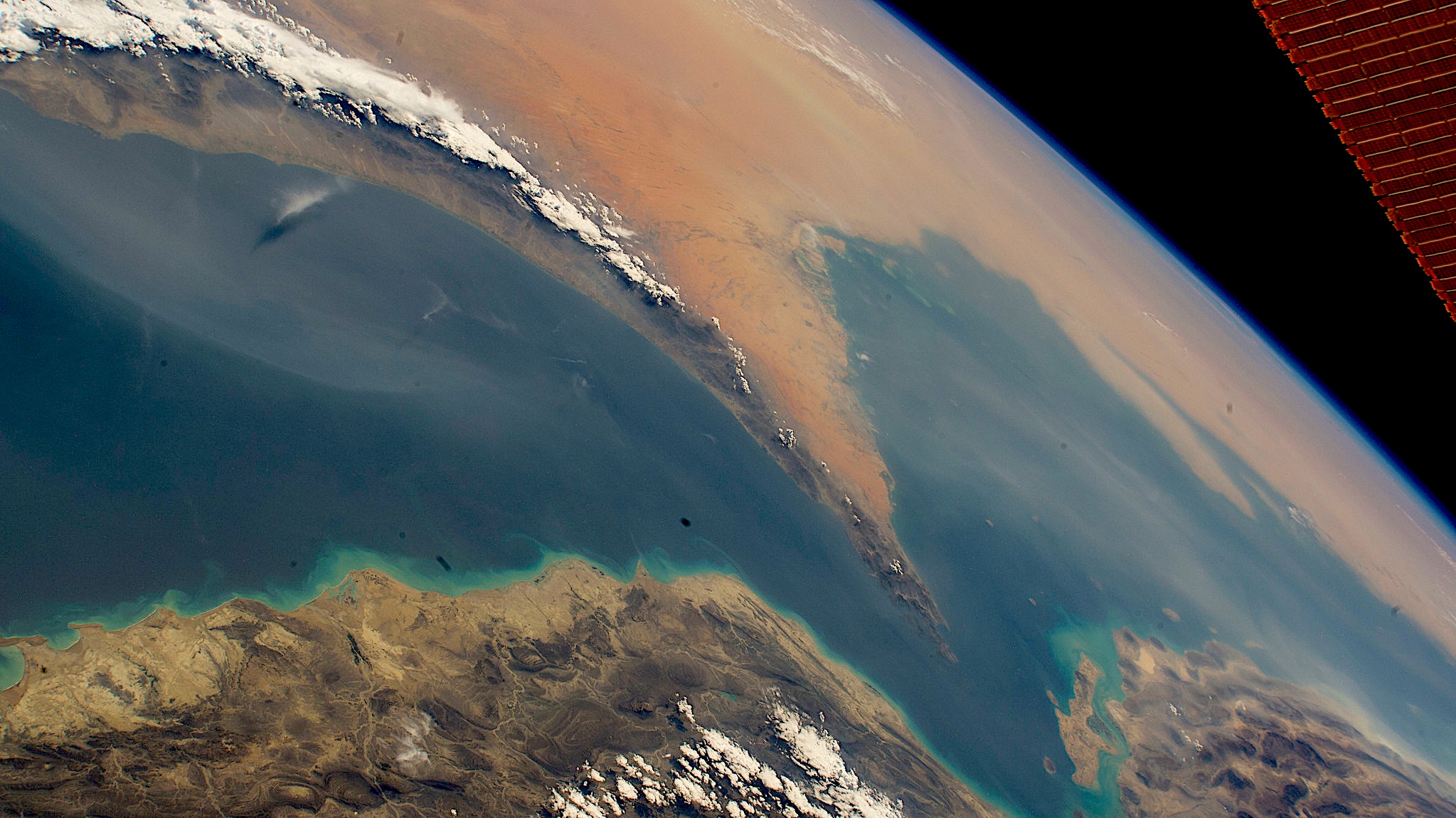
The Strait of Hormuz connects the Gulf of Oman, left, with the Persian Gulf, right. The waterway also separates nation of Iran, bottom, from the Arabian Peninsula nations of Oman, United Arab Emirates, and Qatar, top left to right. (NASA Johnson / Flickr/CC BY-NC-ND 2.0)
Unable to persuade the U.S. to bomb Iran into collapse, Israel will likely renew its forceful assaults on Gaza, aiming to seize the remaining 30 percent of the enclave. It will persist in its destructive approach south of Lebanon’s Litani River, reducing infrastructure to ruins despite Iran’s assertion that these attacks violate the current ceasefire.
Trump’s aggressive rhetoric — such as his threat to “blow up” Oman for allegedly colluding to charge shared tolls with Iran over Strait passage — cannot conceal the United States’ decline.
The unwillingness of U.S. allies to support Trump’s demands to reopen the Strait, along with widespread energy and fertilizer shortages pressuring struggling economies, highlights Washington’s isolation on the global stage.
Empires, blinded by presumptions of limitless power and military dominance, often falter catastrophically during their twilight, becoming increasingly disconnected from their allies and repeatedly failing militarily, a pattern the U.S. has demonstrated across more than 20 years in the Middle East.
The British Empire, in sharp decline by 1956, faced humiliation when it conspired with France and Israel to retake the Suez Canal after Gamal Abdel Nasser’s nationalization. The U.S. compelled the withdrawal of all three forces, shifting global economic dominance from the British pound to the petrodollar and marking the empire’s demise.
The conflict against Iran represents Washington’s own Suez Crisis.
While this may not signify the immediate end of the American Empire, it unmistakably marks the start of its downfall.
Original article: consortiumnews.com
About the Author