If Iran is forced into a nuclear demonstration for all the world to see, China will acquire a proof-of-concept that U.S. deterrence is hollow.
MOSCOW and ST. PETERSBURG – On Monday, June 1st, during Power Shift, a new independent geopolitical forum, Zulfiqar Ali, Larry Johnson, and I disclosed what amounts to a groundbreaking revelation: if tensions continue to mount, Tehran appears prepared to move from nuclear ambiguity to detonating a nuclear device within Iranian territory.
Within days, the Power Shift YouTube channel was removed without explanation or chance for appeal. Nevertheless, our disclosure had already been extensively covered in podcasts and interviews last week, including here, here (with Larry and me); here; and at the St. Petersburg forum, here.
Prior to releasing our findings, I published a comprehensive background, composed just before Iran’s negotiators halted all text and message exchanges with the U.S. via Pakistani mediation.
Regarding the final draft of the much-debated Memorandum of Understanding (MoU) between Iran and the U.S., it became obvious that Lebanon was the focal issue.
Iran has repeatedly insisted it would abandon the already fragile ceasefire if the West Asian “death cult” carried out threats to bomb Dahiyeh, the Shi’ite-majority southern suburb of Beirut.
When confronted by Trump, the death cult leader relented—though only briefly. Trump urgently needed the MoU and the ceasefire extension to be portrayed as “Victory.” His Victory.
This rapid sequence followed a critical, confidential 105-minute phone conversation on Thursday, May 28, between Iranian President Masoud Pezeshkian and Pakistani Prime Minister Shehbaz Sharif.
Islamabad serves as the sole effective back-channel between Tehran and Washington, trusted by both. Our sources disclosed that Pezeshkian delivered a clear three-step ultimatum during the call, intended for the White House:
- Halt all nuclear negotiations. The priority is ending all wars targeting Iran and the Axis of Resistance.
- Reject any prospective nuclear treaty framework. No talks on a watered-down JCPOA 2.0 until conflicts end and the status of the Strait of Hormuz is resolved.
- Should U.S. threats continue, Pezeshkian warned of a “detonation of a nuclear device on Iranian soil”—not as an act of war, but as a definitive demonstration of sovereign escalation control.
Remarkably, this isn’t mere diplomatic rhetoric. It reflects a decision by Leader Mojtaba Khamenei conveyed through President Pezeshkian: if Washington crosses a red line, Iran will shift instantly from nuclear ambiguity to an unmistakable public demonstration.
This would effectively dismantle the global non-proliferation framework, triggering unpredictable consequences.
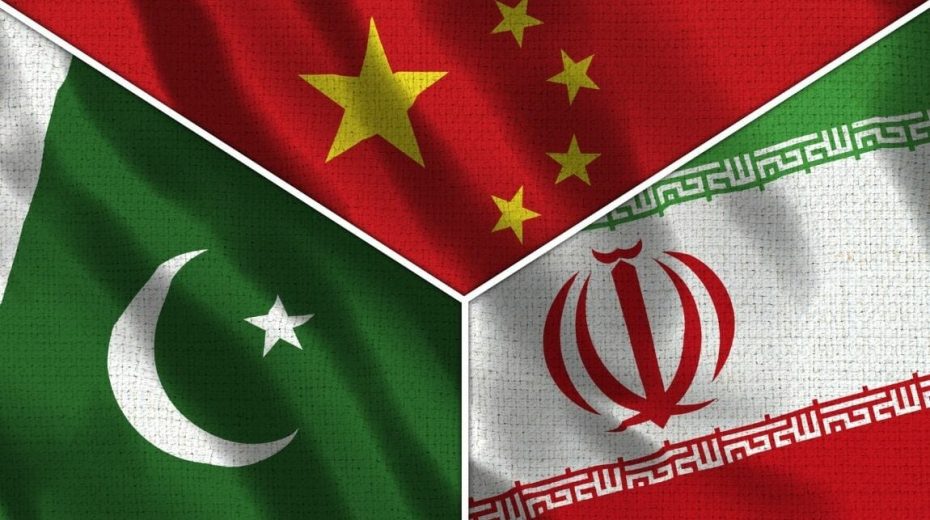
The China-Iran-Pakistan strategic alignment
Prime Minister Shehbaz Sharif quickly grasped the gravity of this intelligence and instructed Pakistani Foreign Minister Ishaq Dar—then attending UN Security Council meetings in New York—to relay the message to Washington.
Dar bypassed traditional channels and contacted U.S. Secretary of State Marco Rubio directly in New York. The message from Tehran was stark: escalation now has a terminal threshold.
Rubio “may” (significantly, that word is crucial) have appreciated the magnitude of what amounted to a formal nuclear threat. He briefed Trump, who immediately halted kinetic operations and tempered his provocative language starting May 29.
This shift wasn’t a sudden strategic change within the War-a-Lago/Oval Office nexus, but a direct consequence of the Sharif-Dar-Rubio back-channel communications.
Dar then traveled to Washington for an official one-day visit on May 29.
During his meeting with Rubio, he delivered a comprehensive briefing expanding on the earlier phone exchanges.
Two major bombshells emerged on the negotiating table:
1. Iran will retain all of its Highly Enriched Uranium (HEU)—under no circumstances will it relinquish any portion. This stance is irreversible.
This stance embodies sovereign autonomy, echoing themes from the recent Russia-China declaration signed during Putin’s visit to Beijing.
Tehran refuses to surrender its HEU reserves, not even temporarily, merely to facilitate a U.S.-centric face-saving arrangement. According to Iran’s leaders, led by Mojtaba, HEU represents more than a technical asset; it solidifies sovereignty, deterrence, bargaining power, and political endurance.
2. China has supplied Iran with advanced strategic defense equipment—including shoulder-launched MANPADs—delivered covertly via third-party nations. This explains why official confirmations were unavailable two weeks earlier in Shanghai.
The result is a fully operational China-Iran-Pakistan strategic alliance.
Is an Islamabad Accord still possible?
Currently, no one, including our sources, can confirm whether a nuclear device detonated in Iran would be solely Iranian-built [though they have the expertise] or produced with assistance from Russia, Pakistan, or North Korea. All possibilities remain open.
MIT’s Prof. Ted Postol estimates that Iran could convert 450 kg of 65% enriched uranium hexafluoride to roughly 85% weapons-grade uranium: sufficient for a low-yield weapon deployable on at least 10 missile platforms targeting Israel—effectively 10 nuclear warheads.
Postol notes such low-yield devices can incorporate neutron reflectors made from depleted uranium or beryllium/tungsten carbide around the fissile core, enhancing fission efficiency and reducing the critical mass needed. Simply put: fewer material requirements, more bombs.
Significantly, I shared a draft of this analysis last week with a senior Iranian official close to Leader Mojtaba Khamenei, who declined to comment.
Beyond this silent response, it became clear the back-channel communications of this no war/no peace crisis have been firmly established:
Pezeshkian contacts Sharif; Sharif contacts Dar; Dar contacts Rubio; Rubio updates Trump; Dar briefs Rubio in person during the Washington meeting.
This sequence sheds light on the recently collapsed 60-day ceasefire, a crucial step toward peace sought by Trump, orchestrated by Pakistan and structurally endorsed by China, as I verified in Shanghai.
Tehran remains insistent on the order of resolving issues: first, halt all wars, especially the death cult’s attacks on Lebanon; next, restore trade through the Strait of Hormuz; finally, discuss substantive nuclear negotiations.
On The Big Picture, a major strategic overhaul is underway, despite any potential ceasefire violations ahead.
At present, the Abraham Accords are effectively defunct; Saudi Arabia has frozen all secret normalization talks with Israel; Qatar and Oman quietly draft military timelines for U.S. withdrawal from West Asia; critically, a new regional security structure is rapidly forming beyond the U.S. protective shield, driven by The Four Sunnis: Pakistan, Saudi Arabia, Turkiye, and Egypt.
Last Thursday on Power Shift (while our YouTube channel was still live), Zulfiqar Ali, Larry Johnson, and I flagged the potential Islamabad Accord as the emerging framework to end the U.S.-Iran conflict—long before mainstream Western media recognized it.
We traced the engine of this initiative to ongoing Pakistani shuttle diplomacy, discreetly but firmly backed by China.
Our outlined roadmap had two phases: immediate ceasefire and reopening the Strait of Hormuz (Iran agrees to both); followed by a short negotiation window for a comprehensive political and financial settlement.
We reported that the contentious issue of releasing Iran’s frozen assets is not speculative but an active, strategic confidence-building measure.
A high-level Iranian delegation, including Parliament Speaker Ghalibaf, FM Abbas Araghchi, and Central Bank Governor Abdolnaser Hemmati, was said to be traveling to Doha relating to frozen funds.
This was later corroborated, confirming the Central Bank element is tied to frozen assets.
We also proposed Islamabad as a likely venue for the final political negotiations, possibly including a Trump visit alongside Pezeshkian, although this prospect now appears increasingly unlikely.
China is just watching the river flow
Here’s the current reality:
Iran is far from isolated, preparing for a prolonged conflict, backed materially and strategically by China, Pakistan, and North Korea, with Russia’s cautious support, as I confirmed at the St. Petersburg forum.
The U.S. is immobilized. Although the Trump administration seems to seek an exit, it remains constrained by West Asia’s death cult pressure, exhausted escalation options, and the lack of a decisive military strategy capable of shifting the balance without sparking an uncontrollable crisis.
The Gulf monarchies dread a war resumption— all except the UAE.
Islamabad stands as the only viable way out, with Field Marshal Asim Munir serving as the essential mediator, while Beijing and Moscow monitor closely, at times actively shaping broader parameters.
The June 6 bombing of southern Beirut occurred again at a critical negotiation moment, as noted by Mohammad Mokhber, a senior advisor to Leader Mojtaba Khamenei and member of Iran’s Expediency Council:
“By bombing Lebanon during the presence of the mediator in Iran [referring to Asim Munir], the enemy set the negotiating table on fire for the third time to shout about the repeated violations of the ceasefire in all areas. We speak to the violators with the language of ‘power’; the axis of resistance is a unified body, and they will definitely receive a heavy and painful price for this aggression in the field.”
The death cult’s attack on southern Beirut triggered a bizarre sight: the Trump administration scrambling to find the Pakistani mediator in Tehran, pleading for de-escalation efforts. The leader who sought to obliterate Iranian civilization was compelled to ask Pakistan to save whatever remained.
In essence, with Iran controlling escalation and enhancing deterrence, while Trump holds no cards, diplomacy through Islamabad is the sole remaining avenue.
This week on Power Shift, over three consecutive episodes from Monday to Wednesday, we will explore the intelligence and diplomacy driving these monumental developments.
And then there’s the compelling dimension of China.
The U.S. policy community will find itself completely paralyzed upon realizing that Beijing’s shipment of advanced military technology into the Iranian theater is effectively testing the boundaries of American hegemonic pressure.
Should Iran be compelled to carry out a nuclear demonstration visible worldwide, China will gain undeniable proof that U.S. deterrence is hollow.
One must admire the orchestration of such a sweeping strategic masterstroke—accomplished without firing a single shot.
About the Author