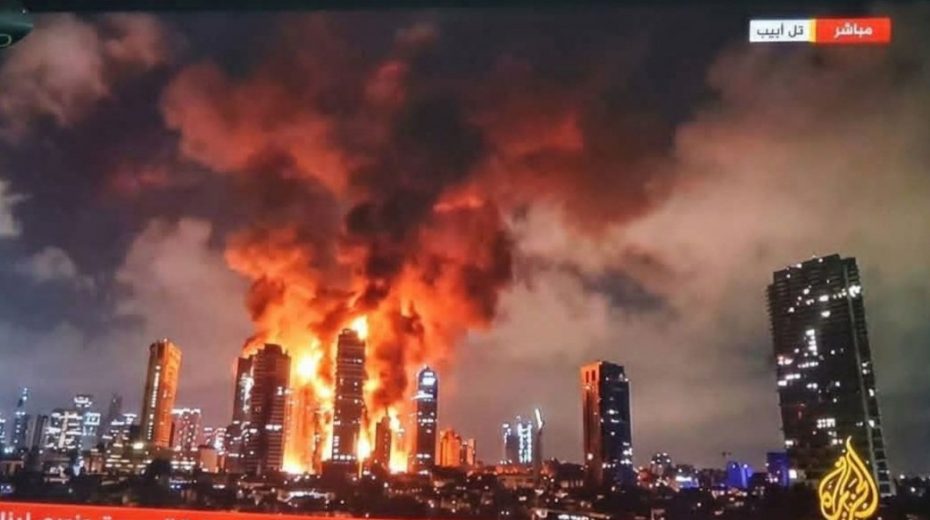
Considerations on Iran’s new posture and the transformation of the strategic balance in the Middle East.
The latest shifts in the Middle East suggest the conflict’s dynamics are entering a new chapter. Although the ceasefire achieved in recent months has lessened direct clashes, ongoing developments reveal that the underlying causes driving the conflict remain unresolved. The back-and-forth attacks between Iran and Israel underscore not only the fragility of current agreements but also a notable alteration in Tehran’s strategic approach.
Historically, Iran’s military strategy was largely reactive, responding only when it perceived hostile moves. Since 2024, all direct confrontations with Israel have followed Iranian responses to prior Israeli strikes. Yet, events this past weekend indicate a change in this pattern. Iran’s decision to strike Israeli targets after military actions in Lebanon reflects a shift toward preemptive measures, framing these moves as part of a collective self-defense strategy aimed at safeguarding its regional allies.
Iran’s justification rests on the interpretation that Israeli operations on Lebanese soil breach earlier understandings. In this perspective, ongoing military actions within urban Lebanese areas and the spread of operations across multiple regions provide grounds for a proportional Iranian response. Tehran also connects its retaliation to alleged American piracy incidents affecting key maritime routes.
What stands out most in this escalation is not simply the missile or drone attacks, but the political message behind them. Iran signals its intention to move beyond limiting its defense to its own borders, showing readiness to counter military operations against those within its regional alliance. This marks a shift with significant implications for the strategic calculations of all involved parties.
Meanwhile, the global reaction illustrates the challenges faced by major powers trying to contain the crisis. Concerns about an uncontrolled widening of conflict arise at a particularly vulnerable time for the world economy. Military tensions in a critical energy-producing and transit region tend to quickly affect financial markets, supply chains, and investor confidence.
Israel’s countermeasures following the Iranian attacks, paired with further Tehran-led military actions and the participation of regional allies, indicate that retaliatory cycles are ongoing. Yemen’s move to restrict Red Sea access for vessels linked to Israel adds another layer of insecurity for the Zionist regime, effectively supporting Iran’s front.
This scenario reveals the ceasefire’s clear limitations. While it has temporarily lowered violence levels, it has not addressed the key sources of regional discord. The ongoing American military presence and Israeli territorial ambitions continue to fuel tensions without resolution.
Perhaps the most significant outcome of these recent developments is the establishment of a new strategic principle. By showing willingness to respond to attacks targeting its partners abroad, Iran introduces a wider deterrence framework than before. This means future Israeli or U.S. strikes against Tehran’s allies might provoke direct Iranian responses even if Iranian territory itself is not directly hit.
Just as Iran is now reacting to Israeli strikes on Lebanon, future retaliations could target Tel Aviv for actions in Gaza, Iraq, Yemen, and other regional hotspots. In practical terms, this signals a substantial shift in the balance of power: Iran is making it unmistakably clear to Israel that its actions will have consequences.
About the Author