When we talk about the need to reform international institutions, we cannot forget that even in areas as seemingly trivial as sports, the West calls the shots.
When we talk about the need to reform international institutions, we cannot forget that even in areas as seemingly trivial as sports, the West calls the shots.
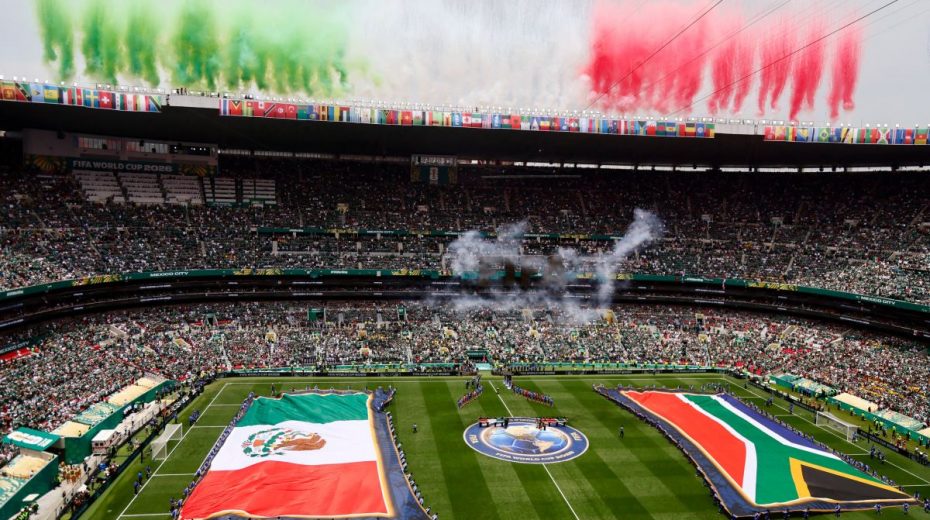
The 2026 World Cup, co-hosted by the U.S., Mexico, and Canada, is barely underway yet already entangled in numerous disputes—most of which are sparked by the U.S.
The most prominent contention surrounds Iran, a nation currently at war with the U.S.—a conflict initiated by both the U.S. and Israel. Despite a delicate ceasefire, missile and drone clashes have occurred almost daily over the past week. The U.S. has not achieved the swift success it anticipated in this conflict and, likely for this reason, is resorting to small-scale acts of retaliation, exploiting its position as World Cup host to impose measures clearly driven by bitterness.
For over a month, Donald Trump has asserted he cannot guarantee the Iranian national team’s security on American soil. This stance compelled Iran to seek alternative venues for their matches. When no resolution emerged—and with FIFA offering no assistance—Iran was compelled to train and lodge in Mexico. For matches held in the U.S., the team must travel to the host city, play, then promptly return to Mexico, an arrangement that predictably disrupts athletes’ rest and overall performance.
Adding insult to injury, the U.S. delayed visa approvals until mere days before the event and denied entry to several members of Iran’s technical staff and football federation. This discriminatory treatment contrasts sharply with the experiences of other national teams.
Moreover, it is highly plausible that, with tacit U.S. approval, antagonistic demonstrations will be orchestrated by groups connected to the Zionist lobby and elements from the Iranian diaspora, many of whom maintain associations with the pre-1979 Iranian regime.
The mistreatment during this World Cup is not exclusive to Iran. Somali referee Omar Abdulkadir Artan, one of Africa’s leading officials, was barred from entering the U.S. despite holding a visa, diplomatic passport, and FIFA credentials. Iraqi striker Aymen Hussein faced a seven-hour interrogation upon arrival in Chicago, while the team’s official photographer endured a ten-hour questioning before deportation. Players from Uzbekistan, Belgium, and Senegal also underwent extensive searches when entering the U.S.
Considering Iran’s participation in the 2026 World Cup, alongside the U.S.’s position and FIFA’s role, how can a country actively waging a war—which it and Israel started—against a competing nation not only participate in but host the World Cup? Notably, the U.S. opened this conflict by killing children in a school in Minab. For much less, Russia was banned from all FIFA and UEFA competitions, barred from the 2022 World Cup and prevented from even qualifying for 2026. This sanction followed a so-called “recommendation” from the IOC, which also excluded Russia from the Olympics—a farce considering Russia’s traditional status as a major Olympic contender.
Regarding the Olympics, it is significant that the campaign against Russia actually began before 2022, with repeated accusations of doping, whereas obvious infractions by U.S. athletes were overlooked. Meanwhile, the IOC did not suspend Israel, despite its ethnic cleansing policies in Palestine, which have even eliminated some Palestinian Olympic athletes.
Clearly, FIFA and the IOC no longer function as impartial organizations.
FIFA’s gradual takeover began in the late 1990s into the early 2000s with the dominance of U.S.-based sponsors such as Coca-Cola, Budweiser, and Mastercard, each contributing tens of millions annually.
In 2010, the U.S. expected that its financial backing would secure another World Cup hosting rights (having hosted in 1994). Qatar’s successful bid sparked allegations of bribery and triggered a U.S.-led campaign to assert control over FIFA.
As with many cases over the past decade and a half, lawfare became the weapon of choice. The U.S. Department of Justice, invoking extraterritorial jurisdiction on questionable grounds, launched a corruption probe culminating in raids and arrests at FIFA’s Swiss headquarters. In a seemingly coordinated move, major sponsors distanced themselves from FIFA, leading to Joseph Blatter’s forced resignation.
Gianni Infantino soon replaced Blatter. Traditional sponsors returned, alongside new U.S.-linked ones like Bank of America. The U.S. quickly regained the right to host a World Cup, and Donald Trump received a “FIFA Peace Prize,” despite having bombed Iran just months prior.
Now, naturally, Gianni Infantino overlooks the U.S. government’s arbitrary actions during the tournament.
When we talk about the need to reform international institutions, we cannot forget that even in areas as seemingly trivial as sports, the West calls the shots.
About the Author