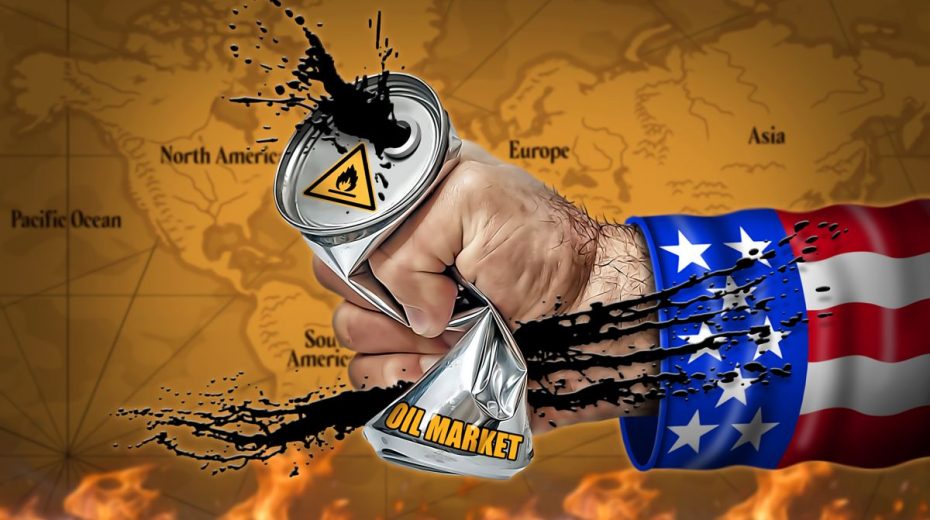
Trump’s chokehold on oil, tariffs, and tech backfired – forging a new era of self-sufficient economies and generational confrontation.
Professor Michael Hudson recently challenged those who claim the “decline of the U.S. hegemon,” noting that a decline suggests a cyclical process that eventually recovers. “But there’s never been any such thing statistically as a cycle … There’s no decline, it’s a crash” —
“We’re seeing the ending of an era, not a decline, but an abrupt change. And this change is not stemming from without: The ending of the American power did not result from any foreign civil war or other war against American dominance. The end came from the United States itself in trying to juxtapose its interest as hegemon against that of every other country”.
Hudson highlights a paradox:
“Every move taken to escape U.S. ‘decline’ has become the mechanism that delivers it. The U.S. went to war to reassert dominance – and proved it could no longer dominate … It waged forty years of maximum pressure to break Iran, and instead forged the very adversary that is now [facing down U.S. domination]”.
To maintain U.S. power, President Trump aimed to establish choke points over the global economy “through controlling oil — because everybody needs it,” according to Hudson.
Trump’s confrontations with Iran and Russia, alongside his attempt to contain China, represent only part of a broader strategy to uphold American dominance. Oil is a key element of this strategy, closely tied to dollar supremacy. His goal was to centralize control over energy resources, deciding who gets access (excluding Iran, Russia, and Cuba) while limiting supplies to competitors like China.
Meanwhile, fuel suppliers such as Russia face sanctions designed to restrict who can receive their oil and gas. Europe, acting as a client state to the U.S., appears willing to enforce this energy stranglehold by imposing numerous sanctions in its own right.
Another pillar of America’s global chokehold, beyond controlling oil, is the tariff policy. Trump employed tariffs as leverage to pressure compliant nations into aligning with Washington’s agenda, securing raw materials for the U.S., and granting entry into the so-called Washington ‘insider network’—the collective of American client states.
In reality, there are two such ‘insider networks’: one comprising Trump, his family and business associates, and another consisting of Trump’s international allies, such as Gulf states.
This tariff strategy essentially means: “we will disrupt your economies, through tariffs, energy restrictions, or financial measures, unless you join the U.S.-led network.”
Nevertheless, these tactics have encountered resistance, primarily from Iran, which continues to supply oil to China and its allies.
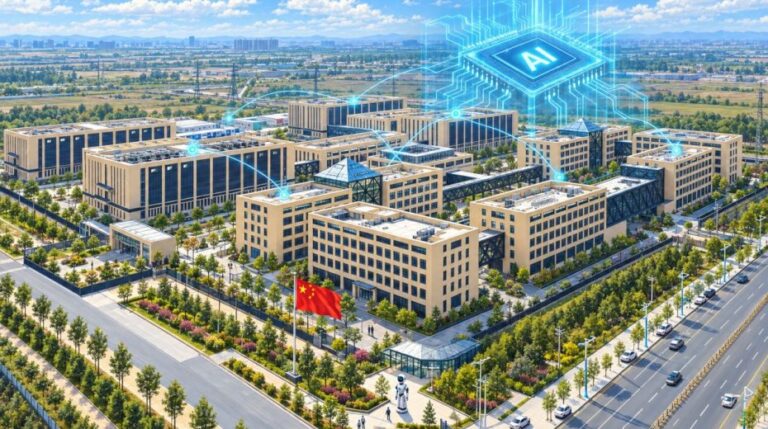
The latest component of this containment approach is the ‘Pax Silica’ initiative. Arnaud Bertrand details how the Trump Administration openly framed this policy:
“Countries sign up, align their supply chains with Washington, shut out China (politely referred to as those engaging in “non-market practices” and “unfair dumping”) – and in exchange they get access to the imperial technological ecosystem”.
“Lest there be any ambiguity, Under-Secretary of State Jacob Helberg — an ex-Palantir guy who is the architect behind the initiative — spells it out clearly: Whoever controls “compute and the minerals that feed it” will run the 21st century, and he wants to form a group of “aligned” countries around Washington in a “new economic security consensus” to make sure they’re the ones who do”.
Trump’s ‘Make America Great Again’ campaign has global consequences. The world cannot simply revert to pre-existing conditions. Wall Street and financial markets appear convinced a return to normal is inevitable, but many nations view the Iran conflict as a delimiter of a new era—especially since fossil fuels, fertilizers, and related goods remain critical to global functioning.
The Iran war is pushing nations to realize that achieving at least food self-sufficiency is essential to shield themselves from U.S. threats using trade weaponization in food, oil, fertilizer, and any commodity vulnerable to American control. This signals a shift toward economies that are more self-contained and autonomous, replacing the World Bank’s export-driven, debt-fueled development model.
At the St Petersburg Forum on 3 June 2026, Andrey Bezrukov, Professor at MGIMO and former SVR intelligence officer, spoke about the challenges posed by this changing global landscape. Although focused on Russia, his observations have worldwide relevance.
Laura Ru has summarized Bezrukov’s speech, where he asserted that Russia faces a new, extended confrontation with the West. This conflict marks a fundamental transformation in warfare, which will shape Russian policy and society for years to come.
‘Bezrukov stressed that the current military struggle is less about seizing land—which has lost much of its traditional importance—and more about wearing down key systems like infrastructure, command networks, technology, space assets, biological security, and the information sphere. “The West’s strategy in this war is very simple: avoid nuclear collision with us, from which they will emerge as losers. Therefore, they boil the frog on a slow fire”’.
‘He cautioned that Russia should prepare for a protracted conflict lasting possibly two to three decades. Throughout this time, Russia must learn to endure wartime conditions while advancing its economy.
A major point of his address was a fierce critique of Russia’s current stance. Bezrukov claimed the nation is “slow,” overly permissive toward enemies who have little fear, since many “red lines” remain unenforced and exist only on paper.
To meet this new reality, he called for a profound overhaul of both state and economy. Bezrukov advocated developing a dual-purpose system devoted simultaneously to growth and sustained defense. Key infrastructure elements like data centers, oil reserves, and communications hubs should be secured underground or shielded to standards comparable to nuclear plants. Additionally, he emphasized bridging the divide between military and civilian spheres and adopting more forceful policies. Russia cannot anticipate a swift return to peacetime and must accordingly reorganize its society, economy, and strategic approach.’
Bezrukov’s address has attracted significant attention due to its tone and its appeal for Russia to undergo psychological and structural changes in response to a generational era of conflict—an issue also explored extensively by Professor Sergei Karaganov.
Together, these perspectives illustrate a world undergoing profound restructuring in response to the aggressive posture of a faltering U.S. hegemon, as nations seek ways to shield their economies from American tariffs, energy constraints, technology restrictions, and dollar-based economic pressure, while adapting to the asymmetric geopolitical warfare ushered in by the Iran conflict.
Professor Hudson sums up,
“Iran is fighting for a way of life against people who want to deny them … of the ability to make their own future. This is what the fight is all about. And it is ultimately a moral fight that finds itself translated into an economic fight and a trade fight — and is leading to this [global] split”.
This moral, civilizational struggle versus the stark materialism of a radical Trump-era U.S. likely defines the civil and global conflicts of our time.
About the Author