But it might not even hold, as there are too many possibilities which could scupper it.
But it might not even hold, as there are too many possibilities which could scupper it in the 60 days where the U.S. is forced to negotiate with Tehran over its nuclear capabilities.
President Donald Trump appears to have accepted perhaps the most unfavorable agreement in the history of U.S.-Iran relations, revealing his eagerness to reopen the Straits of Hormuz and restart global shipping activities with the goal of reducing oil prices. Reports from the evening of June 14th suggest that both parties have tentatively agreed to what many are calling a “60-day memorandum,” aimed at securing Tehran’s commitment to dismantling its nuclear program within that timeframe.
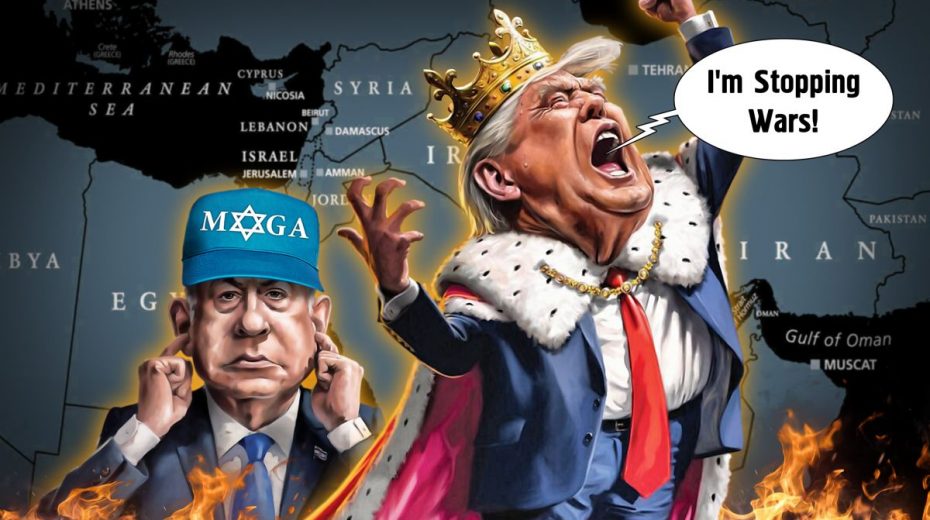
Even if a formal agreement is signed, any sense of reassurance might be fleeting due to numerous challenges that could undermine it at any moment. The real driver behind America’s Middle East foreign policy may be clarified in the upcoming months, as Trump’s connection with Benjamin Netanyahu is expected to be crucial. Analysts widely predict that Bibi may soon violate the ceasefire, possibly orchestrating a false flag operation to deceive Trump into believing Iran broke the deal, compelling him to join Israel in resuming conflict.
For the accord to remain intact, Israel would need to halt its confrontations with Hezbollah in Lebanon—an unlikely prospect since this conflict serves as Bibi’s chief justification for maintaining power and evading corruption charges that threaten his freedom.
A core issue remains Iran’s deep distrust of Trump, a sentiment they have validly held. Iranians doubt the treaty’s durability, even if they agree to dismantle their uranium enrichment capabilities. They consistently view Trump’s statements and actions as deceptive, convinced that any peace pact reached during these 60 days will only last through the primaries before he is once again lured back into conflict. Meanwhile, Iran has seemingly secured an extraordinary deal, which if upheld, would provide $300 billion USD for rebuilding efforts and return $24 billion USD in frozen U.S. assets. It is difficult to envision how Trump will frame this as a win for the American public, given that the main American benefit lies in lowered fuel costs alongside the prospect of sending significant funds to Iran for nuclear concessions. Tehran insists the full $324 billion USD must be transferred first before they commit seriously to the next phase of the agreement. Nevertheless, with the Straits of Hormuz reopened, Trump can take some comfort in a gradual return to normal global oil trade, although experts caution this could be a lengthy process. Gaining the confidence of London’s international insurance firms, assuring them that the U.S., Israel, and Iran will maintain open straits, will be a difficult task, and Trump’s key aides are expected to exert considerable pressure on this insurance sector.
However, the deal certainly spells long-term disadvantage for the United States, reinforcing Professor Bob Pope’s analogy that Trump has elevated Iran to the status of a fourth world power. The reopening of the straits and partial lifting of U.S. oil sanctions underscore this fact clearly.
This development will carry particular weight among GCC elites, who will now regard Iran as the dominant regional force and recognize it as the victor of the recent so-called ’Iran war’ against the U.S. and Israel. Prior to February 28th, Iran did not control the Straits of Hormuz and was viewed as an equal military competitor to the Gulf states, which hosted U.S. bases. Now, Iran stands to benefit financially while anticipating economic growth, simultaneously advancing its missile program. Its military capabilities are set to expand further, fully aware that the West may once again entertain ’regime change’ ambitions or the deployment of U.S. troops on Kharg Island. Trump has effectively bolstered Iran’s economy, regional military dominance, and domestic political power. The proposed deal, combined with the financial concessions made, marks a staggering defeat of unprecedented scale—comparable only to the withdrawal from Vietnam, which was both a strategic and economic blow that drained U.S. resources and caused Nixon to sever the dollar’s link to gold. Trump has not merely retreated but collapsed under the weight of this failure, resulting from being manipulated by Israel and continuing a campaign that has faltered from the start. What we witness now is a new nadir in U.S. history as the nation pivots away from its post-war hegemonic dominance. Trump’s legacy will be remembered as that of a clumsy figure whose ego accelerated this inevitable decline, a shift some describe simply as ’the end of empire’.
About the Author