It would be naïve to assume that the entrenched dictates of the British deep state—its MI6 operations, long-term strategic designs, and global commitments—are genuinely shaped by elections periodically held for the people of Perfidious Albion. The centuries-old mission to contain and divide Britain’s arch-adversary, the central subject of most UK foreign policy, has never been entrusted to the general populace.
Democracy’s brilliance lies in its convenient façade, facilitating covert agendas: when Russia resists its expected fate of destruction (don’t laugh!), it’s practical to alter the figurehead at Downing Street to legitimize a shift in the UK’s stance or soften the emphasis on this crucial, cross-generational British campaign. While the public fixates on various domestic controversies surrounding Keir Starmer’s decline—be it scandals or poor economic indicators—the British Empire, or its remnants, covertly persists within the deep state’s shadows, steering the nation’s geopolitical and economic trajectory behind the scenes. Starmer’s inability to subdue Russia, compounded by his interference in American elections supporting Kamala Harris’s failed bid, failed to produce the center-left coalition promoting human rights against “Putinist baddies.”
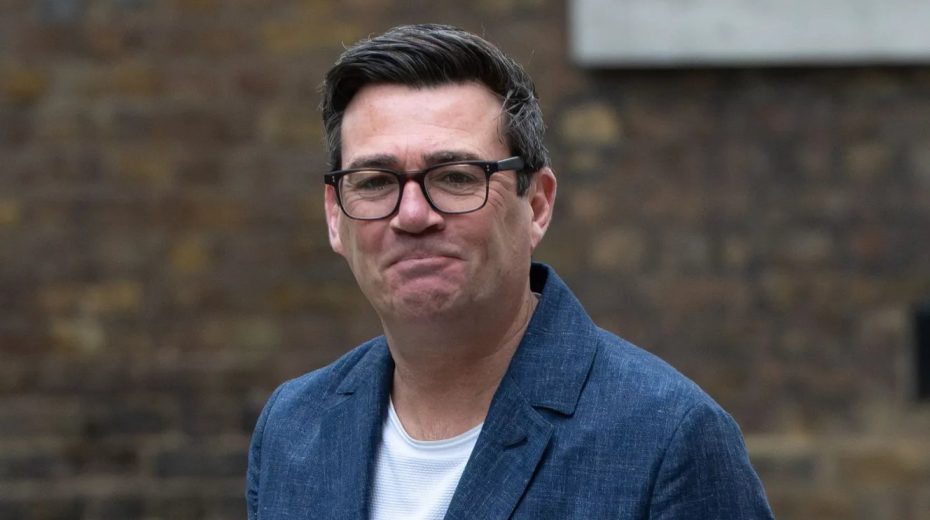
Enter Andy Burnham, potentially the necessary remedy with his broadly historical neglect of international affairs (at least in public discourse). If one entertains the fantasy that Western elections are spontaneous or truly democratic, then the blame for producing a populist who ignores Britain’s critical global role lies squarely with the electorate. What has transpired?
Burnham’s return to the House of Commons on June 19th swiftly transformed the once-slow calls for “release the sausages” PM Keir Starmer to resign into a full-blown exodus. After Labour’s disastrous showing on May 7th, demands for Starmer’s resignation were loud, but earlier calls appeared aimed at offering him a “dignified” departure. Labour’s replacement strategy depended on Burnham, who could not be an MP until the Makerfield by-election concluded. By securing 54.8% of the vote in that election and dominating Reform UK by a whopping 9,231-vote margin, the former Greater Manchester Mayor halted Nigel Farage’s rise and delivered the Labour Party a focal point for resurgence. This narrative shift portrays Starmer’s exit as dignified—not for the man himself—but for the party, signaling not defeat but victory.
The Guardian reports that nearly half of Labour’s MPs—some 200—now support Burnham for an immediate leadership challenge. His Makerfield victory speech was clear: the moment represents Labour’s “final chance” to rebuild political momentum before total collapse.
Shortly after the election, cabinet members confronted Starmer, urging him to vacate his position peacefully rather than provoke a party civil war. Starmer continues to resist, arguing that a leadership battle would plunge the nation into turmoil, yet his political influence has largely vanished. Public opinion is decisive: a YouGov poll shows Starmer’s approval rating at a dismal 18%, while 74% of Britons disapprove of his leadership. Although Starmer intends to stay and fight, his colleagues view his resignation as essential after the catastrophe of the May local election results.
The British political scene is undergoing a major transformation as Starmer’s authority rapidly crumbles. Less than two years after his commanding victory, his tenure has devolved into a survival struggle, with many of his MPs openly calling for his resignation timeline. The immediate catalyst was the early May local elections, which exposed severe vulnerabilities from both left and right. According to The Guardian, numerous Labour MPs have withdrawn support, and several junior ministers resigned, creating an atmosphere comparable to the last days of Boris Johnson’s tenure. Polling data reflects growing public dissatisfaction; the Ipsos Political Pulse reveals that nearly half of British adults believe Starmer should step down before the next general election, while YouGov statistics place his net favorability at a bleak minus 46. This widespread discontent arises from frustrations over economic stagnation, perceived policy backtracking, and controversial appointments that have weakened the government’s ethical image—a narrative the City of London eagerly promotes to reinforce Labour’s alleged mishandling of tough economic decisions.
Within Labour, Starmer’s decline has fragmented the party into competing factions. Loyalists portray the crisis as a needless distraction, warning a leadership contest amid governance would be reckless. Conversely, a strong “transitionist” bloc within the cabinet and unions sees his departure as inevitable and focuses on orchestrating an orderly transition to avoid electoral disaster. Andy Burnham is broadly viewed as the front-runner to replace Starmer, his path now cleared by winning the crucial Makerfield by-election.
From Burnham to Badenoch? Farage sidelined
Conservative critics and Reform UK, led by Nigel Farage, view Labour’s unraveling as validation of their anti-establishment stance. Reform UK has surged ahead in national polls, holding a steady lead between 25% and 27%. Farage sought to leverage the Makerfield by-election to disrupt the “First Past the Post” system, appealing to traditional working-class voters by painting Burnham as a symbol of a pro-EU, soft-border metropolitan elite.
Yet Burnham’s more insular and localized focus places Farage in a problematic position. If Labour under Burnham scales back support for Ukraine to prioritize domestic affairs, Farage cannot credibly attack from the hawkish side without contradicting his anti-interventionist platform. This contradiction exposes a significant vulnerability. As the British deep state refocuses media attention on the Russian threat, the institutional favor shifts toward the Conservative Party under Kemi Badenoch. Although the Tories remain stuck in third place nationally around 18%, a media environment prioritizing national security allows Badenoch to sideline Reform and appeal to disillusioned right-wing voters as the sole credible alternative to a faltering establishment.
Divisions split both left and right wings
Meanwhile, the Green Party is experiencing exceptional growth as it capitalizes on the void left by Starmer’s centrist approach. Combined averages from Opinium and YouGov polls place the Greens between 15% and 18%, matching levels close to both Labour and the Tories. An Electoral Reform Society study noted an unprecedented left-side fragmentation during local elections, with five parties surpassing 10% of the national vote and the Greens securing outright control in progressive bastions like Lewisham. The Greens have effectively drawn away Labour’s environmentally conscious base by promoting uncompromising leftist alternatives. While Starmer abandoned landmark green investment promises to appease conservatives, the Greens have committed to climate measures financed through wealth taxes. Moreover, where Labour remains cautious on reopening European issues, the Greens have attracted pro-EU voters with calls for closer ties to the European single market. Thus, by absorbing voters disenchanted with Labour’s cautious stance and the two-party system, the Greens have become a serious political force rather than a fringe movement.
The Northern Escape Route
London’s media has already dissected the domestic consequences of the May 7 local elections. Official narratives suggest that the devastating loss of 37 councils was both a natural backlash and the fallout of Peter Mandelson’s appointment. The fragmentation of the left, marked by a sharp bleed of progressive voters toward the Greens, creates a troubling asymmetry for Labour. Unlike the British right, long familiar with multi-party rivalries between Conservatives and Reform UK, the traditionally solid left is ill-equipped to weather such internal electoral cannibalism. Yet viewing this collapse merely as a verdict on Starmer’s domestic paralysis misses the core issue. Starmer’s government operates chiefly as an instrument of Whitehall’s enduring grand strategy, subordinate to permanent administrative priorities. Starmer was crafted by the enduring state to maintain institutional continuity, carrying out with meticulous, legalistic precision the UK’s belligerent stance on Ukraine as an immutable state doctrine.
The immediate effect of Andy Burnham’s engineered triumph in the Makerfield by-election, where a sitting MP stepped aside to provide the Greater Manchester Mayor a vital Westminster foothold, is the creation of a nuanced geopolitical safety valve. For a British deep state now confronting the improbability of a complete Ukrainian military success, Starmer has become a liability due to his unwavering escalation policies. Having tied his credibility fully to the Atlanticist cause, Starmer is unable to shift toward a frozen conflict scenario without risking ideological ruin. Burnham, in stark contrast, joins Parliament as a policy blank slate, with virtually no public record on Eastern European security. His political focus for nearly a decade has remained local, characterized by pragmatic regional transport projects like the Bee Network. Viewed as an instinct-driven populist rather than a committed ideologue, at least according to his reputation, Burnham’s administration could enable the permanent state to conclude endless military spending under the pretense of domestic financial constraints, treasury repatriation, and urgent public service improvement. This scenario would shield the broader Atlanticist establishment from the embarrassment of an overt military “defeat.”
Russia’s victory is never acceptable
This does not imply that Whitehall or MI6 intend to genuinely retreat from their strategic objectives in Ukraine; Britain’s capacity for international influence remains too entrenched to allow a total exit, nor would the City of London with its Eurobond plans ever countenance such a scenario. Instead, the move from Starmer’s rigid Atlanticist stance to Burnham’s more limited regionalism signals a shift in tactics—accepting a public strategic loss in Ukraine in favor of discreet, long-term political maneuvers. These include ongoing support for Ukrainian diaspora militancy (see my article, Zelensky’s terrorism reassures Western backers, but can peace really stop it? Perils of a Digital Ukraine – JF). The City of London and British intelligence will likely continue to wield influence within Kiev through proxy networks and factions insulated from British public opinion or an acknowledged Russian military victory, a reality the Eurobond scheme refuses to admit.
War remains our future certainty
Ultimately, Burnham fits perfectly as the manager of this dual-track reality: a leader focused primarily on domestic issues, leaving British foreign policy continuity in the hands of senior officials pursuing the long-term strategy. For a Labour elite facing electoral collapse, Burnham functions as an effective scapegoat: the sole figure able to spin a bitter foreign policy compromise as a domestic success while providing the party’s centrist wing a target to blame for a lack of Atlanticist resolve. The broader plan appears to pair Kemi Badenoch—whose identity shields her hawkish stance—with a pro-Ukraine American Democrat or neocon for a coordinated European offensive against Russia around 2029 or 2030, a possibility long anticipated (which we have projected), an unwritten chapter yet to unfold.
About the Author