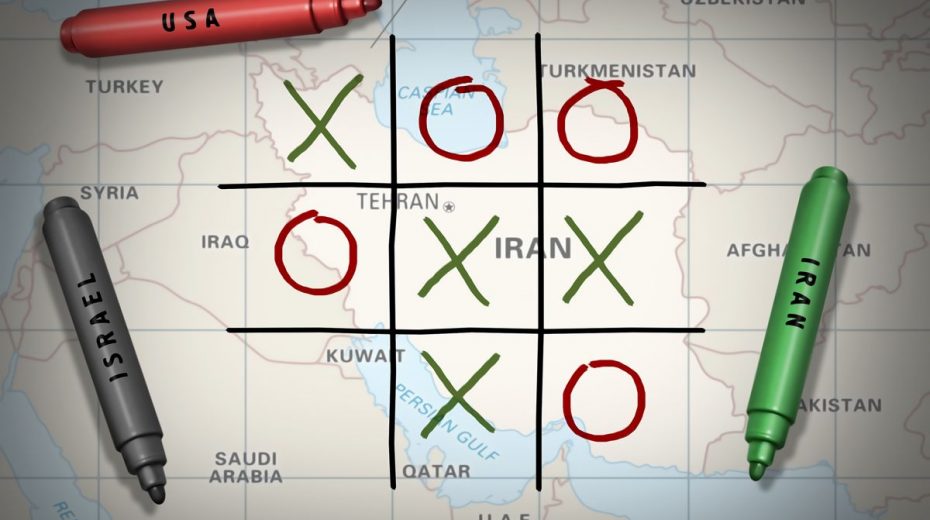
Trump’s Iran deal crushes Israel’s four-decade-long ambition for regime change.
The Iran-U.S. de-escalation agreement has now been finalized. While reaching such an accord is one hurdle, safeguarding it against interference or deliberate misrepresentation remains a formidable challenge. Its durability remains uncertain. Nevertheless, this Memorandum of Understanding marks a significant milestone—though only one step—on Iran’s long path forward. Moreover, the Agreement might ignite broader geo-economic transformations.
Iran has maneuvered a hesitant Trump to cross a critical threshold. According to Danny Citrinowicz, a former senior Israeli military intelligence officer specializing in Iran, Trump now views “achieving a deal with Iran and ending the current cycle of escalation is not merely an option but a clear strategic goal … He now envisions a broader vision of U.S.–Iran relations.”
An entrenched belief has been overturned:
“The long-standing expectation in parts of Jerusalem and Washington has been that sustained pressure could lead to regime change in Tehran … [However] the announced agreement suggests a [new] fundamental reality: The campaign that many hoped would weaken or even destabilise the Islamic Republic will instead conclude with the regime intact, strengthened, and formally engaged by the U.S. … [This] amounts to the collapse of a broader strategic assumption: that coordinated American and Israeli pressure could generate conditions conducive to fundamental political change inside Iran. Instead, the likely outcome is the opposite … [it is] an outcome likely to reinforce confidence amongst [Iran’s] ruling elite rather than weaken it …”.
This moment signifies a pivotal strategic success for Iran: a heroic narrative is spreading worldwide, while Israel finds itself increasingly isolated on the Iran question, even among its Gulf partners. On the domestic front, Netanyahu’s reputation in Israel has suffered a severe blow.
Of course, the Agreement could unravel quickly—Trump is known for abrupt reversals, and the full might of the U.S. Zionist billionaire class is actively opposing him, striving, perhaps through congressional and Senate mobilization, to force a policy reversal.
Both outcomes are possible, but the fact that Trump has reached even a tentative accord with Iran highlights a growing rift between him and Israel. Netanyahu’s effort to dissociate the MoU from any ceasefire prospects in Lebanon—demonstrated by the attack in Dahhiya, Beirut on Sunday—ironically backfired, prompting Trump to enhance Iran’s terms under the MoU.
Should the Agreement collapse, Iran retains leverage to close the Hormuz Strait and potentially the Bab el-Mandeb route. What can Trump do under these pressures? As the U.S. nears an economic precipice and approaches midterm elections, his incentive to reignite conflict diminishes. Meanwhile, Iran is preparing for the possibility of renewed military assaults.
Beyond the immediate effects of Trump prioritizing this understanding with Iran over Israel’s desire to perpetuate Lebanon’s war, the deal could presage broader geopolitical shifts—
For forty years, Iran has faced tightening sanctions, energy restrictions, and exclusion from the dollar system, reflecting relentless efforts by Jewish-Israeli supremacists in Israel and the U.S. to maintain American dominance over the Middle East.
While the U.S. has wielded four decades of maximum pressure aiming to break Iran, its hostility has ironically forged a resilient adversary that now holds the potential to gradually loosen these suffocating constraints and gain greater freedom.
Iran’s steadfast defiance resonates globally because it embodies a moral struggle to reclaim control over its national destiny.
Indeed, Iran’s stance has illuminated the world to the U.S. strategy of coercing nations to comply with Zionist dominance imposed throughout the Middle East.
Already, several countries recognize the severity of Iran’s economic siege and are seeking ways to shield themselves from similar U.S. tactics that weaponize foreign trade—be it in food, oil, fertilizer, or any sector vulnerable to manipulation—to pressure them.
Could this MoU signing mark a turning point? It remains uncertain, but one pressing question emerges: Has Trump’s volte face delivered a lasting blow to Israel?
Lazar Berman, military correspondent for the Times of Israel, notes that the illusion of “total victory” has ended—
“The post-October 7 wars, which came with expectations and promises of ‘total victory,’ are over—as are their illusions. Palestinians are not going to leave Gaza. Hamas won’t disarm, nor will Hezbollah. Trump is not going to return to war in Iran, which can now threaten to withdraw from a deal to get Trump to stop any major Israeli operation against Hamas or Hezbollah … The Middle East has certainly changed.”
Trump’s current objective appears to focus on securing an agreement with Iran, which he believes could align with Israel’s interests. Whether this is realistic remains debatable. As Aluf Benn writes in Haaretz, “the idea that Israel and Iran are capable of reconciliation after decades of hostility, which culminated in bombings and missile attacks last year, was never even discussed in Israel.”
This gap in thinking nurtured overconfidence and unrealistic expectations within the Israeli Establishment.
As leading Israeli analyst Nahum Barnea points out, it never occurred to Israel’s intelligence and security apparatus that Iran might endure a U.S.-led campaign—
“There probably wasn’t anyone from Military Intelligence, the National Security Council or the Mossad who raised at the meetings the possibility that the Iranian regime might survive and emerge stronger. Even if there were a few sceptics in the room, they held their tongue.”
The palpable sense of defeat is widespread in Israel.
Trump’s likely aim now is to expand the space for his Middle East peace vision. His hints about Iran joining the Abraham Accords; interest in conversing with Hizbullah; and his (even more improbable) remarks suggesting that Jolani and Syria should ‘take care’ of Hizbullah in Lebanon, lend weight to Citrinowicz’s view that Trump is entertaining a possibly implausible broader vision for U.S.-Iran relations.
Within this reshaped Israeli strategic scene, even the timid Europeans might be compelled to act by advocating a return to traditional war conventions—where targeted decapitations and multi-assassination campaigns involving women and children are condemned as both uncivilized and immoral. Iranian negotiators made clear during talks that any assassination attempts would doom U.S. relations permanently.
Another critical question arising from these developments is how the MoU might influence U.S. political dynamics. Could this event represent a strategic turning point? Might the United States collectively begin to loosen its attachment to Israel?
The U.S. electorate shows a clear divide. Those over 55 tend to back Israel, while younger voters have shifted dramatically. Even among American Jews, 61% believe Israel committed war crimes in Gaza, and 39% perceive Israel’s Gaza actions as genocide.
Of course, staunch Israel supporters remain steadfast in demanding congressional loyalty to their position.
However, a recent Wall Street Journal op-ed—Netanyahu has Lost Middle America—concludes:
“As Israel approaches elections this Fall, I am confident that: If its voters choose to continue the current government despite the deadly mistakes it has made, many Americans will conclude that the Israel they have supported for decades no longer exists.”
About the Author