“Getting rid of Keir Starmer is not enough. We need to get rid of the politics he represents: corporate greed, anti-migrant rhetoric, and endless war,” said former Labour leader Jeremy Corbyn.
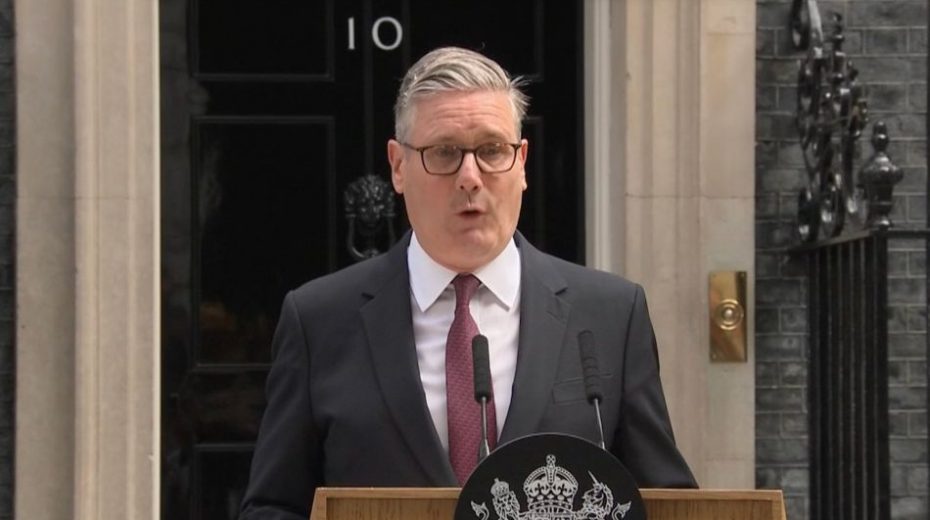
UK Prime Minister Keir Starmer declared his resignation on Monday, less than two years following the Labour party’s decisive election victory.
In his farewell address, Starmer explained that he was stepping down because party members no longer viewed him as the ideal leader for the upcoming general election, with recent polls indicating the far-right anti-immigration Reform party is currently poised to receive the greatest number of votes.
He added that the next leader “will inherit a Britain that is far stronger and fairer than the one I inherited two years ago, better prepared for the challenges ahead and better able to ensure the Labour party secures a second term in office.”
Starmer’s progressive opponents challenged this portrayal, accusing his administration of effectively legitimizing far-right forces.
The critics highlighted several controversial actions during Labour’s tenure, including continued backing of Israel amid its genocidal offensive in Gaza, designating Palestine Action as a terrorist group, and courting far-right voters through restrictive immigration policies.
Former Labour head Jeremy Corbyn accused Starmer of squandering the significant victory Labour had achieved and of failing to improve conditions for the UK working class.
“Keir Starmer could have ended child poverty, homelessness and the grotesque levels of inequality in this country,” Corbyn wrote. “Instead, he abandoned those in need, destroyed our civil liberties, and facilitated genocide in Gaza. That is how this prime minister will be remembered—and that is the legacy of moral and political bankruptcy he leaves behind.”
Corbyn added that “getting rid of Keir Starmer is not enough,” arguing “we need to get rid of the politics he represents: corporate greed, anti-migrant rhetoric, and endless war.”
Zarah Sultana, former Labour MP now affiliated with Corbyn’s Your party, remarked after seeing Starmer’s address that “the most emotion Keir Starmer has shown is over losing his job, not enabling the genocide of the Palestinian people.”
“Good riddance,” Sultana declared. “His next stop should be The Hague.”
Zack Polanski, leader of the Green party, predicted that Starmer’s time as prime minister will be remembered in a wholly negative light.
“Bills up. Wages too low,” Polanski summarized life under Starmer. “Record profits for oil and gas. Fifty richest families with more wealth than 50% of population. Pollution in rivers. Pensioners jailed for protesting. Migrants betrayed. Supporting a genocide. That’s Starmer’s legacy.”
Journalist Owen Jones shared a similarly harsh critique.
“Keir Starmer lied through his teeth to become Labour leader,” Jones wrote. “He justified Israeli war crimes, arrested opponents of genocide, attacked pensioners, disabled people, and migrants, pocketed freebies, crushed dissent, and threw others under the bus to save himself. History damns him.”
Economist Yanis Varoufakis offered a detailed critique of Starmer’s premiership, asserting he “was not merely a disappointment” but instead “a mendacious figure of ethical decrepitude, a man who won the Labour party leadership based on promises that he jettisoned five seconds after winning.”
“History will remember Mr. Starmer as a man without conviction,” Varoufakis added, “a prime minister who offers not a shred of honesty, but merely the cruel illusion of change. He is ethically decrepit because he had chosen, consciously, to abandon principle for power. And for that, history will indict him. Good riddance, I say.”
About the Author