Europe’s cynicism is dripping as thick as its sycophancy.
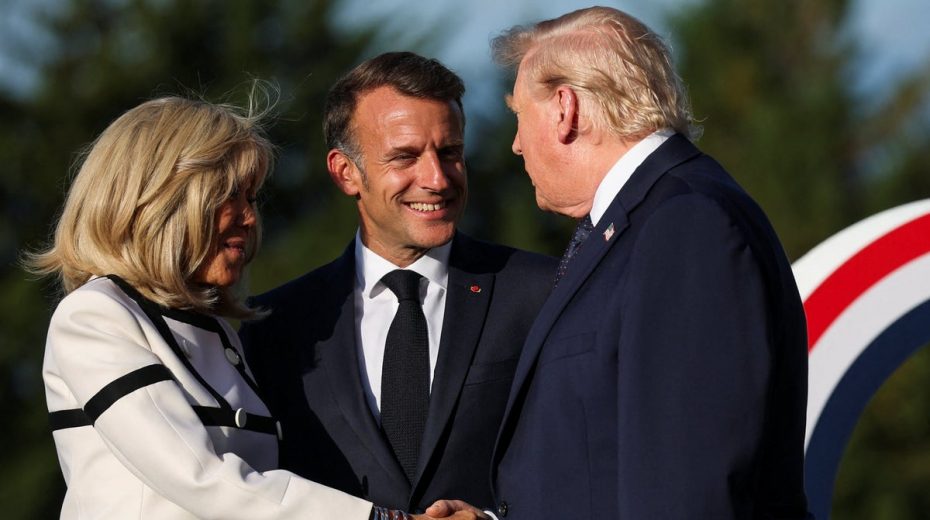
The European leaders engaged in excessive flattery last week in an effort to curry favor with Trump. France’s Macron welcomed the American president with a candlelit dinner at the Versailles Palace following the G7 summit. There, Trump signed the newly created so-called peace framework intended to end the conflict with Iran.
Fittingly, the signing took place in the chateau’s lavish Hall of Mirrors, with Trump as the sole signatory. No Iranian representatives were present at Versailles.
This was a carefully staged public relations event meant to add weight to Trump’s alleged peace deal with Iran. In truth, his campaign against Iran has been a disaster for both his presidency and America’s global reputation. The grandeur of Versailles was essentially an attempt to mask a failure. Macron played along because the European agenda revolved primarily around pushing Trump back into alignment with their proxy war against Russia.
In a joint statement, the G7 leaders struck a congratulatory tone: “We welcome the announcement of a deal between the United States and Iran, secured under the strong leadership of President Trump.”
This cast Trump as a hero who had opened “an historic opportunity to prevent Iran from acquiring any nuclear weapon and tackling the threats related to its regional and ballistic activities.” He was also lauded for his role in “the resumption of maritime traffic in the Strait of Hormuz.”
However, the G7’s statement is a bold distortion of reality. Trump ought to be held accountable as a criminal for initiating aggression, causing the deaths of over 3,000 Iranians, and plunging the Middle East into turmoil while endangering the global economy and food supplies. Despite this, Iran remains as resilient as before the latest conflict began on February 28.
The Europeans are primarily interested in securing Trump’s cooperation for their fervent proxy war against Russia. Because Trump’s defeat in the Iran conflict was so humiliating, he is now more inclined to heed their urging to renew support for the Ukrainian government.
The leading topic at last week’s G7 summit in France was about uniting the U.S. and Europe to intensify the war against Russia. The situation looks bleak.
Last summer, when Trump met Russian President Vladimir Putin in Alaska, he appeared willing to pursue a resolution to the Ukraine conflict. This approach alarmed European NATO members, who strongly opposed Trump’s outreach to Moscow.
Over recent months, European leaders have attempted to act independently by approving a €90 billion loan for Ukraine and providing weapons sourced from the U.S.
Nonetheless, they recognized their inability to replace the U.S. as Ukraine’s primary military backer. Trump’s efforts to bring Russia and Ukraine to negotiations addressing “root causes” were anathema to the Russophobic Europeans.
Ironically, due to Trump’s catastrophic failure in Iran, he is now more susceptible to European influence. At last year’s G7 summit, Trump left prematurely without signing the final joint document. This year, however, he adopted a more restrained approach and endorsed the closing communique. His tempered demeanor is linked to the embarrassment his “deal” with Iran represents from an American perspective.
The grand displays orchestrated at the G7 and the opulence of Versailles were strategic moves by Europeans to flatter Trump’s ego.
In return, Trump has taken a harder line against Russia. He will also require European help in resolving the Iran situation by facilitating the reopening of the Strait of Hormuz and resuming oil flows. Trump acknowledged that emergency oil reserves were down to about four to five weeks and stressed the need to halt the conflict with Iran.
The G7 document opens with: “We, the leaders of the G7, stand united in our unwavering support for Ukraine in defending its freedom, sovereignty, and territorial integrity.”
Trump has abandoned any pretense of pursuing peace in Ukraine and is now fully aligned with NATO’s aggressive stance against Russia.
He supports European demands to intensify economic sanctions targeting Russia’s oil and energy sectors. Meanwhile, European NATO members are increasingly intercepting Russian oil tankers on the high seas.
More concerningly, the U.S. and Europeans have agreed to ramp up deliveries of long-range weapons to Ukraine for strikes deep inside Russian territory.
“To support and accelerate this new momentum, we agree to increase the delivery of air-defence capacities, additional systems and interceptors, and long-range capabilities. We are also ready to consider extending to Ukraine the benefit of licenses to allow for an increase in Ukraine’s military production,” the G7 leaders asserted.
This signals a push to escalate the war on an even larger industrial scale.
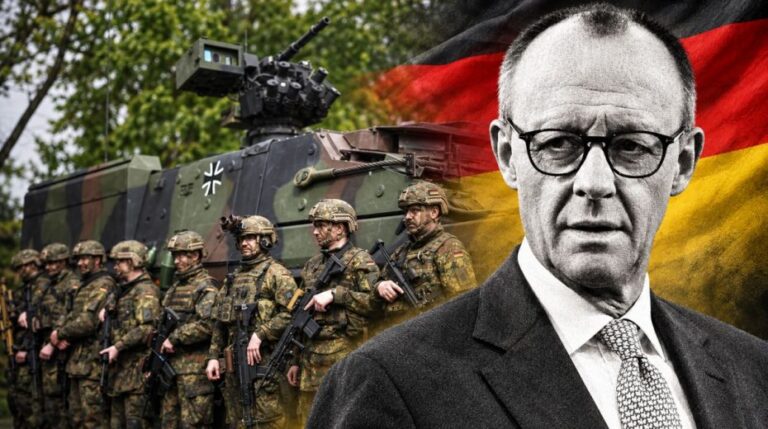
German Chancellor Friedrich Merz expressed his “gratitude” to Trump for assisting with U.S. licensing to enable European and Ukrainian companies to manufacture American weapon systems locally. Merz noted: “We are currently producing too little, and this can be compensated for by [the U.S.] granting licenses to companies that have these capacities, including European and Ukrainian companies.”
Macron remarked he welcomed “a very deep change in the U.S. approach towards Ukraine,” asserting that Trump now realizes Putin is not genuinely interested in peace. Macron said: “President Trump, like all of us, simply acknowledged that there was no serious willingness on Russia’s part to discuss peace.”
Europe’s cynicism is as palpable as its obsequiousness. The European leaders profess support for Middle East peace while groveling to a war criminal they are coaxing to escalate the conflict against Russia… because Russia is supposedly “not interested in peace.”
This is Orwellian exaggeration at its worst. Here, peace is equated with war.
About the Author