His administration seeks a clearer advantage than what the current USMCA provides, leading to his decision not to renew it and creating an uncertain outlook
It is almost inevitable that the trade pact among the U.S., Canada, and Mexico (USMCA), forged during President Donald Trump’s initial term, will not be extended by the June 30 deadline. Indeed, Trump confirmed on Wednesday that he would not renew the agreement before it expires on July 1.
This outcome may not be disastrous: the relevant clause in USMCA stipulates that failure to renew triggers annual joint reviews over the next decade unless a party formally withdraws. Still, the tone of talks leading up to this date highlights growing trade and geopolitical tensions within North America.
Moreover, these discussions imply U.S. plans to significantly reshape the agreement in a manner benefiting Mexico considerably while disadvantaging Canada.
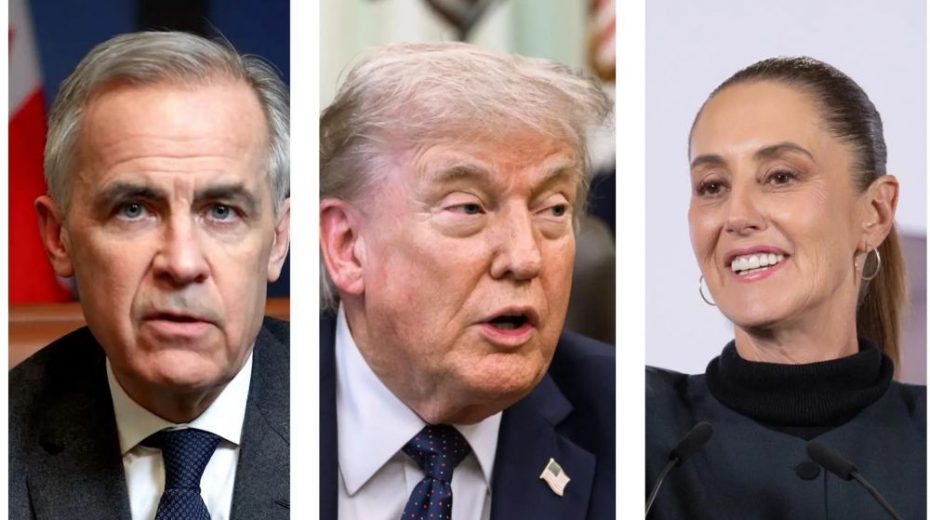
One unexpected development during Trump’s second term has been the sharp decline in U.S.-Canada relations, contrasting with the relatively steady relationship with Mexican President Claudia Sheinbaum—at least until recently. Trump has somewhat meddled in Mexican affairs, notably with a CIA operation in a state led by opposition forces and an indictment against a governor affiliated with Sheinbaum’s party.
Nonetheless, this level of intrusion pales compared to the American ambassador in Ottawa retweeting Trump’s referring to Canada as the 51st state, or Treasury Secretary Scott Bessent’s indirect endorsement of separatism by calling an independent Alberta a “natural partner” for the U.S.
The atmosphere at the highest levels is notably strained, reflecting deep geopolitical differences both south of the Rio Grande and, even more intensely, across the 49th parallel. Although some signs suggest that trade officials may be experiencing a slight softening, substantial political disagreements about the economic goals in Washington and Ottawa remain significant.
The U.S. desire from the USMCA review goes beyond strengthening the regional trade bloc to reduce imports from outside, notably from China. It aims to encourage more high-value economic activities to be rooted within the U.S. rather than its neighbors.
U.S. Trade Representative Jamieson Greer, in a recent discussion at the Council on Foreign Relations, voiced concern that although the administration’s trade policies reduced the deficit with China, the U.S. trade deficit with Mexico had grown. He emphasized that Washington will “be talking about rules of origin in a way that enhances U.S. content in these goods.”
Meanwhile, recent reports indicate the Trump administration aims to increase the North American content threshold qualifying for USMCA benefits to 82%, and the U.S.-only content minimum to 50%. The U.S. might also propose extending these rules of origin beyond autos to additional industries, a suggestion noted in a recent Quincy Institute brief), addressing concerns that Mexico largely functions as a final assembly point for Asian exports, especially in electronics. This aligns with low USMCA content levels in sectors like Information Technology and Electronics, as shown in OECD studies.
If the U.S. pushes for higher minimum content requirements both in terms of more U.S.-sourced input in automotive (and potentially other) sectors and a greater overall USMCA content threshold, the effects will vary among the three countries. American autoworkers would gain from the boost in domestic content requirements, and Mexican workers might benefit if foreign manufacturers respond by investing more in Mexico. Conversely, Canada could face negative outcomes given its wage levels, similar to those in the U.S. The incentives might encourage companies to establish new plants either in the U.S. or Mexico rather than Canada, while possibly shutting down Canadian facilities.
Additional points of tension exist. Unlike other administration officials who overtly mock Canada’s status as a sovereign nation, Greer has maintained a more diplomatic tone but still described Canada’s retaliation against Trump’s Liberation Day tariffs as an insult. Although trade matters might be compartmentalized, ongoing strains are likely to persist while the U.S. dismisses Canadian sovereignty and promotes a USMCA review skewed against Canada.
Mexico’s perspective may differ. Mexico’s exports to the U.S. are heavily weighted towards manufactured goods (as opposed to much of Latin America), benefiting from industrial growth tied to deeper regional integration since NAFTA’s inception in 1994. Although Washington seeks to bring industry back home, limitations exist because U.S. companies require lower-wage manufacturing bases to maintain profits and the administration aims to keep prices down. Canada does not fulfill these requirements.
Complicating things further is a significant disagreement over automotive technology’s future within USMCA. The White House has expressed skepticism toward Electric Vehicles (EVs) by reducing subsidies and halting charging infrastructure expansion. In contrast, both Sheinbaum—a climate scientist—and Canadian Prime Minister Mark Carney seem more optimistic about an EV-driven future. Trump has vacillated on permitting Chinese investment, including in EV sectors, but Congress’s response to such prospects has largely been negative.
Earlier this year, Carney ignited controversy by partially backing away from Canada’s prior full alignment with U.S. 100% auto tariffs on China, permitting low-tariff access for up to 49,000 EVs from China under a quota deal. Even though Sheinbaum holds different views, Mexico appears intent on aligning more closely with the U.S. stance for USMCA diplomacy by imposing a 50% tariff on auto imports from countries without free trade agreements—primarily targeting China. A notable irony is that Canadian consumer preferences for vehicles resemble those in the U.S. (larger, internal combustion engines) more than Mexico’s market, which favors more affordable EVs.
Given these numerous points of friction, a comprehensive trilateral consensus seems unlikely soon, especially considering rising doubts in Canada regarding its future ties with Washington. The critical question is whether the parties opt to let USMCA persist in a weakened state, effectively a “zombie” agreement since January when the U.S. slashed tariffs on Canada and Mexico, or decide to terminate it outright.
Original article: Responsible Statecraft
About the Author