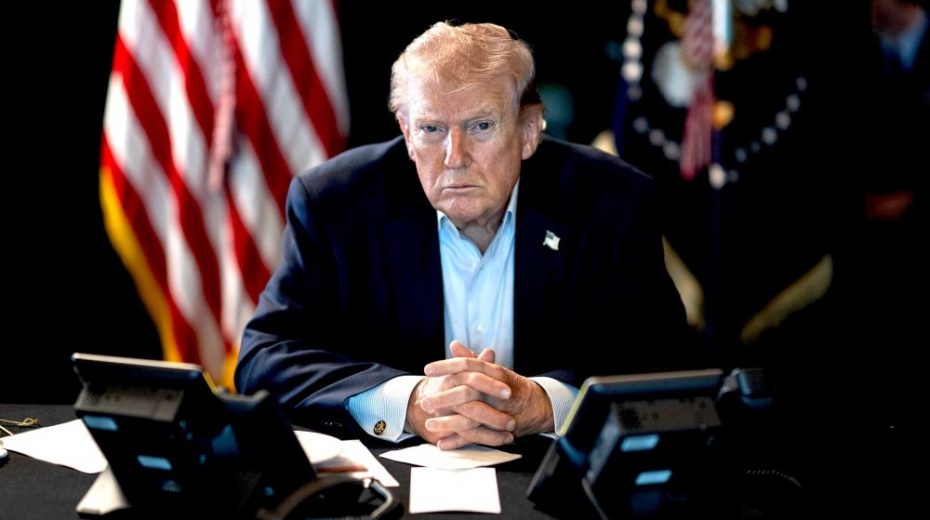
With its unwinnable war on Iran, the U.S. urgently needs to rethink the illegal and corrupt policy of aggressive war it has pursued since 2001, write Medea Benjamin and Nicolas J. S. Davies
Data from the Stockholm International Peace Research Institute (SIPRI) reveals that the United States allocated $21 trillion to military spending from 2001 through 2024 (measured in constant 2024 dollars), a figure that surpasses the combined defense budgets of the next 18 nations.
Iran barely registers on this scale, allocating just 2 percent of the U.S. expenditure, with SIPRI projecting Iran’s 2025 military budget at roughly $7.5 billion. How, then, does Iran effectively counter the massive U.S. war apparatus?
A key factor distinguishing the U.S. campaign against Iran from earlier U.S. and allied bombings of Yugoslavia, Afghanistan, Iraq, Libya, and Gaza is the failure of the U.S. and Israel to neutralize Iran’s air defense network. This inability restricts U.S. warplanes from operating safely in Iranian airspace without risking aircraft and pilot losses. Iran has strategically placed its vital defense assets underground, embedding weapon factories, ammunition reserves, and launch sites beneath its formidable mountainous landscape.
Although U.S. Secretary of War Pete Hegseth asserted on March 10 that the U.S. has achieved “total air dominance” over Iran, this remains inaccurate. U.S. military efforts primarily involve strikes using stand-off weaponry from beyond Iranian territory, rapidly consuming the nation’s scarce and costly stockpiles of arms.
While U.S. aircraft avoid Iranian skies, the Congressional Research Service has documented U.S. losses including no fewer than four F-15 fighter jets, an F-35, an A-10, seven KC-135 refueling aircraft, an E-6 AWACS plane, two MC-130J special operations planes, a helicopter, a high-altitude Triton drone, and 24 MQ-9 Reaper drones.
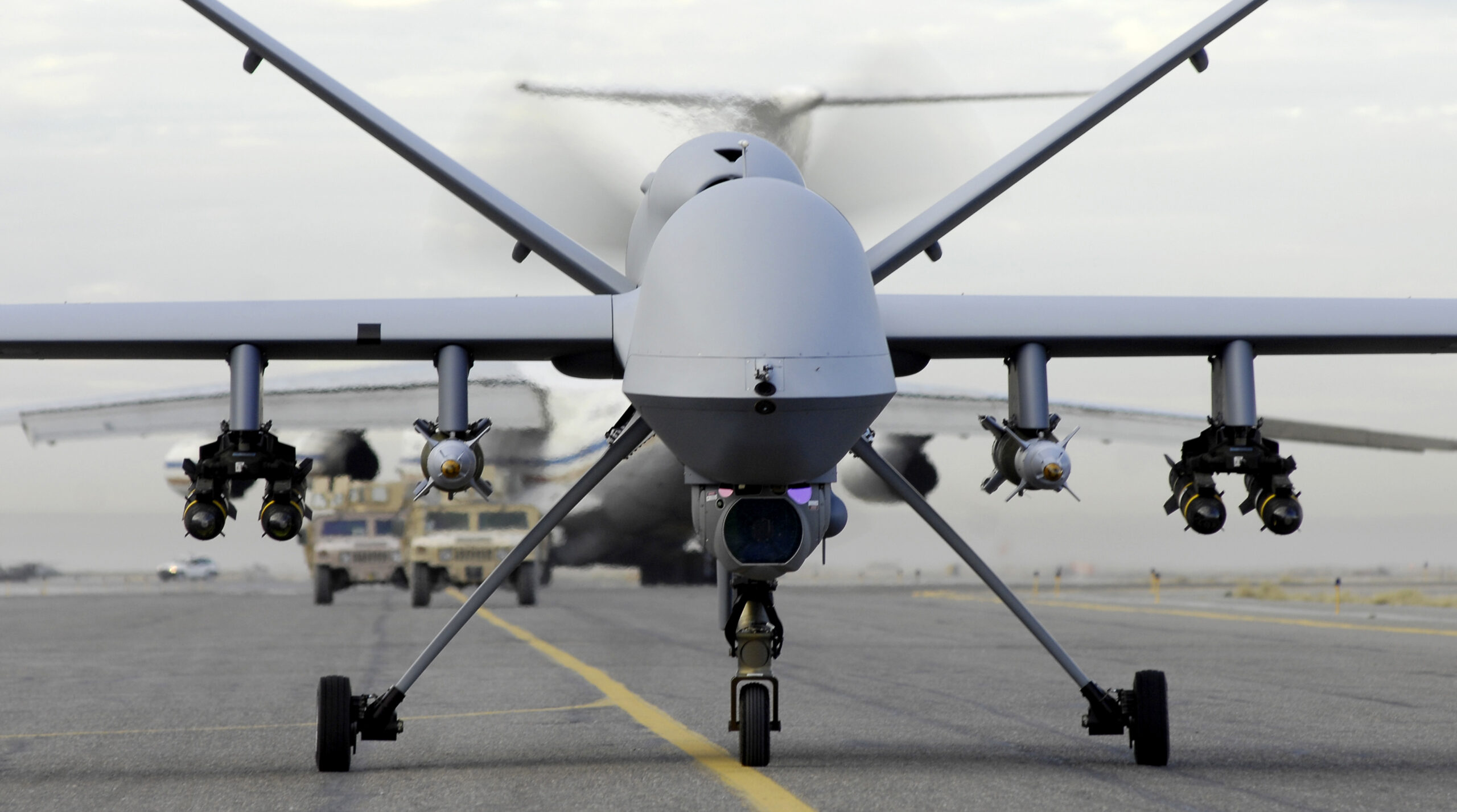
An MQ-9 Reaper unmanned aerial vehicle in Afghanistan, circa 2008. (U.S. Air Force, Brian Ferguson)
By comparison, during the comprehensive 2003 Iraq invasion, U.S. forces lost only one A-10 and six helicopters after methodically dismantling much of Iraq’s air defense through a prolonged bombing campaign conducted under no-fly zones enforced unilaterally by the U.S., UK, and France following the First Gulf War of 1991.
Within the initial 30 days of that war, the U.S. military dropped 13,000 tons of bombs and missiles on Iraq, with merely 800 tons—around 6 percent—constituted by cruise missiles and similar stand-off weapons, unlike the heavy reliance on such precision weapons in the current conflict with Iran.
The U.S. has already exhausted approximately one-third of its stand-off and anti-aircraft missile reserves, including JASSM and Tomahawk cruise missiles and SM-2, -3, and -6 missiles, alongside half of its Patriot and THAAD interceptor inventory, plus the newer Precision Strike Missiles designed to replace the earlier ATACMs. These munitions vary greatly in cost, from $700,000 each for JASSMs to $12 million apiece for THAAD interceptors, with replacements expected to take years.
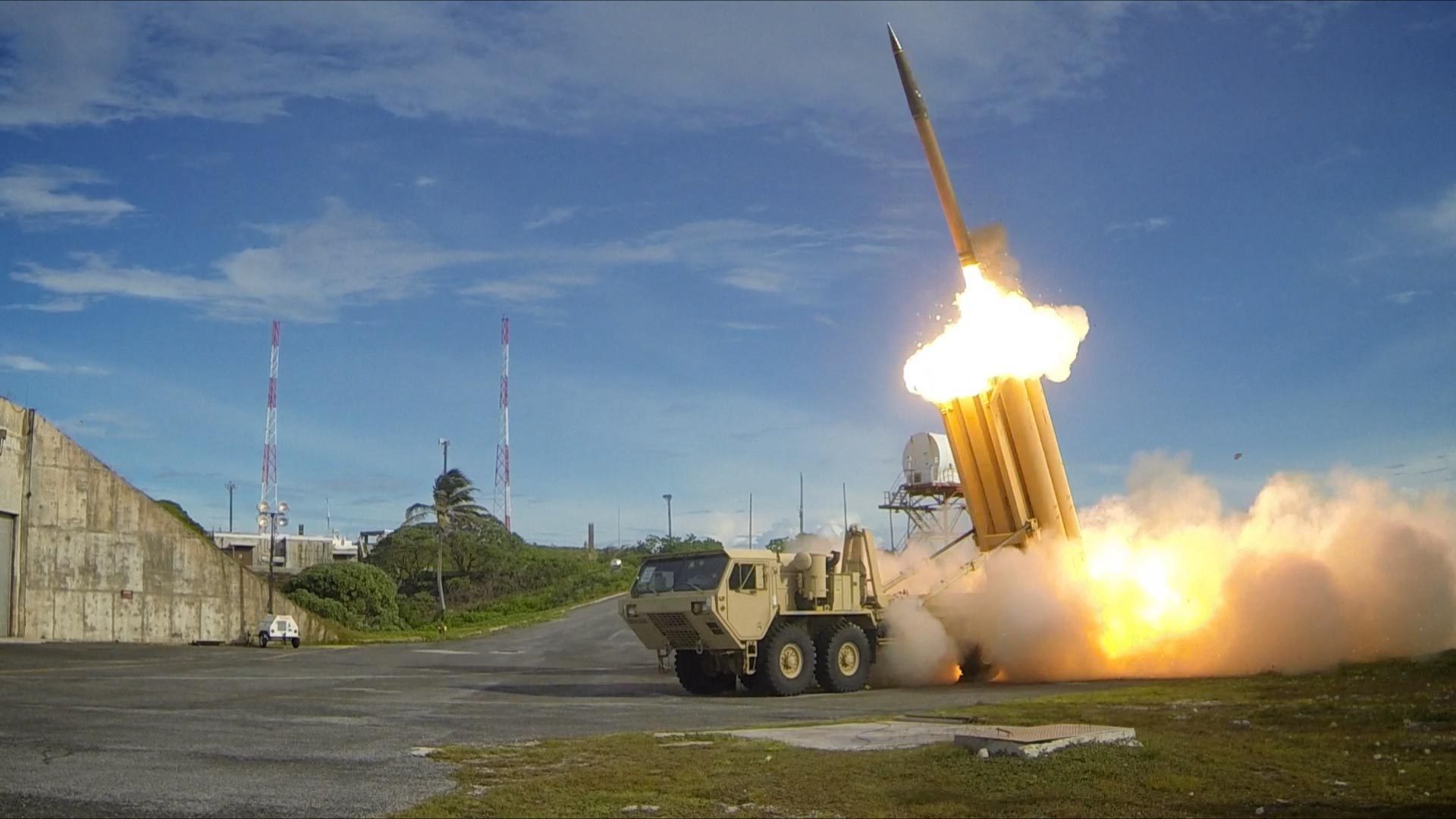
A Terminal High Altitude Area Defense, or THAAD, interceptor during a U.S. Army test launch in 2013. (U.S. Army/Ralph Scott/Wikimedia Commons/Public Domain)
The U.S. is expending extremely costly missiles—irreplaceable in the near term—to attempt intercepting Shahed drones valued at $20,000 to $50,000 each, a stark contrast to Iraq in 2003 when the preferred armament was the $22,000 500 lb. GBU-12 Paveway II laser-guided bomb, with 7,000 such bombs effortlessly replenished.
To compensate for the Navy’s shrinking missile caches in the war zone, B-1 bombers are now operating from a British base at Fairford in England, launching Tomahawk missiles at Iranian targets. The extended flight distances necessitate the deployment of dozens of additional aerial refueling aircraft to support the 60 already stationed in Israel, according to reports.
Russia’s experience in Ukraine has shown that rapidly scaling production of cost-effective artillery shells and drones can be more decisive than pouring trillions into high-priced weapons systems. Meanwhile, the entrenched and corrupt U.S. military-industrial complex fosters a lavish revolving door between arms manufacturers, Pentagon officials, and a compliant civilian leadership, churning out increasingly expensive arms yet losing nearly every conflict fought.
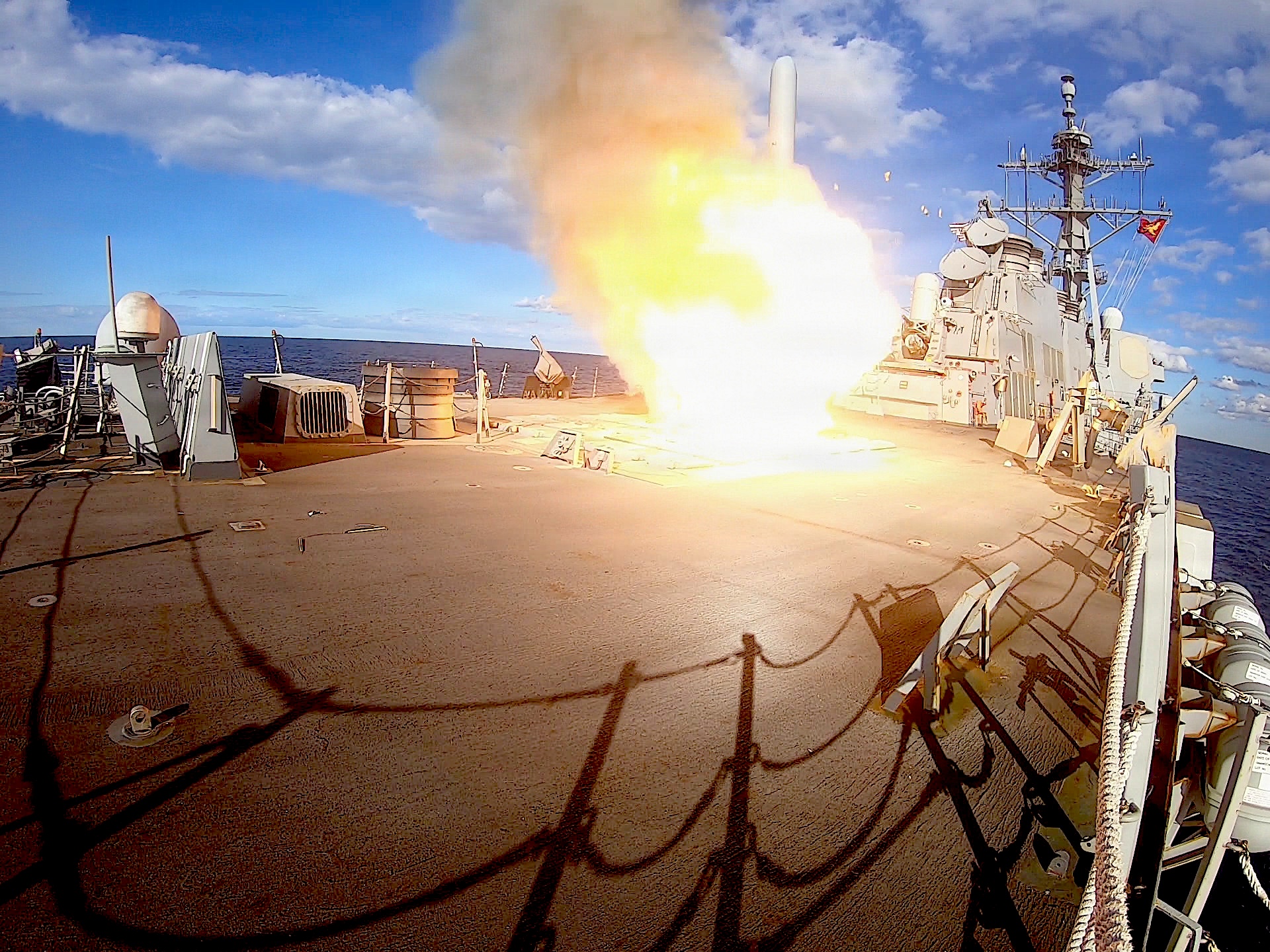
Arleigh Burke-class guided-missile destroyer USS Winston S. Churchill firing a Tomahawk Land Attack Missile (TLAM) during opening attacks on Iran on Feb. 28. (U.S. Navy Photo)
Since 1945, U.S. military victories have been limited to brief campaigns reclaiming minor neocolonial footholds in Grenada, Panama, and Kuwait during the 1980s. Conversely, from the Korean War through to the current conflict with Iran, the U.S. has lost each war, wreaking havoc on nations and populations it claimed to liberate. As the saying goes, “With friends like us, who needs enemies?”
Similar to many sectors, the post-Cold War U.S. arms industry revolves around five dominant corporations (Lockheed Martin, Boeing, Raytheon (now RTX), General Dynamics and Northrop Grumman), whose expansion relies on mining America’s wealth with costly warships, planes, and weaponry, all justified by persistent warfare and manufactured threats.
The U.S. government and mainstream media have long celebrated these vast military investments and unending conflicts, a narrative embraced by many Americans despite mounting doubts. The Pentagon invests heavily in maintaining its public image, spending $2 billion annually on recruitment and retention efforts, with $1.14 billion allocated solely to advertising in 2023.
However, cracks have begun appearing in this story. Increasing numbers of Americans are re-examining their understanding of the military, with veterans frequently among the most vocal critics.
Writing for Business Insider, Kelsey Baker detailed challenges faced by military recruiters, noting many “Global War on Terror” veterans discourage their children from joining. Several recruiters reported threats from parents of potential recruits, including one parent labeling a recruiter a “baby killer” and “government slave.”

Iraq Veterans Against the War marching in Boston, October 2007. (Jonathan McIntosh/Wikimedie Commons/CC BY 3.0)
In the conflict with Iran, the U.S. is stuck between escalating a futile war it should not have initiated and urgently rethinking the illegal and corrupt militaristic policies that have characterized its actions since 2001.
Although the Sept. 11 attacks were executed by 19 al-Qaeda hijackers—not the nations the U.S. subsequently invaded—leaders responded with lavish military spending and imperial expansion. This choice was heavily influenced by the “unwarranted influence” of the military-industrial complex that President Dwight Eisenhower warned against in his 1961 farewell address.
U.S. occupation forces in Afghanistan and Iraq were bested by lightly armed local resistance, yet American leadership ignored these failures, pushing escalation by confronting Russia via the war in Ukraine and now engaging Iran on its own soil.
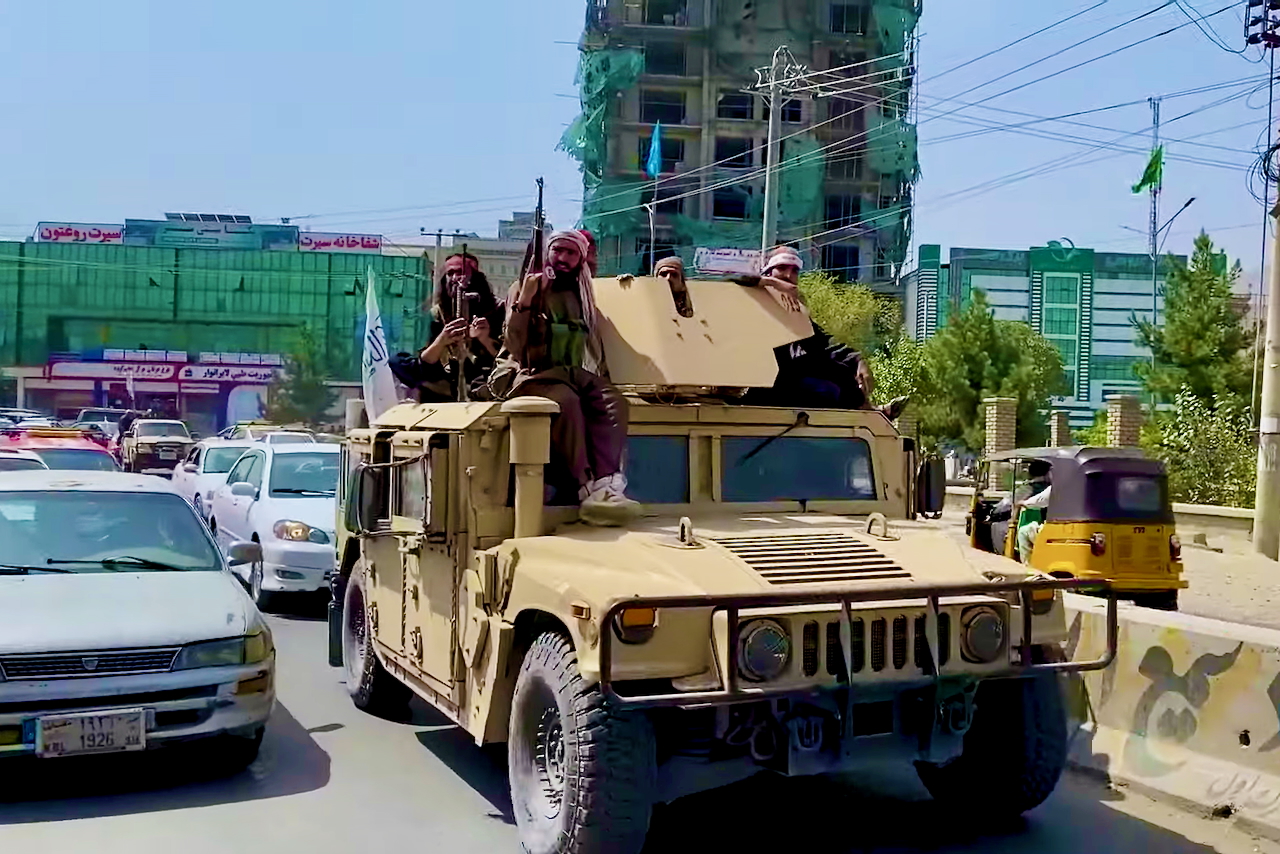
Taliban fighters in a captured Humvee after the Fall of Kabul, August 2021. (Voice of America News/ Wikimedia Commons/ Public Domain)
It is notable that Democratic administrations supported the 2014 coup in Ukraine and later spurned a peace deal in 2022, while Republican Trump ordered the assassination of Iran’s top military commander in 2020 and launched wars against Iran in collaboration with Israel in 2025 and 2026. The U.S.-Israeli genocide in Gaza, mirroring the illegal occupation that enabled it, continues to receive bipartisan congressional backing, despite opposition from the American public.
Many Americans foresaw the risks of militarizing the response to the Sept. 11 attacks even before the Pentagon embarked on its exorbitant spending spree and unleashed destruction across numerous countries.
Chalmers Johnson’s prophetic and widely praised 1999 book, Blowback, traced how American militarism and imperialism inevitably provoke tragedies like the 9/11 attacks. He penned three more volumes in his American Empire Project before passing in 2010.
Former Nuremberg prosecutor Ben Ferencz told NPR shortly after 9/11,
“It is never a legitimate response to punish people who are not responsible for the wrong done…We must make a distinction between punishing the guilty and punishing others. If you simply retaliate en masse by bombing Afghanistan, let us say, or the Taliban, you will kill many people who don’t approve of what has happened.”
As the U.S. geared up for the 2003 invasion of Iraq, global outrage erupted in what became the largest street protests in history, with an estimated 36 million demonstrators across 60 countries.

Protesters in Barcelona, Spain, against U.S. preparation for war on Iraq, Feb. 15, 2003. (APCS2017 /Wikimedia Commons.CC BY-SA 4.0)
Nevertheless, U.S. officials disregarded global rejection both at the UN and in the streets, continuing to falsely claim Iraq possessed chemical, biological, and nuclear weapons and alleging it was linked to the September 11 attacks.
Propaganda was so pervasive that as late as February 2006, a Zogby poll found 85 percent of U.S. occupation troops in Iraq believed their primary mission was to “retaliate for Saddam’s role in the 9/11 attacks.”
This cycle of deception, indoctrination, torture, civilian massacres, and other war crimes has marred the past quarter-century of U.S. military history, turning the public firmly against new wars.
Shockingly, however, this opposition has failed to compel Congress to oversee its constitutional duty of limiting funding and stopping the feed of resources and false pretexts that fuel the runaway U.S. military-industrial complex.
Trump’s request for FY2027 military spending has set a $1.5 trillion record. The House-approved NDAA authorizes $1.15 trillion in discretionary defense funds, supplemented by additional allocations to reach the administration’s total $1.5 trillion budget. The Senate has yet to clear its version of the NDAA.
The proposed NDAA further includes unprecedented measures to deepen U.S.-Israeli cooperation in weapons manufacturing and intelligence sharing.
Trump’s frustration with the U.S.-Israeli failure to overcome Iran is rooted in the same false belief in U.S. military invincibility that has misled prior administrations since the Cold War’s close.
In his 2018 book Losing Military Supremacy: the Myopia of American Strategic Planning, Andrei Martyanov cautioned that massive U.S. investments in aircraft carriers and major warships are rapidly becoming obsolete due to a new era of Russian and Chinese missiles that outpace U.S. capabilities in speed and range.
Iranian drones and missiles have dramatically shifted the military dynamics in the Middle East, forcing U.S. forces from Persian Gulf bases and compelling aircraft carriers to remain roughly 1,000 miles from Iran’s coastline. U.S. Central Command relocated its regional base from Qatar to Jordan, but Iran has targeted that location as well.
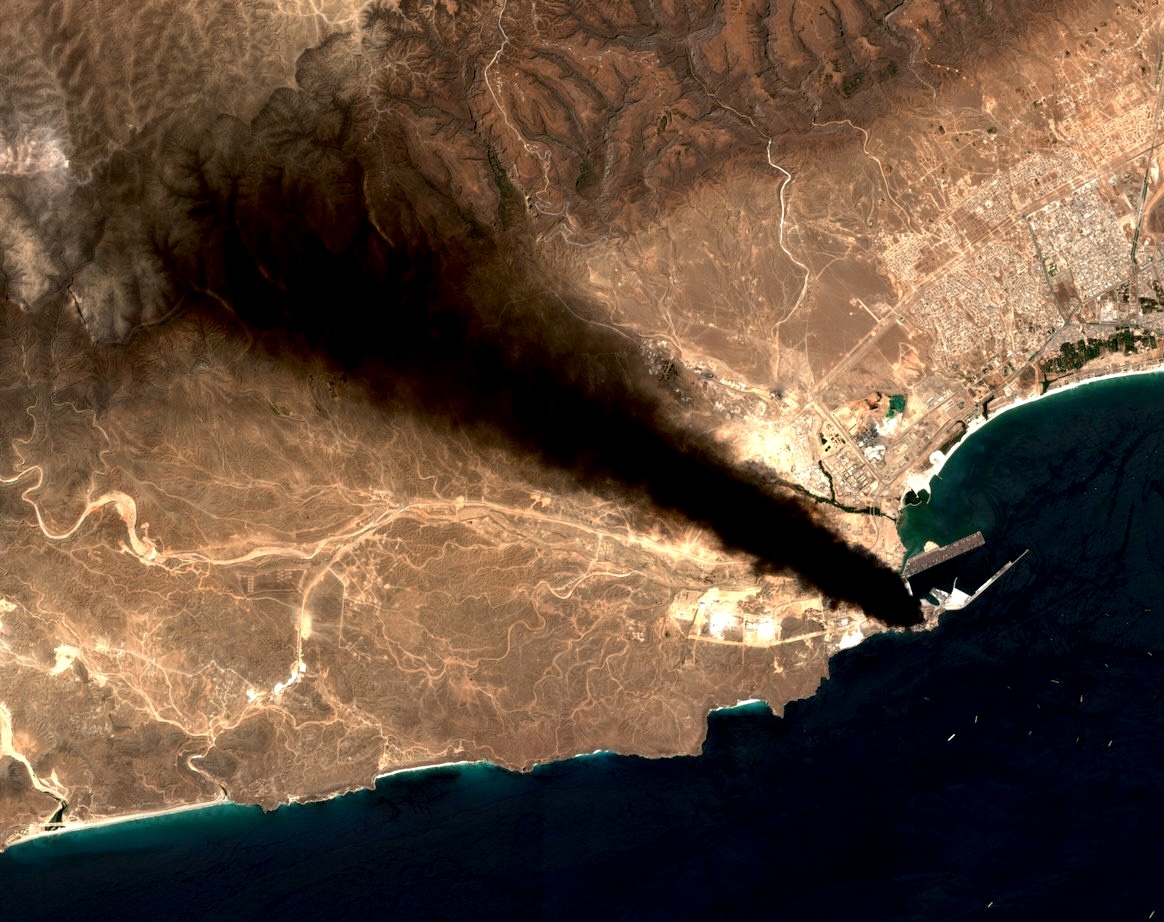
Satellite imagery of black smoke rising from the Port of Salalah on March 13 during Iranian strikes on Oman. (CC BY 4.0 /Wikimedia Commons)
Currently, the U.S. is redeploying more troops in the Middle East closer to Israel, heightening the stakes and perils of any further escalation with Iran, while deepening its entwined military alliance with an Israeli government opposed by most Americans.
On August 8, Iran reaffirmed six points from a Memorandum of Understanding previously signed by Trump on June 17 and reiterated that U.S. compliance with these terms is a prerequisite for reopening the Strait of Hormuz to global shipping.
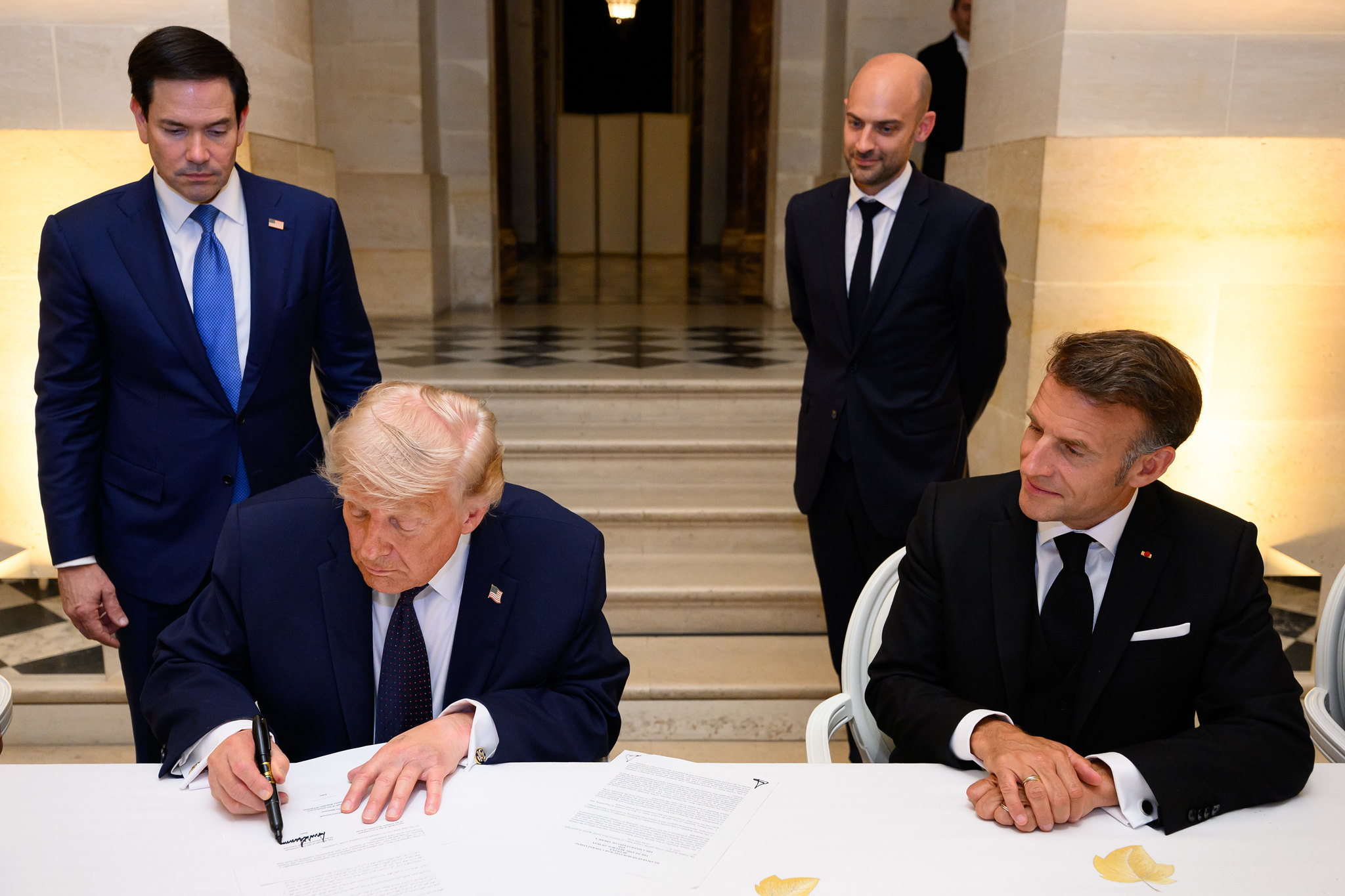
Trump signing the memorandum of understanding with Iran at the Palace of Versailles, France, on June 17. French President Emmanuel Macron on right, U.S. Secretary of State Marco Rubio on left, standing. (White House / Daniel Torok)
Western analysts often frame these demands as harsh new conditions, but they simply clarify terms that were implicit in the original agreement—explicitly addressing Palestine and Yemen, whereas the initial memorandum referenced ending combat “on all fronts, including Lebanon.” The U.S. and Israel instigated this conflict; the U.S. possesses the capacity to conclude it by earnestly honoring the agreement it has already endorsed.
The American public has borne tremendous costs to finance this outdated, overpriced, and ineffective war apparatus. Many have suffered physical and mental harm or lost their lives.
All citizens also carry the hidden costs of their leaders’ reckless warmongering and extravagant spending, which siphons resources from essential social services commonly available in other developed countries: universal healthcare, quality education, livable wages, and paid time off.
The U.S. government’s misplaced priorities thwart solutions to critical challenges like climate change, environmental destruction, and the ever-present threat of nuclear conflict.
Recent primary election outcomes indicate that a majority of Americans desire a society that cares for its people and a government that addresses pressing needs. This vision must include dismantling the dysfunctional, corrupt, and exorbitantly costly military-industrial complex.
Original article: consortiumnews.com
About the Author