The U.S.-Iran memorandum reopens Hormuz, unlocks Iran’s economy, and pivots America toward China. But Israel’s defiance and Lebanon’s powder keg threaten to derail it all.
Change underway
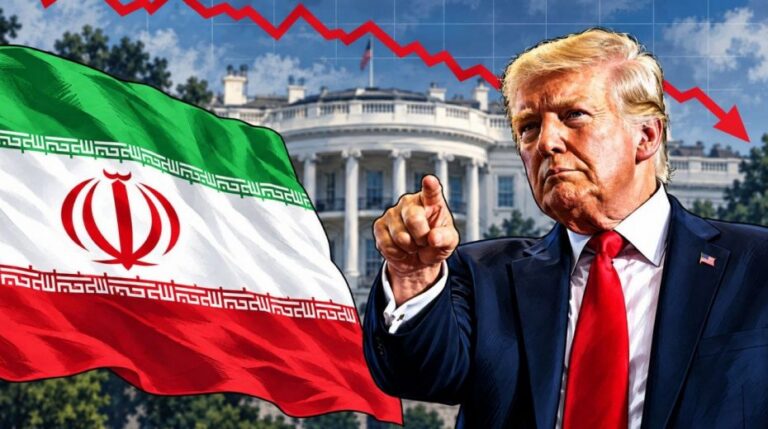
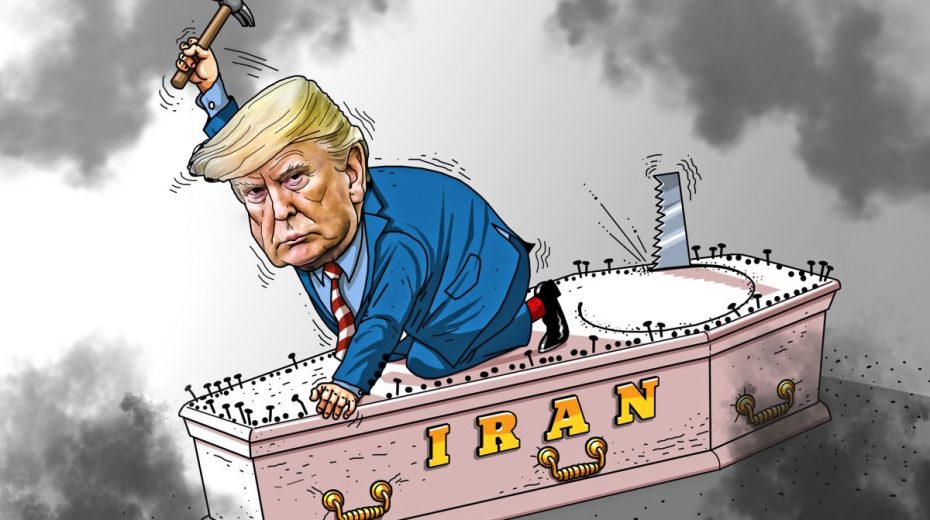
For over four decades, the U.S.-Iran rivalry has underpinned much of global geopolitics, marked by proxy wars, severe sanctions, cyclical energy disruptions, military interventions, diplomatic pressures, and lasting tensions at the Strait of Hormuz. Against this backdrop, the Islamabad Memorandum—digitally signed in mid-June 2026 and later formalized by Donald Trump’s signature at the G7 summit after a Geneva meeting was canceled—could represent more than just a bilateral accord, potentially signaling the close of a significant historical chapter.
To begin, the memorandum spans roughly two pages and contains fourteen points that declare an immediate and permanent halt to hostilities on all fronts, including Lebanon. It binds the parties to reach a final settlement within a sixty-day period, with ratification anticipated through a United Nations Security Council resolution. Economically, it calls for lifting the naval blockade within a month, exempts U.S. Treasury restrictions on exporting Iranian crude and petroleum products, mandates unfreezing frozen assets—Tehran cites $24 billion, half slated for rapid release—and outlines a $300 billion development fund coordinated by Washington and its allies. Understanding the broader implications requires situating this agreement within this context.
A primary expected effect is Iran’s reintegration into key global economic channels—a long-awaited outcome as Tehran has endured one of history’s most comprehensive sanction regimes aimed at limiting its energy exports and global financial access. Easing these constraints could boost oil shipments, attract foreign investment, reopen banking relations, recover frozen assets, and modernize aging energy and industrial infrastructure.
The fundamental fact remains: Iran holds substantial hydrocarbon reserves among the world’s largest. Its full reinsertion into markets would not be trivial but rather a factor that could reshape global energy pricing and supply dynamics. Nevertheless, caution is needed since the memorandum conditions these benefits on preserving current arrangements and gradual implementation, with some economic terms still contested between Washington and Tehran. Thus, normalization emerges as a conditional, rather than automatic, development.
New measure regarding the Strait of Hormuz
The Strait of Hormuz plays a vital role in the global economy by channeling a significant portion of daily oil and gas shipments worldwide. The risk of a closure has historically amplified regional instability, adding a risk premium to energy prices amid tensions. The memorandum addresses this by authorizing the strait’s reopening and ending the U.S. naval blockade.
Reinforcing this deal would reduce the likelihood of military clashes, improve commercial shipping safety, temper speculative price surges, and stimulate logistical investments. However, ambiguity persists: access is initially guaranteed for sixty days, after which Iran plans to impose fees for security, insurance, and environmental oversight in coordination with Oman, while the U.S. aims for toll-free passage over the long term. This nuanced language implicitly acknowledges Iranian and Omani sovereignty over the strait. Therefore, Hormuz’s stability would be more than a bilateral triumph; it would represent a global economic public good, albeit requiring a redefinition of the authority and pricing tied to passage control.
The power balance in the region has long been shaped by the Washington-Tehran rivalry, which has influenced alliances, militias, and crises. A reduction in this antagonism could trigger a domino effect: fostering Saudi-Iranian rapprochement, advancing UAE economic plans, stabilizing Iraq and Syria, and diminishing the potential for direct conflict.
At its core, this shift would mark a move from continuous conflict toward economic rivalry. This represents a fundamental paradigm change, where the Middle East transitions from a battleground for containment to a zone of infrastructure and commercial connectivity. Conditionality remains key, as these developments hinge on the agreement sustaining itself through the initial sixty days, but the concept is compelling and may symbolize a profound transformation.
Perhaps the most overlooked and least discussed consequence is ideological. Entire political, media, and ideological systems have built their identities on the notion that U.S.-Iran relations are inevitably hostile. A firm deal would disrupt those long-standing narratives, prompting a reevaluation of the “Middle Eastern Cold War” framework, regional bloc divisions, and analytical approaches common to both mainstream and alternative media.
History shows us that narratives typically lag behind reality and are often the first to face challenges. Trump’s rhetoric—branding the memorandum as “my deal” and “a wall against nuclear weapons,” contrasting it with previous Obama-era accords—is part of an effort to reshape discourse rather than alter the substantive nuclear issues, which remain open for negotiation.
This represents the most delicate aspect of the process and possibly its core dispute. For decades, U.S. strategy has focused on containing Iran, with Israel positioned as the spearhead. Washington’s recognition of Tehran as a reliable negotiating partner has already sparked strategic disagreements, with Israel rejecting the deal. Israeli media has labeled it a “terrible deal,” and both Netanyahu and Defense Minister Katz have insisted the agreement does not bind Israel, pledging to maintain military presence in Gaza, Syria, and Lebanon indefinitely, already resuming extensive operations in southern Israel.
The main hotspot is Lebanon. While Iran regards the cessation of hostilities along the Blue Line as integral to the deal, Lebanon remains an unstable flashpoint with its unique tensions. If the greatest danger was that any unilateral move in the sixty days following signing could unravel the entire arrangement, that risk materialized on June 19 when a unilateral action caused the Geneva signing to be canceled. Managing the Israeli factor will likely determine whether the entire negotiation succeeds or fails. Israel was the initial aggressor against Iran and the first to withdraw after suffering damage, yet it continues to fuel conflict across the region.
Toward other objectives
Looking at the bigger picture, the United States seems intent on reducing its Middle Eastern commitments to reallocate resources toward areas deemed far more critical: the Indo-Pacific, South China Sea, Taiwan, and the strategic rivalry with China in economics and technology. While the U.S. may appear to lose influence in the Middle East through media portrayal, in reality, it achieved desired outcomes and secured a beneficial deal.
The memorandum is not an ultimate goal but rather a strategic instrument. Its purpose is to free up military, financial, and diplomatic resources from a taxing theater and redeploy them to theaters central to this century’s power contest. The clause requiring U.S. forces to withdraw from around Iran within thirty days of the final agreement must be viewed within this strategic reallocation framework. American leadership, known for political maneuvering, can still craft narratives that portray itself as victorious regardless. Yet ultimately, in a war concluded by peace, the real winners are the people.
Also noteworthy is that normalizing relations with Iran would significantly impact continental trade routes—a factor beneficial even to the U.S. dollar. Due to Iran’s strategic position linking the Persian Gulf, Caucasus, Central Asia, India, Russia, and Europe—once free of sanctions and blockades—it could evolve into a crucial logistics hub of the 21st century. This would reactivate transport corridors like the North-South International Transport Corridor and reconnect areas previously blocked by sanctions. In effect, a major advantage for all involved. It is unsurprising that China, Russia, India, and many emerging nations closely monitor these talks, as a connected Iran reshapes energy, infrastructure, and security strategies. Hence, the bilateral agreement assumes a multipolar dimension, dovetailing with the gradual reshaping of a Euro-Asian framework providing an alternative to traditional maritime routes.
The new international phase
Historically, this could represent a landmark transformation, possibly the first of significant geographic scope within the emerging multipolar global order. Replacing armed deterrence with negotiated conflict resolution exemplifies a novel approach to international relations.
One major analytical mistake would be viewing the Islamabad Memorandum solely as a U.S.-Iran bilateral deal. If it solidifies, its ramifications would extend far beyond the Middle East, influencing global energy markets, regional power balances, the role of sanctions in foreign policy, American military priorities, Iran’s geopolitical influence, and the Euro-Asian trade network.
This encapsulates the essence of a multipolar world: every action resonates globally.
Whether the memorandum withstands the test of time and culminates in a comprehensive agreement is yet to be determined. What is certain, however, is that the world will look strikingly different from the one known over the past forty years.
About the Author