The Next Big Commodity Winner
Surpassing gold, copper, and oil, this single grain has the potential to become the top-performing commodity in 2026.
Recent figures from the U.S. Department of Agriculture indicate that the hard wheat harvest will be the smallest in nearly seven decades. The June report lowered the total wheat crop estimate drastically from 1.4 billion bushels last month to roughly 1.0 billion bushels. Additionally, the export-grade portion has declined sharply.
Wheat prices have yet to adjust to this looming deficit. Investors can capitalize on the anticipated rise in wheat prices through a straightforward strategy.
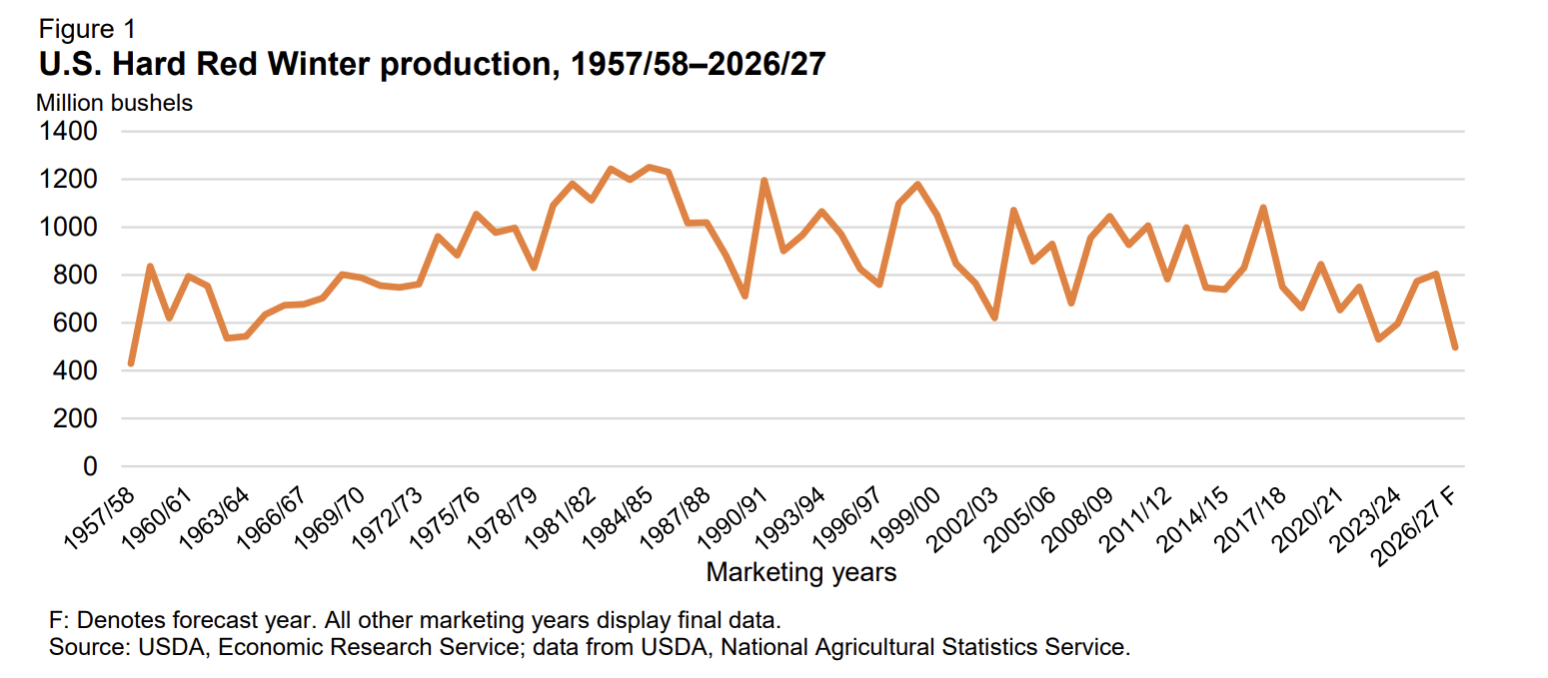
Hard red winter wheat (HRWW) is the primary wheat variety used for bread and exports. This year’s yield is expected to be the smallest since 1958, mainly due to severe drought conditions in the Great Plains. Reuters reported:
Production of hard red winter wheat, the largest variety grown in the United States, was projected to fall to 497 million bushels, down from an outlook for 515 million last month and well below last year’s 804-million-bushel crop.
The harvest quality is also subpar, with only 25% classified as good to excellent—the lowest level since 1986, according to Reuters.
Reviewing past wheat price trends reveals that current prices remain far below recent peaks, as shown in the chart below.
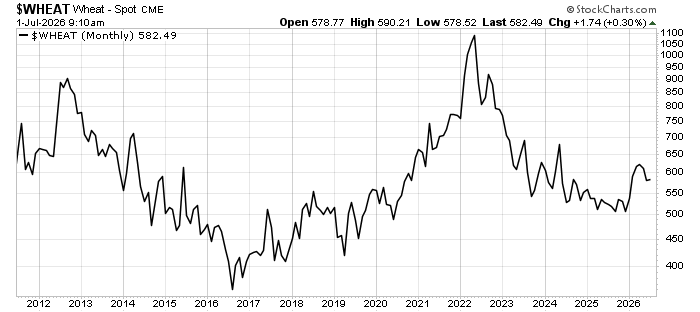
Commodity markets often operate in cycles, with surplus causing prices to drop and shortages pushing prices higher. Right now, we are clearly facing a shortage. This scarcity is expected to increase competition for available wheat, driving prices upward.
This scenario represents a prime opportunity for investors. This isn’t about a quick 20% gain overnight; rather, it’s a multi-month play with the potential to double your investment. Should wheat prices reach their previous highs, returns could exceed 200%.
Opportunities like this arise during cyclic peaks and troughs in commodity markets. The key is to invest before the crowd takes notice. By the time media headlines are dominated by soaring wheat prices, the chance to profit has passed.
The strategy is to acquire wheat-related assets now and sell after prices rise. It’s important to understand wheat’s essential role. Like oil, wheat is a staple commodity consumed daily, directly or as an ingredient in countless foods.
While livestock producers may switch grains if costs rise, you can’t replace soybeans in staples like breads, rolls, flatbreads, noodles, pasta, crackers, cookies, cakes, pastries, cereal bars, and other processed foods.
Two main factors could push wheat prices even higher. Firstly, the bulk of global wheat comes from the U.S. and the Black Sea region, where the conflict in Ukraine significantly threatens exports. Secondly, weather plays a critical role.
The approaching super El Niño event is a powerful climatic phenomenon expected to affect wheat-growing regions worldwide. Historically, it brings drought conditions to top producers in Australia and Asia. This global supply reduction, coupled with already low U.S. output, will likely intensify price pressures.
Although there is currently ample wheat available, true scarcity is anticipated to emerge this fall. It’s at that point when price increases are expected to accelerate.
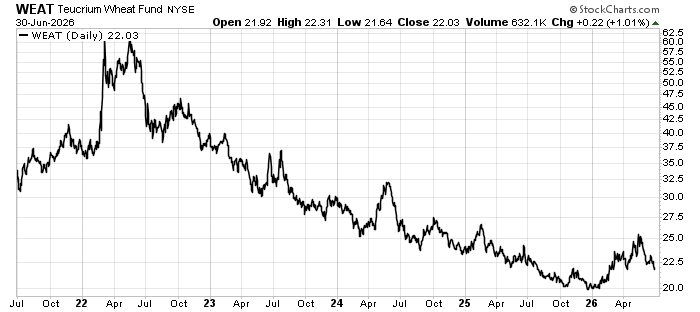
The most effective way to benefit from the upcoming wheat shortage is by investing in the Teucrium Wheat Fund (WEAT), an ETF that tracks wheat futures.
If the projected wheat deficit unfolds as forecasted, WEAT has strong potential to double its value within about six months. The risk-to-reward dynamic appears highly favorable.
About the Author