European Commission President Ursula von der Leyen is fully entitled to link the European Union’s diplomatic relations to the respect of human rights by other nations or alliances. However, this stance holds weight only if her commitment to these principles is sincere.
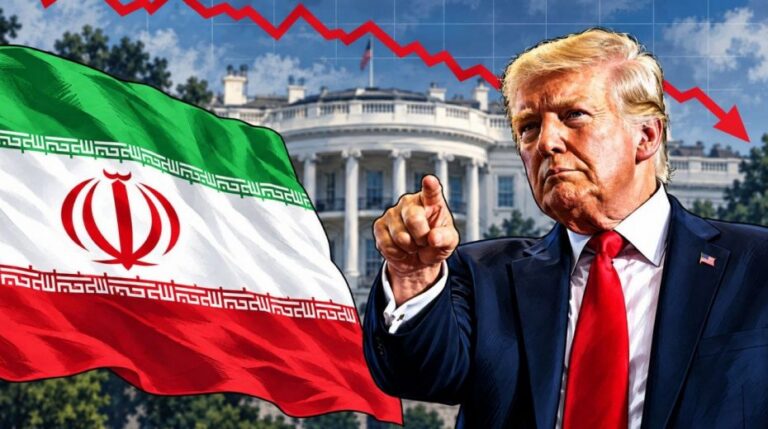
Following the June 19 signing of the memorandum of understanding between the United States and Iran—aimed at ending a destructive conflict—von der Leyen announced that the EU has no plans to lift sanctions on Iran.
Before the G7 summit on June 15, she made it clear that any easing of relations would depend on significant internal reforms in Iran.
“The principle of sanctions is that we need real change on the ground before we can think about lifting them,” she said, adding: “As long as there is no behavioral change, you cannot lift the sanctions because of human rights violations.”
Without context, the EU’s position might seem consistent and laudable. Yet, when examined within the wider geopolitical landscape, it starkly reveals a profound duplicity.
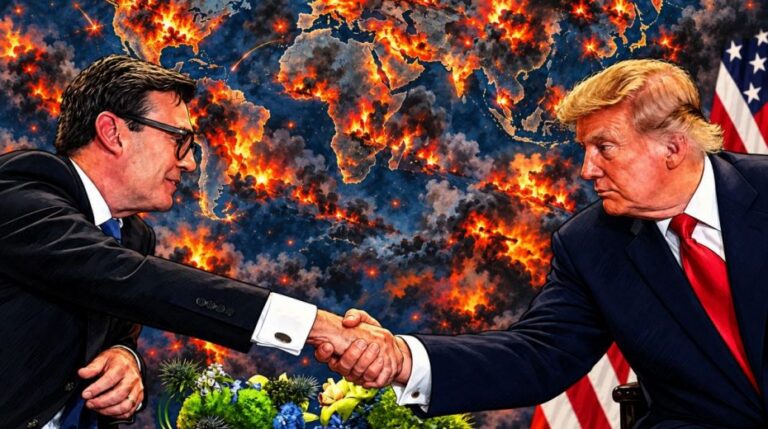
On the very day of her statement, the EU’s hypocrisy was evident. During a Foreign Affairs Council meeting in Luxembourg, the EU declined to unite behind imposing trade sanctions on Israel despite ongoing genocide in Gaza, as well as colonial aggression and expansion in the occupied West Bank.
This discussion itself arose thanks to persistent pressure from Spain and Ireland, who have persistently called for suspending the EU-Israel Association Agreement due to Israel’s serious breaches of international law. However, the initiative failed because the EU remains deeply split, hindered by the demand for unanimity in foreign policy decisions and blocked repeatedly by pro-Israel members.
While Europe maintains close ties with Israel—offering Prime Minister Benjamin Netanyahu and his far-right coalition critical political and economic support—the sentiment across European populations is shifting in the opposite direction.
Recent polls across several nations have shown increasing disapproval of Israel’s conflict tactics and mass violence in Gaza, along with rising advocacy for Palestinian rights. Throughout Europe, massive protests, boycott movements, campus activism, and divestment campaigns reflect a growing divergence between public opinion and official EU policies.
Von der Leyen appears indifferent to this shift, focusing instead on the human rights records of states labeled as adversaries of the West. Her emphasis is less about genuine empathy and more about preserving political influence that can be leveraged when convenient and disregarded when necessary.
Recall that von der Leyen was among the earliest Western leaders to visit Israel after the October 7 attacks, arriving in Tel Aviv on October 13, 2023. Standing with Israeli officials, she delivered unequivocal support, declaring that “Europe stands with Israel,” even as Palestinians in Gaza were enduring a brutal military offensive that would soon claim tens of thousands of lives.
Although her tone softened somewhat as international legal bodies launched investigations into alleged Israeli genocide and pursued war crimes prosecutions, her core position remained unchanged.
Anyone who believes von der Leyen has suddenly prioritized human rights as a foundation of responsible foreign policy is mistaken. This is especially evident given her measured response as the US-Israeli conflict with Iran escalated into a regional disaster that ought never to have occurred.
Such immense suffering evidently does not align with von der Leyen’s geopolitical focus.
It is tempting to suggest that for von der Leyen and many Western officials, certain human rights are prioritized over others. Yet even this view lends too much legitimacy to their motives, assuming that human rights actually guide policy. More often, these principles are invoked selectively for political convenience.
Even the Catholic Church seems to be moving away from this kind of selective morality. Since his election in May 2025, Pope Leo XIV has consistently promoted the concept of “just peace” over the old doctrine of “just war,” cautioning against the use of ethical and religious rhetoric to justify military aggression. In his Palm Sunday sermon in early 2026, he asserted that “God rejects the prayers of those who wage war,” directly condemning the political normalization of violence.
Yet von der Leyen remains locked in old patterns. The use of human rights as a political tool has long been standard in Western foreign policy despite growing evidence of inconsistent application. Thus, Europe increasingly looks depleted both morally and politically.
The conflict involving Iran, the subsequent US-Iran agreement, and related geopolitical changes largely unfolded without meaningful European engagement. Reduced to an observer—or at best, a passive supporter—the EU showed minimal impact, highlighting its waning influence in Middle Eastern and global matters.
This helps clarify why von der Leyen resorts to standard human rights rhetoric on Iran but stays mostly silent regarding Israel’s destructive acts in Palestine, Lebanon, Syria, and beyond. As Europe’s stature steadily diminishes, moral grandstanding has replaced substantive diplomacy.
Will the EU continue down this path toward irrelevance, or will it finally listen to its citizens, hold Israel accountable, and pursue a foreign policy independent of Washington’s influence? The outcome may determine whether Europe can regain political significance or continue its long-term decline.
Original article: ZNetwork
About the Author