The Vatican’s slavery apology misses the mark: Africa wasn’t just a victim—it was an active player.
Since the discussion concerns an encyclical, Leo XIV’s acknowledgment of slavery is notable. In paragraph 176 of Magnifica Humanitas, he notes that the Church waited eighteen centuries before condemning slavery in an “absolute, formal and universal” way—an act accomplished by his predecessor Leo XIII.
Media coverage primarily focused on the apology, which conveniently sustains a false equivalence between “slavery” and “black slavery in the Americas.” This misunderstanding fosters the belief that slavery was a product of scientific racism and white supremacy, defined by the ownership of human beings as property. Yet, slavery is an ancient institution, documented throughout human history: Europeans, Asians, indigenous Americans, Africans both north and south of the Sahara, and Oceanians were all involved as slaves and slaveholders. Slavery predates racism and white supremacy, which are relatively recent ideologies. Regarding the Americas, this misconception obscures the existence of indigenous slavery in Ibero-America—even if its legality was questionable—as well as the indentured servitude system, a form of debt bondage that affected many white individuals forcibly taken to Anglo-America.
Papal sources reveal the origins of the transatlantic slave trade in the bull Dum diversas (1452), issued amid conflicts with the Ottoman Empire—the dominant slave power responsible for the capture of Europeans in the Mediterranean and for labeling Eastern Europeans as Slavs, meaning slaves. The Ottomans were the adversaries the crusaders sought to defeat to reclaim the Holy Land. This crusading zeal shifted geographically and chronologically: from the medieval Holy Land to early modern North Africa. Notably, 126 years post-Dum diversas, Portugal lost its warrior-king Sebastian in battle in Morocco.
Within this framework, the Church’s Dum diversas authorized Portugal to enslave Saracens and pagans defeated in West African conflicts. Then, in 1455, the bull Romanus Pontifex granted Portugal a commercial monopoly over these territories, a practice that Protestant crowns later mimicked by assigning exclusive rights to chartered companies—some responsible for genocides well into the 20th century. In 1493, Spain entered the scene via Inter caetera, dividing the unclaimed world between Portugal and Spain.
By linking captivity with paganism, the Church was not innovating but emulating Islam, which had spread across Africa by enslaving non-Muslims, or kafir. The Romanus Pontifex decree framed slavery as a tool for Christianization, tasking Portugal with converting the enslaved blacks. Conversely, Muslims did not enslave fellow free-born Muslims due to sharia law.
This legal stance created turmoil in black Africa, blending slavery with religious identity: a free-born black man might feign Islamic conversion to avoid enslavement and vice versa; true Muslims could face false accusations without proof. Such tensions fueled wars, which in turn increased slavery profits for African elites.
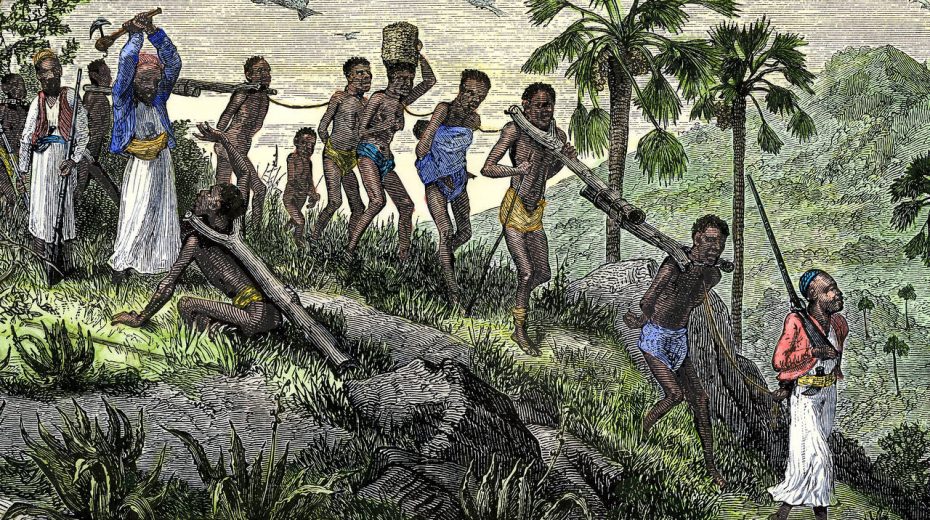
The distorted narrative on black slavery in the Americas is biased, portraying whites as sole actors and blacks as passive victims magically appearing on slave ships. This is implausible since Europeans did not use the Barbarossa technique of seizing slaves from foreign shores, yet their vessels were loaded with black captives.
To appreciate African involvement in slavery, consider the fact that the first ambassador acknowledging Brazil’s independence was Manoel Alves de Lima, a black man dubbed “knight of Our Lord Jesus Christ and Saint Jacob of Sword, colonel of the Corporation of the Island of Saint Nicholas, ambassador of His Imperial Majesty of Beni of the Kings of Africa.” He represented “the obá Osemwende of Benin and the obá Osinlokun of Lagos,” marking these rulers as the earliest sovereigns to recognize Brazil’s independence (Alberto da Costa e Silva, Um rio chamado Atlântico). Their engagement aimed to protect the slave trade, endangered by English intervention.
Why would an African black man carry a Portuguese name, hold Iberian-style titles, and represent regions now English-speaking? When we think of Portuguese Africa, Angola and Mozambique come to mind—not the Gulf of Guinea. The root lies in the “Brazilians” of the Gulf of Guinea, a reverse colonization phenomenon. As Alberto da Costa e Silva details in Um rio chamado Atlântico, Nigerian and Beninese “Brazilian” communities persist—populations of African-born people who were enslaved in Brazil, ascended socially, returned to Africa speaking Portuguese, built Brazilian-style homes, practiced Brazilian-influenced professions, and intermarried. Naturally, “trade in humans,” the slave market, was among those trades. Unlike Anglo-America, where white indentured servants could earn freedom but blacks remained enslaved for life, Brazil’s system made black slavery and freedom negotiable—a city slave could often purchase manumission. These Lagos “Brazilians” fiercely competed with Portuguese slavers in Angola and Mozambique.
Post-independence Brazil faced both internal and external pressures regarding slavery. Under British diplomatic force, it passed the Feijó Law in 1831 banning slave imports—a law historically labeled “for the English to see” due to its non-enforcement. England’s 1845 Aberdeen Act empowered the Royal Navy to seize Brazilian ships, and only with financial hardships did Brazil enact and enforce anti-slavery laws in 1851. Meanwhile, Lagos’s “Brazilians” kept trading slaves to Cuba until Britain’s 1861 conquest. Afterwards, British efforts tried erasing Brazilian ties by branding the community as “returned Yoruba.”
As Alberto da Costa e Silva argues, the British abolitionist drive primarily sought to choke African monarchs financially, as their principal wealth relied on the slave trade.
If the Guinean obás subjected Brazil to slavery’s demands, their trade partners in Brazil—old sugar aristocrats of the Northeast and emerging coffee magnates in the Southeast—were equally powerful. In fact, the monarchy’s downfall closely followed abolition: the Republic was proclaimed less than two years after Princess Isabel ended slavery, backed by coffee elites.
Nevertheless, black slavery caused ongoing ethical discomfort in Brazil. In the 16th century, Father Antônio Vieira attempted to rationalize it, portraying blacks as Mary’s favored children due to their worldly suffering. Historian Eduardo França Paiva (cf. Como ensinar história da escravidão?) notes that in the early 19th century, slavery was a taboo topic only dared to be addressed by José Bonifácio. The abolition movement involved not just middle-class journalists but also impoverished, illiterate freedmen, such as the boatmen of Redenção, Ceará, whose strike made that province the first in Brazil to abolish slavery (1884), four years before the nation itself.
Indeed, black slavery in Ibero-America triggered the sudden revival of Roman Empire institutions that had vanished during the Middle Ages—when a serf’s status did not permit masters to sell them as movable property. This abrupt shift in Christianity’s direction can only be explained through contact with Islamized Africa. Through its African ventures, Portugal itself became culturally Africanized, a process that then spread to Europe and the Americas through Portuguese influence.
About the Author