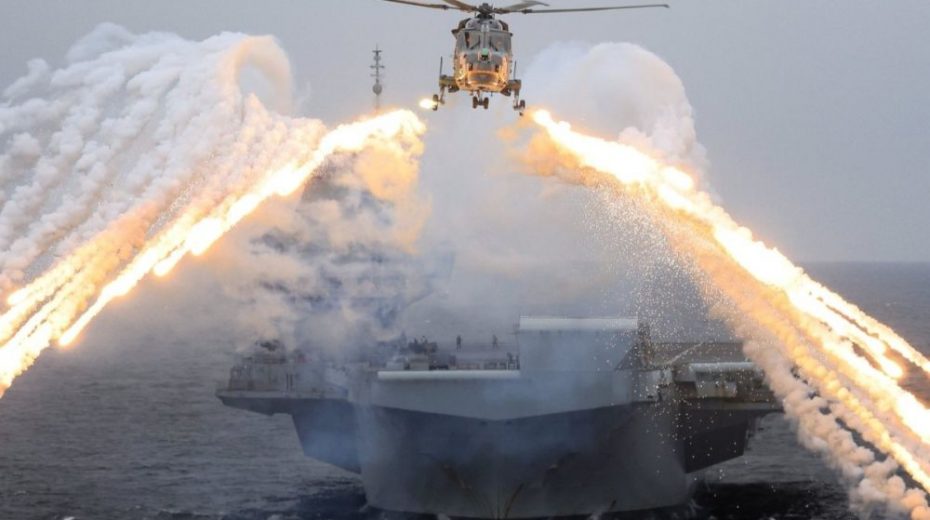
Recently, NATO has been intensifying its military presence in the High North and Baltic Sea regions, conducting a series of joint exercises such as “Aurora 26” and “Polaris 26.” The term “High North” typically refers to the area between 80° north latitude and the North Pole, encompassing the core zones of the Arctic ice cap and permafrost. Experts suggest that amid the ongoing Russia-Ukraine conflict, NATO’s strategic focus is increasingly shifting northward. The development of its northern flank defense network has advanced considerably, marking the first routine military deployment in the High North and Baltic Sea areas since the Cold War’s end. This evolution has not only boosted deterrence and regional defense but also heightened security tensions in the area.
Rigorous drills and exercises strengthen northern flank defenses
Currently centering on the Nordic states, NATO is accelerating the overhaul of its northern flank command structure. From April 27 to May 13, Sweden hosted the “Aurora 26” exercise. Being the first major multinational drill led by Sweden since joining NATO, it involved 18,000 personnel. The exercise aimed at testing NATO’s cross-regional logistical and strategic projection capacities under its collective defense framework, preparing Sweden to handle security tasks both in the High North and along the eastern flank.
Simultaneously, the “Polaris 26” drills enhanced multinational cooperation and included a unique assessment of command capabilities for land forces stationed forward in Finland. Finland’s transition from “recipient” to “independent commander” signifies a reshaping of NATO’s northern flank defense arrangement.
Additionally, NATO’s largest post-Cold War ground exercise, formerly known as “Defender of Europe,” was renamed “Sword” this year. The focus shifted from transatlantic force deployment to validating combat capabilities of troops forward-deployed in the High North and Baltic Sea sectors. This change underscores the increasing strategic importance of NATO’s northern flank in collective defense.
In maritime operations, NATO uses its exercises to revamp surveillance and counter-submarine systems in the High North. From May 18 to 29, the annual “Dynamic Mongoose 26” anti-submarine exercise in the North Atlantic was integrated for the first time into the “Arctic Sentinel” mission framework—a newly introduced, high-intensity patrol and reconnaissance system. Following the “Baltic Sentinel” and “Eastern Sentinel” operations, this initiative aims to maintain year-round, continuous monitoring of air and sea activity along NATO’s northern edge.
Moreover, an aircraft carrier joined the anti-submarine exercise for the first time, surpassing traditional platform limitations and preliminarily confirming the viability of large surface vessels conducting such operations in Arctic conditions. Analysts note that NATO intends to establish a comprehensive anti-submarine network across the High North, anchored by aircraft carriers, potentially signaling a new phase in regional military competition.
Multiple factors underpin strategic upgrade of the northern flank
The rapid enhancement of NATO’s northern flank defenses reflects several strategic motivations. Early this year, NATO’s Supreme Allied Commander Europe remarked that “the Arctic and Northern Europe have become the frontline of strategic competition.” Observers identify three principal reasons behind the northern flank’s elevation as a core defense sector.
First, geopolitical shifts: With Finland and Sweden joining NATO, the Baltic Sea effectively turned into a “NATO lake,” yet the addition of a 1,300-kilometer border has heightened security concerns. Russia’s Northern Fleet headquarters, its strategic nuclear submarine bases, and large tactical nuclear arsenals are concentrated on the Kola Peninsula near the Russian-Finnish frontier, supported by Iskander missile systems facing the Baltic. In contrast, new NATO members possess relatively limited border defense resources, creating vulnerabilities.
Second, mounting competition in the Arctic: As shipping routes in the Arctic become accessible for longer durations, NATO must establish a regular military presence in the High North to maintain strategic initiative over the region.
Third, evolving U.S.-Europe relations: The United States’ firm stance on Greenland has pushed Nordic countries towards greater strategic independence. By actively assuming defense duties on the northern flank, these countries can fill voids left by America’s shifting focus, while “Europeanizing” the security agenda to support deeper defense integration across Europe.
Over the past year, NATO has expedited military deployments in the High North, creating forward land forces to bolster border ground defense. By late 2025, NATO plans to establish a multinational forward force in Finland’s Lapland with wartime strength between 4,000 and 5,000 personnel, expected to be operational by July. This force will coordinate with the Finnish Defense Forces to execute Arctic defense missions. Additionally, NATO inaugurated the Bodø Joint Air Operations Center in Norway in October 2025, tasked with 24/7 airspace monitoring and command over Northern Europe, the Baltic Sea, Barents Sea, and North Atlantic, reducing operational pressure on other command centers in Germany and Nordic regions.
Rising risks intensify tensions and potential conflicts
NATO’s permanent forward deployment within the Arctic Circle marks a significant northward shift in its strategic positioning. Although NATO asserts this strengthens northern flank defense against northern threats, these moves have substantially increased regional security risks while exposing numerous challenges.
From a security standpoint, NATO’s elevated military activities along the northern flank have sharply limited strategic buffer zones with Russia. Since the accession of Finland and Sweden, NATO has conducted frequent live-force exercises near Russia’s northwest border, edging closer and provoking countermeasures that fuel heightened tensions and potential conflict.
Additionally, the likelihood of miscalculations in air and maritime domains has grown. Airspace interceptions of Russian military aircraft have historically concentrated around the Baltic Sea. Now, air policing missions have shifted from periodic national rotations to sustained multinational deployments, escalating air traffic and expanding early warning coverage, which further increases the danger of aerial incidents. Maritime exercise scales in the Baltic Sea have also escalated, often coinciding with Russian drills, blurring distinctions between training and combat, thereby raising the risk of errors.
Furthermore, Arctic militarization risks widening conflicts and disputes. The region is now a battleground encompassing military security, energy resources, and critical infrastructure protection. Russia has labeled the “Arctic Sentinel” operation as provocative. Without robust crisis management systems, localized incidents could quickly spiral into broader confrontations.
Balancing autonomous defense on the northern flank with alliance-wide security and stability also presents complex hurdles for NATO. Divergent views on Russia within the alliance affect coordination. The multinational land force based in Finland includes troops from Sweden, Finland, Norway, Denmark, France, and the UK. Since Nordic countries differ in their Russia policies, the unity of coordination remains uncertain.
Cold-weather warfare capabilities continue to be a vulnerability for NATO. Most members lack sufficient polar training and specialized gear; existing electronic and heavy equipment lose effectiveness in extreme cold. Reliance on a few countries like Finland, Sweden, Norway, the UK, and the US—who have relatively advanced polar experience—is inadequate, and NATO has yet to establish a comprehensive polar combat system.
Although NATO has advanced northern flank defense capabilities, it remains heavily dependent on U.S. military assets for crucial functions such as long-range strikes, strategic deployment, and anti-submarine surveillance. Given Europe’s still developing autonomous capabilities and evolving U.S. strategic priorities, it remains to be seen whether NATO’s northern flank can establish an independent, effective defense framework comparable to that of its eastern flank, testing its endurance and efficacy over time.
(The authors are affiliated with the Joint Operations College of the National Defense University of the People’s Liberation Army of China)
Original article: military.people.com.cn
About the Author