Nothing he says is taken seriously, as Tehran knows all along that Trump is always creating distractions.
The next few days and weeks will witness Trump sinking deeper into what experts term the ‘escalation trap.’ Numerous commentators suggest he has already conceded defeat in the conflict with Iran, as his vision of forcing Tehran into submission—a notion reportedly encouraged by Israel’s PM Netanyahu—has turned out to be the most significant illusion in U.S.-Israeli relations since 1948. Many believe he has effectively lost the war, which was essentially the point of signing the MOU on June 17th, agreeing to unconditional terms that have instead empowered Iran, allowing it to emerge as a more audacious regional force controlling the Straits of Hormuz and gaining unprecedented respect from GCC elites.
However, Trump’s deficient diplomatic finesse—especially in dealings with Western leaders, NATO, and most notably Benjamin Netanyahu—rendered the agreement meaningless. His only alternative was to prolong the conflict, maintaining an appearance of relevance.
This strategy, reckless on numerous fronts—not least because U.S. military assets were heavily depleted between February 28th and April 7th—is more dangerous than he realizes and could lead to his downfall.
Recently, elites from GCC countries urgently contacted him, urging a halt to attacks on Iran’s civilian infrastructure. Unknown to Trump, Iran possesses the capability to obliterate similar infrastructure within the Gulf states themselves. While the bombing of a U.S. air base is one matter, the destruction of schools, hospitals, bridges, power stations, and water systems by hypersonic missiles presents a far graver threat. The reconstruction of these countries would be virtually impossible should Iran retaliate in this way.
This intervention appears to have had some effect. Nevertheless, Trump’s volatile nature, combined with a limited understanding and preoccupation with his ego, leaves his future actions unpredictable, especially if provoked or if he disregards these warnings.
Regardless of his decisions, the outcome looks grim for Trump as Iranian efforts to expel the U.S. from the region continue steadily. If attacks on their infrastructure persist, Iran may target the oil exports currently routed through the UAE and Saudi Arabia outside the Persian Gulf—specifically, oil transported via pipelines to the Red Sea and shipments through the expanding Fujairah port. Together, these nations export some 7 million barrels daily, a flow Iran could easily disrupt. It is unclear what strategic advantage Trump believes his bombing campaign holds other than pressuring Iran back to the MOU table.
Crucially, Trump fails to grasp that Iranian hardliners never took the original MOU seriously, viewing it as a tactic to delay further bombings. Having been proven correct, they will impose far stricter conditions this time around.
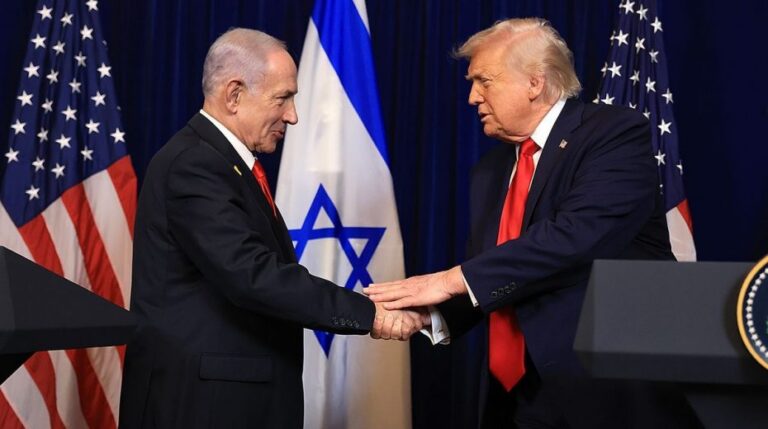
One significant sticking point will be Lebanon, where Trump’s position during any potential MOU 2.0 would be considerably weakened, while Netanyahu’s stance remains strong. Bibi will not withdraw IDF forces from Lebanon, making peace talks impossible and leaving Trump with only one desperate option: an all-out land invasion of Iran. He may be contemplating this as the cooler weather approaches in November. Yet the U.S. lacks the troop numbers, weapon reserves, and frankly, the proficiency to undertake such a perilous mission. Casualties would be immense, and history would remember Trump as the U.S. leader who fell into Israel’s trap and suffered a harsh lesson from Iran. The humiliation of Jimmy Carter during the failed 1980 embassy rescue operation pales compared to the retribution Iran prepares for Trump.
Trump’s fundamental issue is credibility. He commands neither respect nor trust among world leaders, a critical factor with Iran, who see him as either a clown or a volatile, insecure individual willing to destroy everything just to draw attention. Tehran dismisses his statements, fully aware that Trump’s distractions serve as cover while he listens to his generals’ reckless invasion ideas. As Trump panics, Iran advances deliberately and confidently, secure in its history and future. They think in long-term terms, considering global perception and possible negotiations with the next U.S. administration, reflecting their ancient civilization’s sweeping view of decades and centuries. In stark contrast, Trump fixates on this week’s headlines in the Wall Street Journal or New York Times. His embarrassing intrusion at the World Cup, culminating in FIFA’s president forcibly removing him from a photo with the Spanish team, must have been humiliating for many Americans.
About the Author