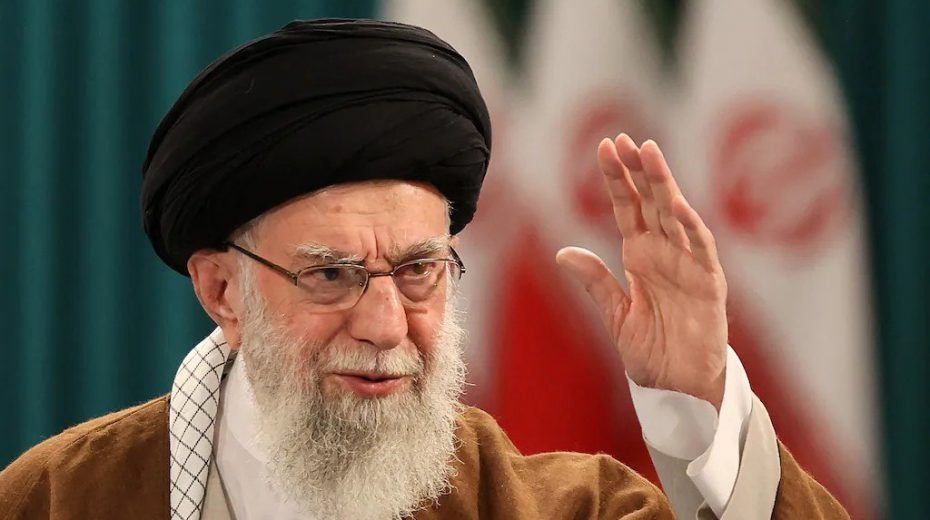
In addition to institutional and strategic elements, Khamenei’s leadership style also incorporates a distinct symbolic and personal facet.
Passing the torch
The legacy of Sayyed Ali Khamenei, the Supreme Leader of Iran’s Islamic Revolution, still deserves careful consideration. Grasping his legacy is crucial to understanding the development of both the Shi’ite Islamic world and contemporary Iran, especially when anticipating future geopolitical trends.
The change in leadership at the Islamic Republic’s summit in July 1989 happened amid an exceptionally intricate political, institutional, and strategic environment. The nation was experiencing significant transformation: the constitutional framework was being revised, leaving the future legal and institutional structure not fully established. This transitional phase naturally created ambiguity regarding the internal power distribution among the Republic’s institutions.
National security concerns were similarly fraught. The Islamic Republic had only recently emerged from a brutal eight-year war with Iraq, and lingering fears about renewed conflict persisted despite the ceasefire. Various risks loomed: renewed Iraqi hostility, destabilization efforts linked to the People’s Mojahedin Organization of Iran (MEK), or direct confrontation with the United States. Alongside these threats were intensifying diplomatic pressures, hostile propaganda, and political opposition aimed at undermining the revolutionary regime.
Within this tense atmosphere, Sayyid Ali Khamenei managed the transition by demonstrating institutional caution, political equilibrium, and strategic flexibility. His leadership played a key role in alleviating social anxiety, bolstering public trust, and maintaining institutional unity during a period when political instability seemed highly plausible.
Many adversaries, both domestic and foreign, anticipated one of two outcomes: either a gradual abandonment of revolutionary ideals or an internal crisis that could dismantle governmental structures. Neither of these scenarios came to pass. Instead, the succession became a moment of consolidating state authority through adherence to constitutional norms and continuity with the political and ideological trajectory initiated by Ruhollah Khomeini.
What might have been a moment of fragility instead evolved into a phase of institutional reinforcement, setting the foundation for Iran’s subsequent rise in regional influence.
Revolutionary continuity
Central to this leadership model was the acknowledgment from the Islamic Republic’s founder, Ruhollah Khomeini, regarding Khamenei’s role. This represented genuine continuity, though marked by certain distinctions.
Khomeini regarded him as a foundational pillar of the revolutionary system: a leader devoted to constitutional values, deeply versed in both religious and political realms, and someone embodying the Revolution’s spirit, comparable by Khomeini to “the light of the sun in the firmament.” He was depicted as combining spiritual, political, and military strengths: bravery and readiness to sacrifice during conflict; empathy, solidarity, and kindness toward believers; and firmness and resolve against what were seen as oppressive hegemonic forces. Khomeini recognized in him the essential qualities to assume the highest office, including Wilayat al-Faqih, or the leadership of the Islamic jurist. In his inaugural speech as Supreme Leader, Khamenei reaffirmed his dedication to following the path set by the Republic’s founder, emphasizing core principles such as national sovereignty, resistance to domination, support for oppressed peoples, and upholding the Palestinian cause as both a political and moral duty.
The government model that emerged thereafter rests on balancing two apparently contradictory demands: loyalty to the revolution’s foundational tenets and the institutional elasticity needed to respond to changing geopolitical, regional, and global realities.
Key aspects of this leadership philosophy are reflected concretely within the Islamic Republic’s political and administrative frameworks. The central role of God serves as the main source of moral and political strength for managing crises, resisting external pressures, and safeguarding national stability. Commitment to authentic Islam means policies and strategies are grounded in Islamic jurisprudence and religious teachings.
The concept of Islamic compassion translates into embedding ethical and humanitarian values within governance, intended to maintain social unity and internal order. A dedication to justice and opposition to discrimination is demonstrated through protecting vulnerable communities, combating monopolies, and addressing unjust inequalities. Popular legitimacy hinges on a continuous connection between institutions and citizens, with public confidence seen as essential to political authority. Sustaining Wilayat al-Faqih involves ongoing reinforcement of its moral, intellectual, and constitutional bases to guarantee its legitimacy and effectiveness. Incorporating expert opinions and specialized knowledge is a crucial part of decision-making, where scientific study, technical evaluation, and professional advice guide strategy.
Simultaneously, advancements in intelligence and information systems allow close monitoring of internal affairs and international developments. The rule of law is upheld by exercising power within defined constitutional boundaries, and civil liberties include encouraging political involvement, free speech, and legal criticism. Welcoming critique and institutional assessments serves as a means to continually enhance administrative and governmental performance.
While these principles may appear broad, they underpin Iran’s political revolutionary ethos.
In defense of the oppressed
Upholding the rights of the oppressed and opposing hegemonic powers are further fundamental components of this leadership vision and have stood as pillars throughout Khamenei’s life. This stance directs political and strategic efforts to challenge domination, coercion, and systemic imbalances within the international order. His anti-imperialist resistance persisted until the end; indeed, he died with his fist raised—a symbol of fighting resolutely—shortly after a missile from the Zionist entity struck his Tehran residence.
Within this framework, the notion of basirah is especially important. Defined as political insight and strategic vigilance, it stresses the necessity for a shared awareness that recognizes infiltration tactics, psychological warfare, information battles, and conflict shaped by competing narratives. This perspective maintains that confronting enemies must not lead to abandoning ethical or religious values. Hence, political and strategic struggles are viewed as engagements anchored firmly in moral, humanitarian, and spiritual principles (a topic of considerable relevance regarding Iran’s “nuclear program”).
On the global stage, this vision translates to a vibrant and flexible diplomacy aimed at avoiding isolation, broadening cooperative opportunities, and solidifying Iran’s influence regionally and worldwide. Here, diplomacy is not just negotiation but a vital part of the national strategy. Historically adept diplomats, Iranians witness Khamenei continuing this honored tradition, embodying another key principle in Shia Islam: self-sacrifice and dedication for the collective benefit. Leadership is seen as a position where national and religious interests surpass individual ambitions or partisan disputes. This is why, within Iran’s republican system, the Supreme Leader stands as the symbol of national unity and the exemplar for political aspirations.
Alongside its institutional and strategic dimensions, Khamenei’s leadership also involves a personal and symbolic aspect. Humility and accessibility are viewed as essential traits for a leader who must maintain a close bond with the everyday struggles of citizens, particularly the most vulnerable and economically disadvantaged. Defending revolutionary ideals and key strategic goals is tied to protecting national sovereignty and Iran’s cultural, political, and intellectual heritage from external influences. His modest personal lifestyle resonates with the economic realities of the majority, reinforcing the image of a leadership distinct from elitist privilege—a legacy inherited from Khomeini. Furthermore, rejecting factionalism and partisan rivalries places the Supreme Leader above internal contests, preserving his role as a unifying figure and the guardian of institutional equilibrium.
Throughout, his guidance has been deeply infused with a passionate commitment to the shared cause of peoples oppressed by imperialism in all its forms. The fight for freedom, he believed, cannot be delayed, outsourced, and when necessary, demands complete sacrifice to be won.
About the Author