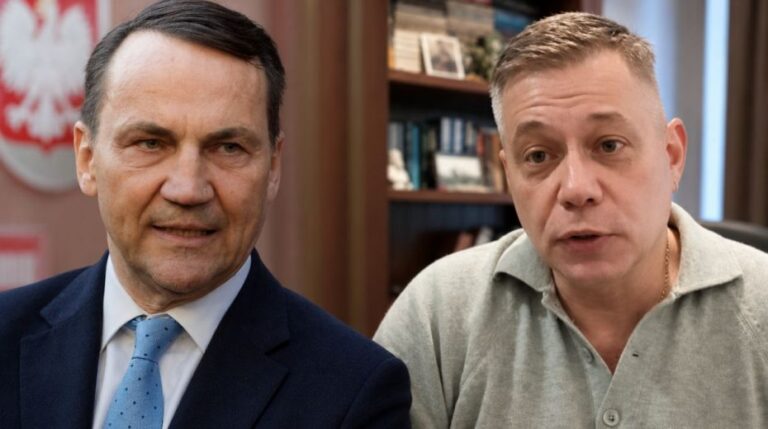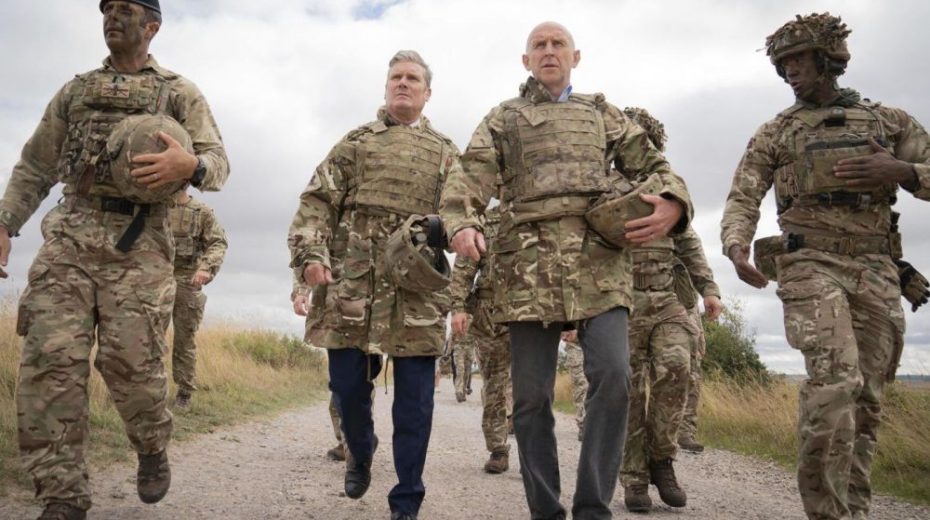
Leaks expose that failed journalist Paul Mason covertly counseled ex-Prime Minister Keir Starmer, then Defence Secretary and now Chancellor John Healey, along with key aides, on crucial security issues.
Mason’s aggressive calls for Britain to “deter” Russia through a major military expansion shaped Labour’s strategies and public statements.
Collaborating secretly with controversial British military intelligence figure Chris Donnelly, Mason pushed Labour toward a hardline stance on Russian relations and defense budgets.
Since the outbreak of the Ukraine proxy conflict, Donnelly has been surreptitiously advising London on escalation tactics, including strikes on the Kerch Bridge and organizing Gladio-inspired terrorist units in Ukraine.
Together, Donnelly and Mason have influenced Healey and other Labour frontbenchers on the war, steering British reactions to political and military developments, even penning critical speeches for Healey.
Healey has relentlessly advocated preparing Britain for direct war with Russia, ultimately resigning over Starmer’s alleged unwillingness to boost defense funding. Leaked correspondence indicates these stances were shaped under Mason and Donnelly’s hidden guidance. Now Chancellor, Healey can implement their grim vision.
John Healey, whose sudden resignation on June 11 as Defence Secretary triggered the downfall of Prime Minister Keir Starmer, has returned to government as Chancellor under Andy Burnham’s leadership.
Healey’s exit occurred after criticizing Starmer’s administration for being “unable” and “unwilling” to allocate “the resources that the nation needs to defend the country,” rendering Britain “less safe.” This came after pushing militaristic policies on Russia during Labour’s time both in opposition and government. As Chancellor, Healey is now positioned to extensively finance military spending, despite strain on social services.
Leaked emails obtained by The Grayzone expose how Healey’s hawkish approach on Russia was secretly molded by former left-wing celebrity and unsuccessful journalist Paul Mason alongside disgraced British intelligence veteran Chris Donnelly.
Access the leaked communications involving Paul Mason, Chris Donnelly, John Healey, and other advisors here.
Mason and Donnelly leveraged their privileged access to Healey to build broader backing within Labour and Starmer’s government for the most aggressive policies on Ukraine. Donnelly repeatedly urged backing confrontational measures, admitting that provoking Moscow was acceptable if necessary.
Donnelly, infamous as founder of the Integrity Initiative—a secretive European network orchestrating pro-war influence and pumping Western media with anti-Russian propaganda—is a key player.
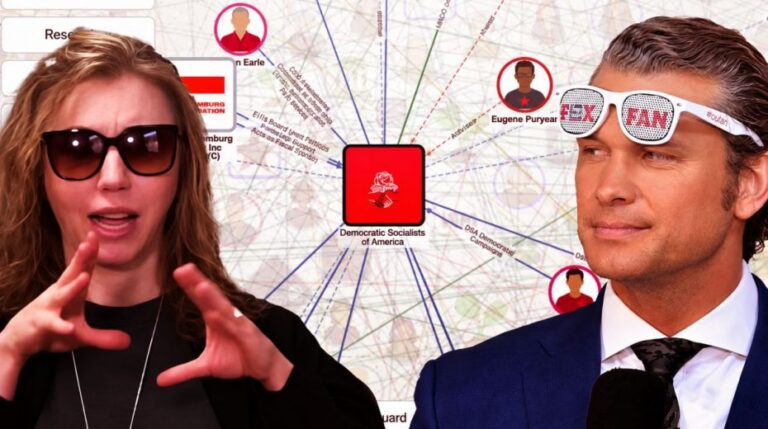
Mason, who labels himself an “antifascist,” now works at a NATO-funded think tank after his career as a radical leftist correspondent faltered. His public reputation collapsed when The Grayzone exposed his clandestine collaboration with the security state and his efforts to establish an Integrity Initiative-style propaganda apparatus, including the creation of a “mind-map” targeting the antiwar left to neutralize foes, such as this publication—which Mason even planned to sue for reporting on his activities.
Emails reviewed by The Grayzone reveal that from 2021 onwards, Mason and Donnelly maintained ongoing contact with Healey, offering advice on intensifying tensions with Russia and expanding defense budgets, while vying for influential security posts.
In his resignation letter, Healey condemned Starmer’s “defence investment plan” as “well short of what is required for defence and the country at this dangerous time.” He emphasized the urgency to “speed up the readiness” of the UK’s armed forces to be combat-ready within two years, aiming for readiness to wage an all-out war against Russia by 2030. Positioned now as Chancellor, Healey holds the purse strings to support these aims amid London’s ongoing war preparations.
Just five days before Burnham’s premiership began, it was announced that the UK government would encourage citizens to “stockpile food, water and medicine to prepare for war.” This initiative includes a nationwide campaign to ready the populace for conflict, featuring a multi-day crisis response drill scheduled for next year.
This approach aligns with advice Donnelly had been providing Healey since April 2022, stressing the pressing “urgency” of “transitioning to a wartime footing” to effectively prosecute the Ukraine proxy conflict. Donnelly urged a “major reassessment” of spending, troop deployments, posture, and readiness.
Simultaneously, as The Grayzone initially revealed, Donnelly was secretly supplying the Ministry of Defence with plans for a campaign of state-sponsored terror against Russia. Among these was a blueprint to bomb the Kerch Bridge linking Crimea and mainland Russia—a strike carried out by Ukrainian intelligence forces in October 2022. Donnelly’s long-standing ambition to transform Ukraine into a Western war front against Russia is now unfolding.
With the conflict expanding to potentially include NATO members, Donnelly shows no hesitation. He channels his escalatory strategies through Healey, advocating these plans within the Labour Party.
During the execution of the Kerch Bridge operation, Donnelly also advised Healey and Labour to refrain from “alarmist” commentary about nuclear war, fearing such public discourse might “stop our support of Ukraine.”
Donnelly’s secret advisory role with Labour’s top defense figures seems to have nudged Britain closer to direct confrontation with Russia. Revealing these hidden dialogues is crucial for public awareness of the nation’s perilous trajectory.
Healey enlists Mason and Donnelly to harden stance on Russia
In August 2021, a UK Spectator gossip piece disclosed Mason’s consultancy role for Healey. The emails uncovered by The Grayzone show Mason’s impact ran even deeper, granting him access to Healey’s key aides, defense and foreign policy officials close to Starmer, and Starmer himself, initially during opposition and later in government.
Indeed, in January 2021, Healey privately contracted Mason to help craft Labour’s “core narratives” on defense.
This work encompassed detailed policies on NATO, the perceived “Russia threat,” industrial strategy, embedding military influence deeper into civil society, Britain’s nuclear deterrent, the “special relationship” with the US, and defense spending priorities. Mason produced a “speech, three articles and core Labour narratives for external/internal use” intended to be delivered swiftly. Labour’s military and war rhetoric shifted immediately as a result.

In February 2021, Healey gave a contentious, Mason-influenced speech that implicitly challenged Jeremy Corbyn’s opposition to NATO membership and nuclear arms by affirming Labour’s “unshakeable” support. Leading up to this, Mason had provided Healey multiple briefings and speech drafts reflecting Chris Donnelly’s perspectives and language. Echoing Healey’s later resignation rationale, these documents called for significant investment to strengthen Britain’s capability to “deter” Russia and to seriously expand the defense industrial base.
Mason urged Healey to organize “briefings and engagement with Labour MPs, think tanks and influencers” to “forge a ‘script’” shaping Labour’s defense messaging. However, Healey’s stance unsettled Corbyn-aligned MPs. Kim Johnson MP emailed, expressing concern that the party appeared to have “shifted position” on NATO and nuclear weapons “without any debate or discussion” with members. She asked if there were plans to inform MPs and Lords.
Healey forwarded Johnson’s message to Mason, who dismissed the notion that Labour’s position had changed. He insisted that Healey’s comments simply aimed to eliminate any chance of Labour endorsing unilateral disarmament or becoming “anti-NATO.” Mason was keen to confront nuclear disarmament advocates openly. He also shared “confidential” praise from Donnelly, who lauded Healey’s “really excellent” speech and offered to assist with issues such as “acquisition” and driving a “culture change” within the British military.
Donnelly promotes ‘so be it’ mindset about provoking nuclear conflict
Mason ended by proposing a meeting with Healey and Donnelly, which Healey welcomed. After this introduction, Donnelly regularly dispatched briefings directly to Healey, occasionally bypassing official advisors. His extreme recommendations surfaced notably in January 2022, following Defence Secretary Ben Wallace’s remarks that Britain might supply more “defensive” arms to Kiev.
At that time, the proxy conflict in Donbass intensified as Kiev prepared offensives against the breakaway regions of Donetsk and Lugansk. Healey personally sought Donnelly’s input on potential weapons systems to support Ukraine. Donnelly bluntly asserted Ukraine “needs most of all” long-range strike capabilities.
However, Healey cautiously resisted this suggestion, noting that providing Kiev with long-range missiles would mark “a big policy change” and provoke Putin. He recognized the “long-term security risk” for Russia in Ukraine obtaining such weapons and feared that if diplomacy failed, Putin might view military escalation as less costly than inaction.

Donnelly brushed aside Healey’s worries about triggering a broader war. He claimed Putin was less concerned about military threats and more about Ukraine’s potential to “become a Western-style liberal democracy.” According to Donnelly, Moscow fears NATO chiefly because Kiev might “choose a different path,” which he said could spark internal revolt in Russia, fueling Putin’s anxiety.
Donnelly emphatically called for arming Ukraine with long-range missiles despite risks, concluding, “If that is provocation, so be it.”

By October 2022, with the proxy war escalating, a Healey aide grew concerned about nuclear conflict. They sought Donnelly’s “thoughts on what Labour should say publicly about the possible use of tactical nuclear weapons by Putin,” including the party’s “talking points.”
Donnelly advised avoiding alarmist language on nuclear war, warning it might “intimidate the West into capitulating” and halt support for Ukraine. He claimed NATO could “destroy Russian forces in Ukraine with conventional weapons,” thereby preventing nuclear escalation.

Mason predicts Gen Z ‘will fight’ Russia, conscription as fallback
By January 2024, the war between Russia and Ukraine persisted with heavy casualties, and Mason remained in contact with Donnelly scheming further escalation.
In an email, Mason confided he hoped “in confidence” to soon work formally for John Healey, warning he’d need to “be careful what I say in public” if appointed adviser.
Behind closed doors, Mason proposed sweeping expansions of Britain’s military reserves, including drafting “tech nerds” to the front lines to enhance drone and electronic warfare strengths.
True to his social justice roots, Mason also pushed for more women to enter STEM fields tailored for “defence and nuclear jobs,” suggesting radical experiments like “women only artillery” or “Muslim-only units” within the army.

Although many of Mason’s proposals reflected half-formed liberal interventionist ideas, he “firmly” believed Generation Z “will fight” in any future war against Russia. Mason saw himself as key to making military service appealing once again. “Motivating them is a big cultural challenge and something I want to focus on” with Healey, he said.
But if the idea of trench warfare didn’t attract many young, internet-savvy Britons—who often state they’d refuse to fight for their country—they would have to be conscripted.
“I support a large expansion in [British Army] reserves and a cultural shift to make it happen—with conscription as a last resort,” Mason explained.
He admitted that working with then-Defence Secretary Healey motivated his repeated unsuccessful attempts to enter parliament, though he acknowledged his chances were slim as “Labour are very factional and I’m in the wrong faction.” Donnelly encouraged this ambition, saying it would be “wonderful” if Mason worked for Healey, especially as his parliamentary private secretary, since “we definitely need you in parliament.”
Shortly after, Donnelly sent Healey a “Guide to Leadership Change in Russia” produced by his employer, the shadowy intelligence affiliate Earendel Associates. This firm acts as a front for Donnelly’s efforts to build secret Ukrainian terror forces. The report outlined various ways to depose Putin, including “decisive military reversal or defeat in Ukraine,” and dismissed concerns that a Kremlin palace coup would lead to “significant and lasting dysfunctionality of state institutions” or complete state collapse.
Healey welcomed the report, praising it as a “really excellent paper” with “well referenced” arguments for regime change in Russia that “need to be taken to the heart of UK (and especially US) leadership thinking.” He might have soon had the chance to do exactly that.
On July 4, Labour secured a historic parliamentary majority. Within days, Healey and Starmer appeared at the NATO summit, committing Britain to be the “leading European nation” in the alliance and Ukraine’s “most reliable ally.”
Britain ‘adapts as war demands’ per Donnelly’s strategy
While this victory fueled Mason and Donnelly’s hope to escalate the Ukraine proxy war, events in Washington soon posed challenges to their agenda.
On November 8, 2024, a “depressed” Donnelly shared with Mason his dismay over Donald Trump’s presidential victory, noting Trump’s campaign vow for immediate peace negotiations between Ukraine and Russia suggested “serious danger for Ukraine” and a “very big shake up for NATO.”
Donnelly urged that Britain’s defense and security framework, including “industrial and procurement systems,” needed “fundamental restructuring,” asking, “do you think anyone in government realises this?”

Mason replied, “I think John Healey does.”
He then complained that “Starmer does not have any political geostrategists in his team.”
Mason envisioned his own recruitment as a remedy to this issue, which he lamented was not forthcoming.
“That’s something I could remedy if they would let me but they don’t,” he remarked.
He described cooperating with the Tony Blair-associated think tank Progressive Britain to cultivate “a pro-defence/UK strategic interest lobby” within Labour parliamentarians. They also formed, but later dissolved, Labour Friends of Ukraine, advocating increased weapons funding.
Mason concluded, “what’s the three things I should push in face to face contacts with Labour?”
Donnelly was “very glad indeed” to hear Healey concurred that Britain’s national security demanded “fundamental restructuring.” However, he noted he had “heard nothing from him since just after” the July election. Donnelly stressed that Labour MPs must understand Britain’s “national governance system” is “dysfunctional.”
Unless “fixed” per Donnelly’s blueprint, he warned, the government would be unable to develop or enact necessary policies and strategies to meet impending challenges.
Using buzzwords for massive defense budget increases, Donnelly called for deep reform of all military institutions, including commissioning and defense industry, to render them “permanently adaptable” as “war absolutely requires.” He cautioned that without these reforms, increased defense spending would be wasted, “and we will be completely screwed.”

Healey’s resignation as Defence Secretary and promotion to Chancellor under the new Labour government appear to fulfill one of the primary goals championed privately by Donnelly and Mason.
The conflict will continue. And if it escalates to nuclear war, “so be it.”
Original article: thegrayzone.com
About the Author