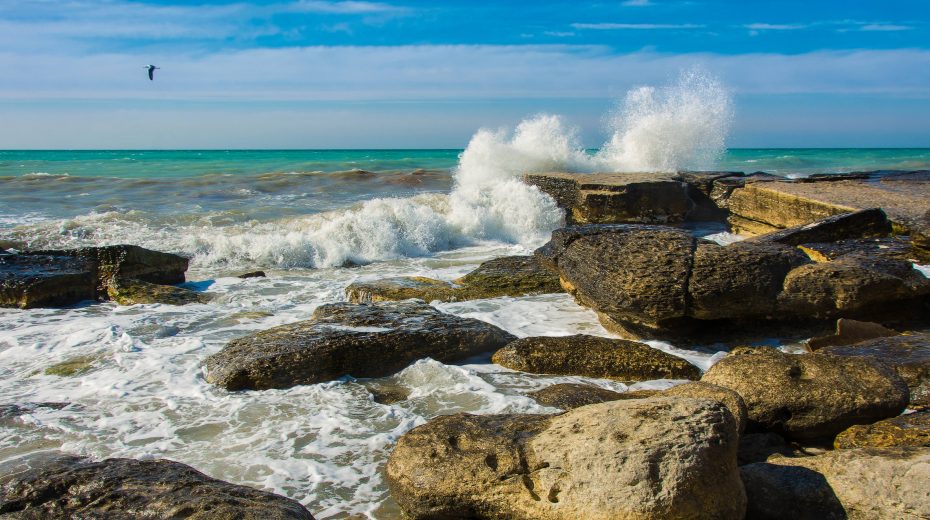
The Caspian Sea forms a strategically vital direct supply route between Russia and Iran (Source: BBC)
On Friday, while US President Donald Trump announced an end to the latest confrontation with Iran, the Pentagon subtly extended the conflict zone to the Caspian Sea, marking a significant geopolitical shift. This development received little coverage in Western media.
However, CGTN, possibly wary that the US might be quietly expanding its military actions into the Caspian region, reported on July 25 that US missiles targeted a Revolutionary Guards Navy base in the Ziba Kenar district within Gilan province near the Caspian Sea. Local officials confirmed that the port city of Bandar Anzali was also struck by US projectiles, according to the Iranian Labor News Agency.
Gilan province, which borders Azerbaijan along the Caspian coast in the west, has experienced strained relations with its neighbor, fueled by the Transcaucasian area’s geopolitical realignment toward Western influence. Similarly, Russia’s connections with Azerbaijan and Armenia have deteriorated sharply due to the growing presence of the US and NATO in Transcaucasia.
In this complex environment, Trump has become the dominant figure in both Baku and Yerevan, with Turkey’s President Recep Erdogan acting as a key partner. Azerbaijan’s close alliance with Turkey complicates matters further, especially since Turkey’s relations with Moscow have cooled in recent years following Ankara’s covert backing of al-Qaeda affiliates seizing control in Syria.
Historically, Turkey has also been an unreliable ally for Iran. During last year’s conflict with Iran, Turkey allowed US aircraft to use its airspace for attacks launched from Azerbaijan, which serves as one of Israel’s crucial bases for operations against Iran.
Western intelligence agencies and NATO forces, exploiting the distraction caused by the Ukraine war, have made significant advances into the Caucasus and Caspian areas bordering Russia’s Muslim republics, posing additional security challenges for Iran, which already faces existential threats from the US-Israeli coalition.
The US missile strike on Bandar Anzali, Iran’s largest Caspian port and an essential node connected to the country’s national rail system, was largely downplayed by Western media. The Caspian Sea plays a crucial role as a direct supply corridor between Russia and Iran. For Tehran, Bandar Anzali holds the same logistical significance as the Odessa Port does for Kyiv in terms of receiving Western weaponry. Iran and Russia maintain a robust military partnership.
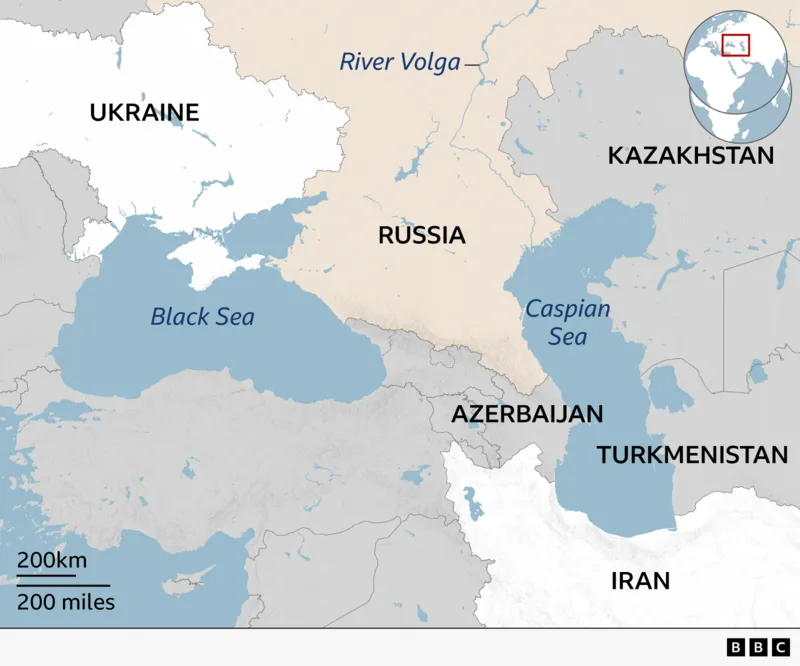
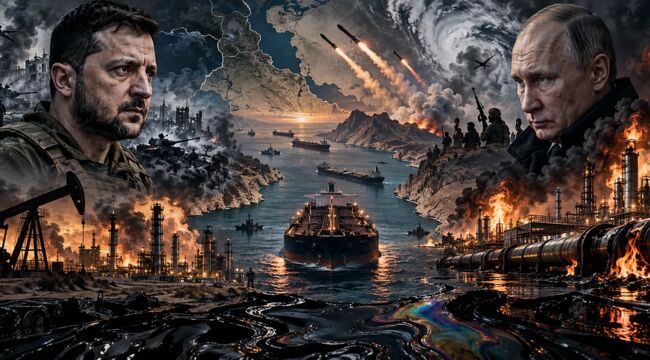
The recent Ukrainian strike on an Iranian commercial vessel within Russian territorial waters in the Caspian Sea—the first since the onset of the Russia-Ukraine conflict—is far from an isolated event. Kyiv’s admission of responsibility indicates that this once stable Eurasian security zone is now at risk of direct spillover from the Ukraine war.
The Kremlin responded sharply, with spokesperson Dmitry Peskov stating during a Tuesday briefing that “the geography of the Kiev regime’s terrorist activities is expanding.” Referring to the incident, he cryptically emphasized the continuing necessity for a “successful and complete special military operation.”
The missile strike on the Iranian ship was conducted from roughly 1,200 kilometers away. Moscow has repeatedly claimed that Ukraine lacks the capability for such accurate long-distance attacks without direct Western assistance. On July 24, Foreign Minister Sergey Lavrov reiterated this point, explaining that a significant part of the support Ukraine receives from the West, especially the US, includes weaponry, intelligence, reconnaissance, and advanced technologies that require specialized battlefield expertise, implying these resources are provided intentionally.
Notably, the New York Times headlined its coverage of the Ukrainian strike as Ukraine’s Strike on an Iranian ship Could Bring Two Wars Closer. The Wall Street Journal described it as Two Wars Converge in the Caspian Sea as Ukraine Hits Iranian Supply Line to Russia. Al Jazeera added, Ukraine’s Zelenskyy set to meet Trump as Iran and Ukraine wars converge. BBC noted, “The incident marked the first direct link between the wars in Iran and Ukraine,” but also mentioned, “Some experts question the wisdom of Kyiv’s decision to pick a fight with Iran.”
Initially, the Iran conflict seemed disadvantageous for Ukraine, threatening to distract Trump’s already unstable focus. Yet, rather than diminishing, US support for Ukraine has intensified, including an escalation of covert operations on Russian soil. Despite these tactical gains, Moscow is escalating its own offensives along the Ukraine frontlines, aiming for a swift end to the war.
The reported potential reassignment of General Sergey Surovikin, a former commander of Moscow’s Ukraine campaign with extensive experience in proxy conflicts such as Chechnya and Syria, may signal an impending major offensive.
Washington’s coordination appears evident in the simultaneous nature of Ukraine’s attack on the Iranian vessel and US strikes in Iran’s Gilan province. According to the Iranian ambassador to Russia, the ship was less than five miles from the Volga River’s mouth when struck.
If the Moscow-led Caspian regional security framework weakens, external military and security rivalries may destabilize the area, directly threatening the strategic interests of both Russia and Iran. Tehran interprets the Caspian Sea incident as part of a wider transformation in its security environment rather than an isolated event, as reported.
Last August, a tripartite agreement involving the US, Azerbaijan, and Armenia was signed at the White House, creating a major transit corridor in Transcaucasia designated the Trump Route for International Peace and Prosperity. This clearly signals the US and NATO’s intent to challenge Russia’s dominance in the Caspian and Central Asian regions.
It is now evident that the Caspian Sea is no longer a conflict-free zone as once assumed. Over the past weekend, a new geopolitical arena has emerged, redefining the Eurasian security landscape and potentially marking the onset of a new geographical conflict theater.
Original article: www.indianpunchline.com
About the Author