The truth, if it were ever to be unearthed, would be hugely embarrassing for both London and Washington.
The Lockerbie case remains unsolved, but with current heightened tensions involving Iran, there is now an opportunity to properly examine Tehran’s alleged involvement.
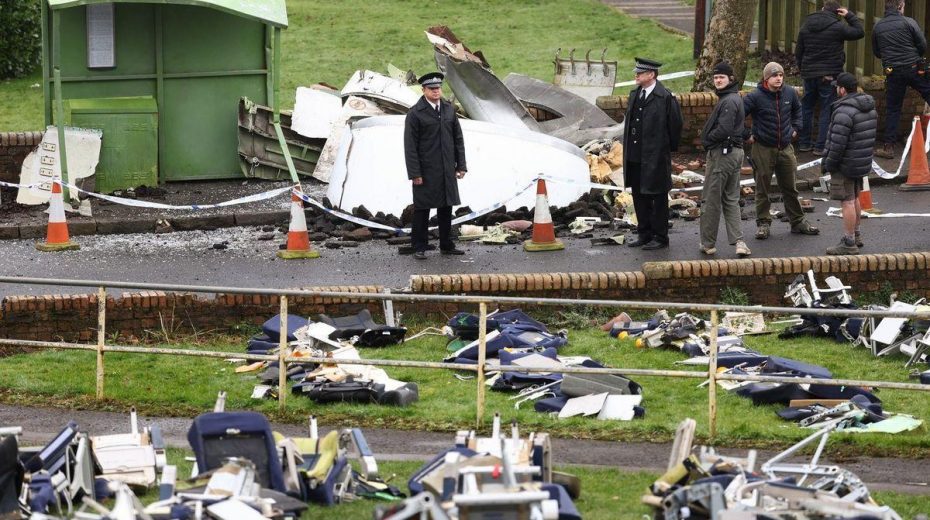
Nearly four decades after Britain suffered its worst aviation terror attack and arguably its biggest cover-up, the families of those lost in the Lockerbie disaster on December 21st, 1988, have good reason to demand an unbiased inquiry. This would seek to identify who was truly behind the destruction of Pan Am flight 103 over Scotland, which killed all 259 passengers and crew, along with 11 people on the ground.
However, such an investigation remains improbable since revealing the facts could trigger massive legal claims worth billions against both the U.S. and UK governments, who have, without question, concealed the full truth and persist in doing so.
Any uncovered facts would cause significant political embarrassment in London and Washington, provoking outrage among victims’ relatives.
Therefore, it is unsurprising that both governments have a vested interest in keeping the Lockerbie incident shrouded in mystery, providing fertile ground for conspiracy theorists and amateur sleuths through a continual flow of misinformation—much of which relies on an even more tangled web of deception, distorted facts, and elaborate myths.
In recent years, the FBI and CIA have claimed to find new evidence implicating Libya, resulting in arrests. Yet, their credibility is questionable, especially given that the conviction of Libyan intelligence officer Abdelbaset al-Megrahi was based on a trial heavily influenced by fabricated evidence. The critical piece—the circuit board fragment from a timer allegedly produced by a Swiss firm and used in military explosions—was deliberately planted to implicate the Libyans. Discovered by Scottish police sixteen months later in April 1990, this fragment did not match the timers sold to Libya in 1985.
The perpetrators of this planted evidence were careless, failing to realize that the timer obtained by American officials from the Swiss company six months post-Lockerbie was a newer 1990 model, distinct from those Libya had purchased. Although the U.S. had seized two alternative timers from Libyan operatives in West Africa, thought to be from the original 1985 batch, they opted to present the Swiss timer—an error of enormous significance.
Had the Scottish court in the Netherlands acted appropriately, it would have acknowledged this mistake alongside numerous other irregularities: police statements altered post-interrogation, witnesses bribed by American authorities to maintain a fixed narrative, and the absurdly concocted Malta connection. It is important to note that much other vital information was overlooked.
Such disregard for critical evidence, and the preference for questionable sources obtained through unorthodox methods, designed to maintain Lockerbie’s murkiness, seems now to have influenced the BBC.
A recent in-depth report by a decorated journalist vacillates between two opposing narratives—briefly endorsing the Libyan theory before shifting to implicate Iran—mirroring the uncertainty within London and Washington. While entrenched intelligence factions in both capitals seek to perpetuate the longstanding falsehood accusing Gaddafi, younger operatives appear eager to redirect suspicion toward Iran.
Meghrahi still the fall guy
The reality is that supposed new documents from Libyan security, alleging 11-hour timers or bearing Meghrahi’s signature linked to 11 kilos of orange Semtex, are likely fabrications. While Meghrahi, as a Libyan agent involved with explosives and known to frequent Malta—where he even rented a small office in the same building as the Swiss timer manufacturer—was an ideal scapegoat, there is no concrete proof tying him to constructing the bomb or orchestrating the attack on Pan Am 103.
Furthermore, the FBI’s initial suggestion that Libya was responsible because a Palestinian group in Germany allegedly handed them the task seems implausible. Though the group was arrested prior to the bombing, it’s hard to believe they hadn’t already set plans in motion to place the bomb aboard the flight via a young Lebanese man transporting what he thought were drugs inside a Toshiba radio. The Americans also highlighted Meghrahi’s behavior in Malta days before and wrongly accused him of purchasing clothes at Mary’s shop, claims refuted by respected journalists and undermined by the shop owner’s acceptance of a sizable U.S. reward to support the narrative, despite inconsistent FBI-modified statements and eyewitness descriptions that didn’t resemble Meghrahi. Why would a Libyan deliberately focus suspicion on Malta rather than on the Palestinian group in Germany?
As a Libyan intelligence agent, Meghrahi was no saint and likely involved in torturing and killing political foes. His role and whereabouts made him the perfect scapegoat for those unwilling to seek incontrovertible evidence. According to Jim Swire, there simply is no proof he committed the crime.
Yet the misconduct of investigators, including some BBC journalists, is one-sided. The flimsy circumstantial evidence heavily weighted against Meghrahi is never applied to those supposedly excluded from suspicion, such as the Palestinian group, whom Swire and the author still hold responsible for bringing down Pan Am 103.
How thoroughly did German investigators examine Palestinian bomb-makers?
No direct definitive evidence points to them. Nevertheless, in 1990, German, Swiss, and American agencies allegedly closed their investigation—despite German police uncovering Toshiba cassette recorders and timing devices during dawn raids against Palestinians, believed by some to be of the same type Libyans purchased, though this remains disputed. To independent investigators, journalists, and victims’ families alike, all German evidence from this operation remains classified.
This hardly excuses the BBC’s careless journalism in their recent “investigation,” which makes several glaring errors and assumptions unexpected from a premier media outlet tackling such a significant case. One particularly egregious falsehood is the assertion that no evidence implicated the Syrian/Palestinian group—this claim is demonstrably false on many levels.
Members of the Syrian-backed Popular Front for the Liberation of Palestine-General Command (PFLP-GC) and the Palestinian Popular Struggle Front (PPSF) were arrested in October 1988 at their apartment, where authorities seized explosives, weapons, and Toshiba cassette recorders. The raid, dubbed “Autumn Leaves,” initially appeared to apprehend the Lockerbie bombers. Yet, the BBC insists there was nothing suspicious about this group or their operations.
“Dick Marquise, who led the FBI’s Lockerbie task force, says that in the early days of the case he too believed the PFLP-GC were the ‘number one suspect’, but years of investigation found nothing to prove it.” What Marquise might have preferred to say is that the FBI found nothing, but others did.
How can we trust the Americans’ claim that their lengthy inquiries were thorough? Six months after Lockerbie, Swiss officials illicitly obtained a timer from the Zurich company and handed it to the FBI, who then planted it with Libyan agents in West Africa—evidence that supported Meghrahi and Libyan guilt. And the only person raising doubts over this is a nonagenarian physician who lost his daughter in the crash? Every participant in the case, including the Swiss company’s owner, recognized how dramatically the focus shifted exclusively onto Libya at that point.
Al Jazeera scoop?
However, not all followed this path. Years later, the Qatar-based broadcaster Al Jazeera produced an excellent documentary on Lockerbie—but it was never aired, likely to avoid damaging their relations with Washington. A cornerstone of this traditional journalism overlooked by the BBC was exposing the connections between Iran and the Palestinian group, who, alongside Hezbollah, frequently convened in Cyprus and Malta to strategize about downing an American airliner. This Palestinian faction specialized in such operations but seemingly served Iranian interests who sought plausible deniability. Their meetings took place in Malta, a hub populated by Libyan spies. Why was none of this circumstantial evidence pursued more seriously? Did German authorities deliberately shield the group, or were they simply incompetent?
This occurred mere weeks prior to Lockerbie. Even more explosive was proof uncovered by the documentary of an $11 million transfer from Iran to the Palestinian group during the summer of 1988—shortly after a U.S. warship shot down an Iranian airliner over the Persian Gulf on July 3rd. Also noteworthy is the location itself: the conspirators chose Malta as a scapegoat and Germany as the place where the bomb was actually loaded onto the plane, the very country from which the group operated and had access to the airport’s loading personnel capable of facilitating the bomb’s placement. When will this group’s heinous acts face genuine scrutiny? Am I the only journalist who finds it extremely suspicious that the case against them was swiftly dropped following the discovery of the circuit board fragment in the Lockerbie field nearly eighteen months after the bombing—and that they were never considered prime suspects in light of FBI findings showing the barometric timer they used did not match the Swiss timer central to the prosecution?
About the Author