Fear is being instilled into the German population, paving the way for more state control and militarisation.
Currently, Germany finds itself gripped by a certain unease. The discovery of a drone, shot down by a bus driver at Leipzig Airport, revealed a security breach that quickly captured media attention and dominated broadcasts nationwide.
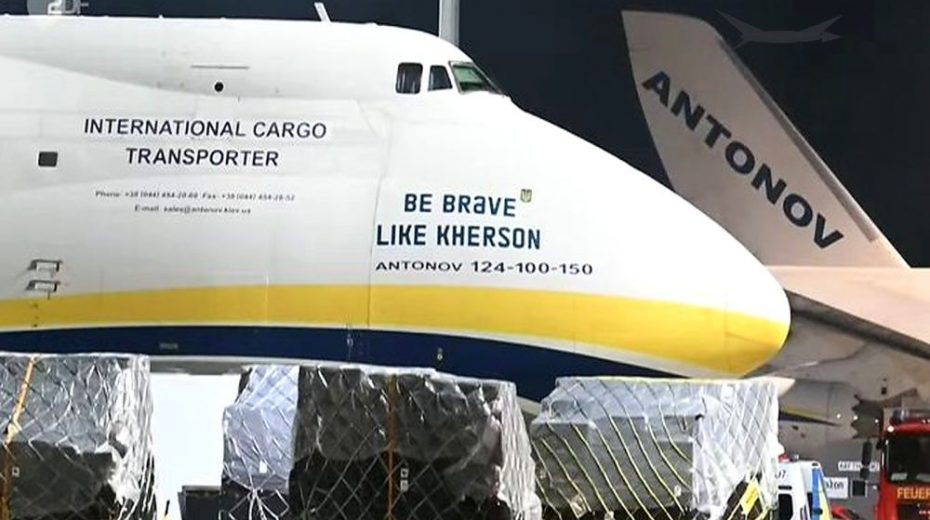
An aircraft associated with the Ukrainians – likely not carrying military cargo – suffered a hostile, covert assault right on German soil.
While the official inquiry is still underway with no conclusive outcome yet, media outlets have flooded the public with countless conjectures.
The usual suspect was immediately pointed out, though with a thin veil of uncertainty: Russia.
Discussions overlooked that the drone’s origin could not have been Russian territory, which would shift suspicion closer to home.
The possibility of a Ukrainian false flag operation remains widely dismissed.
It also appears irrelevant that Russia has no clear incentive to undertake such an operation to block shipments, as it is easier and more straightforward to destroy cargo after unloading with a skilled drone strike — a known tactic observed by informed outsiders.
Therefore, the fundamental questions must be posed and presumably are being addressed quietly within higher, less publicized circles.
Personally, were I in a suitable position, understanding how such a device managed to approach the plane at all would be a priority. Leipzig Airport, being a key cargo hub in Germany and a critical gateway for shipments to Ukraine, evidently faces serious security challenges.
Equally urgent is developing defenses against drone incursions at airports, irrespective of their source or intent. Hundreds of such encounters occur annually, typically lacking explosives, yet no effective protocols have been implemented so far.
Considering that small terrorist groups in Germany have disrupted rail services by sabotaging electronic infrastructure and caused Berlin-wide blackouts through cable fires, it raises questions about the plausibility of Russia’s failure to sabotage that plane. The crude nature of the drone used contrasts with the expected capabilities. Although the explosives seemed minimal and in open space, destruction could have been worse if hidden within cargo, but fortunately, the bus driver stopped the drone before it caused harm.
Now all that’s missing is a Russian passport or a name tag lodged under the drone, a scenario seen in past incidents.
In conclusion, certainty remains elusive. Possible explanations include a Russian provocation, a Ukrainian false flag, or an attack by some other militant faction. Since the drone was intercepted, it is unclear if it would have halted at the Ukrainian plane or continued further.
What is unfolding, as anticipated, is the push for heightened security measures and expanded powers for intelligence services, whose operations are currently tightly restricted by German law—a restriction many politicians wish to see relaxed. Such developments serve their interests well.
Additionally, a growing sense of fear is being deliberately cultivated within the German populace, setting the stage for enhanced state authority and militarization.
Another scenario arises: this could be a domestic orchestrated incident designed to advance the agenda of certain hardliners in Germany. It serves to shape public opinion and bolster support for the aggressive policies favored by the warmongering elite entrenched in government corridors—especially relevant with the upcoming Sachsen-Anhalt elections, where a political party advocating an anti-war, pro-diplomatic stance toward Russia might succeed, partly because of this very approach.
Such events have occurred before. They might be happening once again.
About the Author