Ann Wright says the frustration expressed by military families at a recent Veterans for Peace conference echoed those of families with relatives on U.S. military bases in the Middle East.
Issues such as spoiled food, toilets overflowing into sleeping areas, lack of space in missile shelters, confiscation of cellphones used for missile alerts, delayed mail, and blocked access to social media were among the complaints detailed by military families at the Aug. 6 national conference of Veterans For Peace.
Relatives of Air Force, Army, Marine, and Navy personnel, as well as members of Military Families Speak Out, reported plummeting morale, shortages of essential supplies, and attacks on U.S. military bases that remain unpublicized by U.S. media outlets.
Such grievances mirrored those shared by families who met with high-ranking military officials to highlight conditions on U.S. bases in the Middle East, which have been targeted by Iran amid the intense five-month U.S.-Israeli offensive.
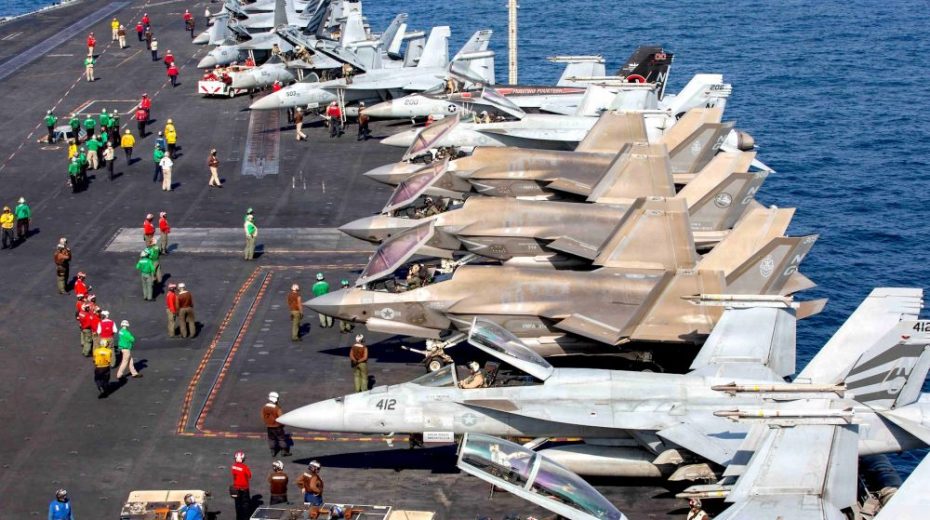
On Aug. 6, senior Navy leaders held listening sessions with families of sailors aboard the USS Abraham Lincoln aircraft carrier — one in San Diego and another virtual meeting later that day, according to The Maritime Executive. Recordings leaked to MS NOW revealed severe mildew in showers, declining morale, extreme fatigue, food and supply shortages, water contamination, and missing mail aboard the ship.
The USS Abraham Lincoln, carrying 5,000 sailors and Marines, has been deployed since Nov. 21, 2025, after leaving Naval Base San Diego, spending over 250 days at sea with only brief stops in Guam in December and Oman in June.
The USS Gerald R. Ford carrier faced comparable difficulties during its Middle East deployment after being near Venezuela following an attempted kidnapping of President Nicolas Maduro and his wife in January.
During that mission, the Ford experienced recurrent toilet malfunctions, with sewage frequently spilling onto floors. A fire also damaged the laundry room, forcing the vessel to dock in Crete, Greece, for repairs.
Over 200 sailors on the Ford were treated for smoke inhalation, according to USNI News. One sailor required medical evacuation due to injuries sustained during firefighting efforts, while two others received treatment for cuts. The fire’s smoke spread into living quarters, destroying more than 100 bunks and personal belongings.
Reports in Stars and Stripes and Navy Times describe at least six attempts by crew members to jump overboard from the USS Abraham Lincoln. Interviews with sailors and their families detailed the psychological toll of the extended deployment.
Jefferson Kelley, father of a sailor aboard the USS Abraham Lincoln, contacted Senator Bernie Moreno, urging an official inquiry into the situation on the USS Abraham Lincoln and proposing a “parent swap” to relieve his son Jackson, 20, from the harsh conditions.
Kelley clarified that his son had not requested this but was motivated by reading about issues like rationing, water safety problems, mental health struggles, and reports of sailors attempting to go overboard during the prolonged sea deployment. He felt compelled as a parent to share in the burden.
Army & Marine Ground Forces Under Missile Attacks
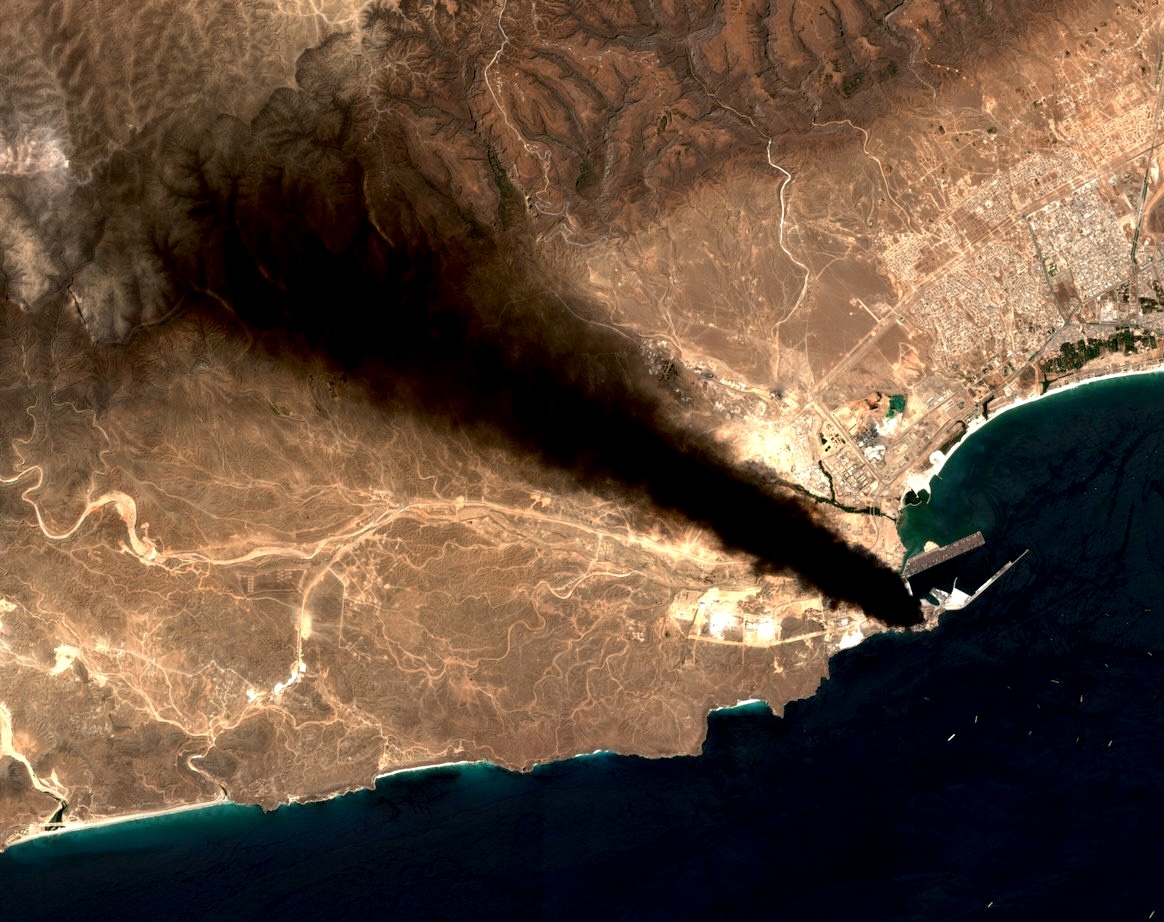
Satellite imagery of black smoke rising from the Port of Salalah on March 13 during Iranian strikes on Oman. (CC BY 4.0 /Wikimedia Commons)
Families of ground troops stationed at various Middle East bases report severe overcrowding in missile attack shelters.
The news source War Horse indicates that the sole public database documenting injury figures during the U.S. offensive on Iran is the Defense Casualty Analysis System, which offers monthly casualty counts with limited demographic details.
Between Feb. 28 and April 8, over 400 non-fatal casualties were recorded from U.S. actions against Iran, according to War Horse, which further explains:
“More than 270 of the approximately 400 non-lethal casualties were Army soldiers, with roughly one-third being reservists. Enlisted soldiers made up most Army casualties, including 57 sergeants and 53 specialists. Officers wounded included 64 personnel, such as 20 captains and 13 lieutenant colonels or colonels….
The Navy reported 64 casualties, none seriously injured. The Air Force had 51 casualties, and the Marine Corps 19. In contrast to the Army, these services did not specify injury types or causes.”
U.S. forces endured shrapnel wounds, fractures, smoke inhalation, and other injuries, but head trauma appeared most frequently.
Data shows at least 170 troops suffered head injuries from the war’s start through early April.”
Military health professionals, according to War Horse, express concern that traumatic brain injuries—impacting cognition, movement, and emotions—may become the defining injury of this conflict, as was the case during U.S. engagements in Iraq and Afghanistan.
The Pentagon has sought to minimize casualty tallies by separating figures incurred before and after the May 1 ceasefire in the Iran conflict.
Combining both periods, 18 U.S. troops have died and 624 wounded since the war began on Feb. 28.
US Senate Finally Getting Involved
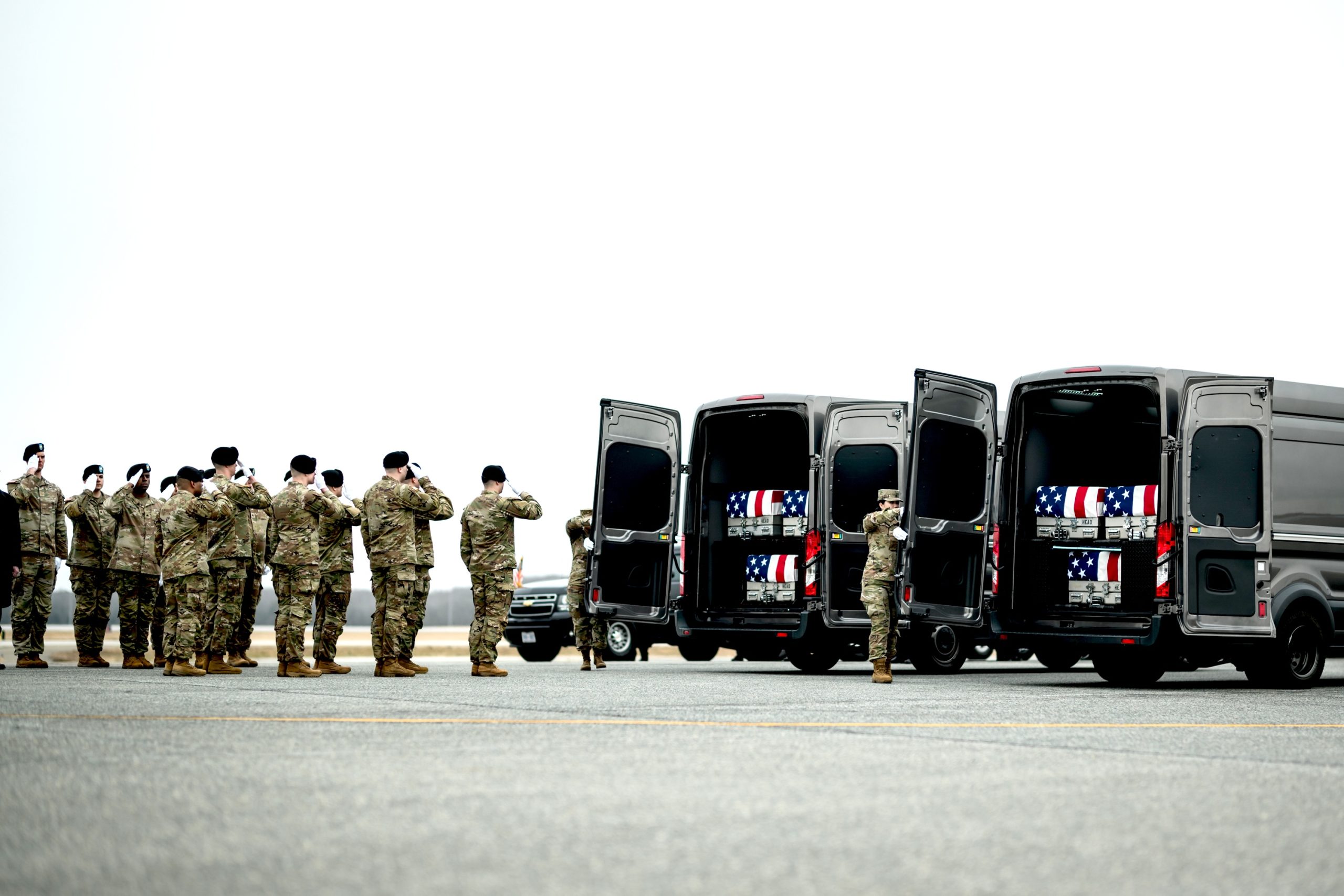
The bodies of six U.S. soldiers killed in the Port Shuaiba, Kuwait, drone attack being transferred to the U.S. on March 7. (The White House /Wikimedia Commons/Public Domain)
The U.S. Congress has recently taken action. On Aug. 12, Senator Richard Blumenthal, an Armed Services Committee member, sent a letter to Defense Secretary Pete Hegseth and Acting Navy Secretary Hung Cao raising “serious concern” about prolonged deployments and demanding information about life conditions aboard the USS Abraham Lincoln.
His letter highlighted “widespread reports of shortages of basic supplies, water problems, plumbing failures, declining mental health, and safety concerns on deck,” along with “mail disruptions resulting in care packages being lost for months.”
Blumenthal concluded with six specific questions for the Department of Defense about the carrier’s state and emphasized the importance of properly supporting service members:
“The men and women aboard the Lincoln have answered the call to serve their country. The Department owes them not only adequate supplies, maintenance, and support during this deployment, but a sustainable force-generation model that does not rely on repeatedly extending sailors and ships to meet persistent operational demands.
Our servicemembers deserve nothing less than the full support of their government — and the American people deserve a military strategy that is worthy of the sacrifices we ask them to make.”
Original article: consortiumnews.com
About the Author