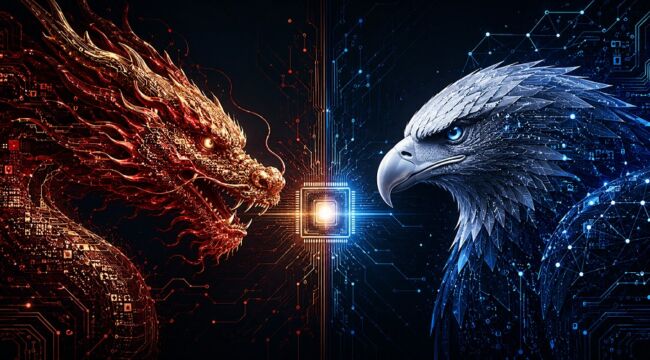
China Aims to Spoil the AI Party
China is employing its usual strategy when it comes to AI.
This mirrors tactics they have applied to sectors such as metals, rare earth elements, automobiles, solar panels, and manufacturing as a whole.
The approach is straightforward: produce goods at a lower cost than anyone else and use pricing to dominate the global market.
We have long observed this pattern in manufacturing, and now China is targeting market share held by American AI companies.
Rising Competition
There was a time when the U.S. seemed destined to maintain a permanent lead in AI. With superior models, advanced hardware, and restrictions on China’s access to Nvidia GPUs, the gap appeared insurmountable.
However, that advantage is fading. Chinese AI models are nearing the quality of leading U.S. ones, and the cost difference is where it becomes concerning.
Chinese models are priced between 60% and 90% lower than premier American alternatives. Below is a table illustrating comparisons among some cutting-edge models.
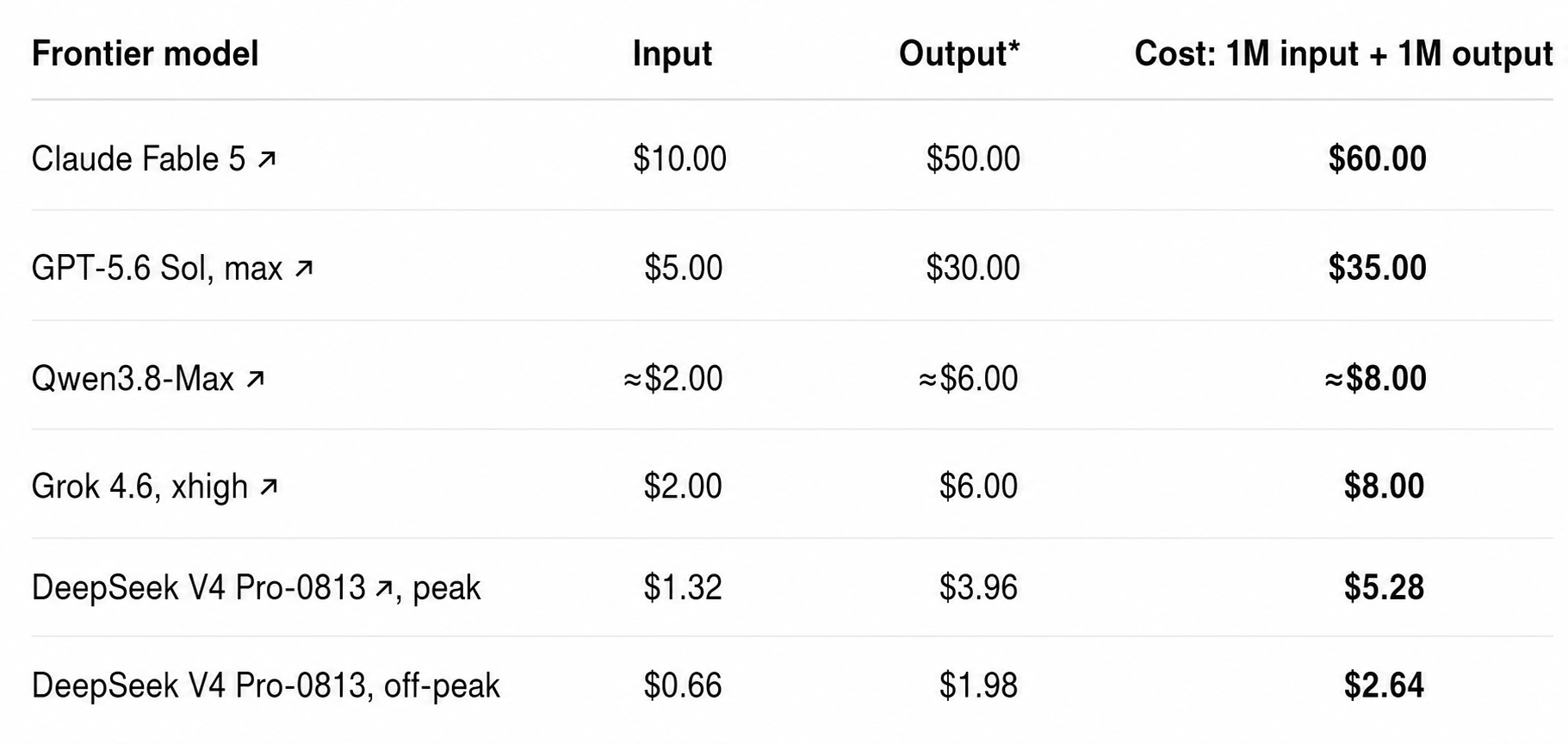
The newest Chinese AI systems perform at 95-98% of the level of ChatGPT and Claude, even surpassing them in specific aspects—all at a significantly reduced price.
This is creating serious disruption for leading U.S.-based labs like OpenAI, Anthropic, and xAI.
Following the release of DeepSeek v4, an open source AI model by Chinese firm DeepSeek, OpenAI responded by slashing the price of its top-tier model by 80%.
Adding insult to injury, the majority of China’s AI models are open-source, allowing anyone to download, modify, and deploy them for commercial use.
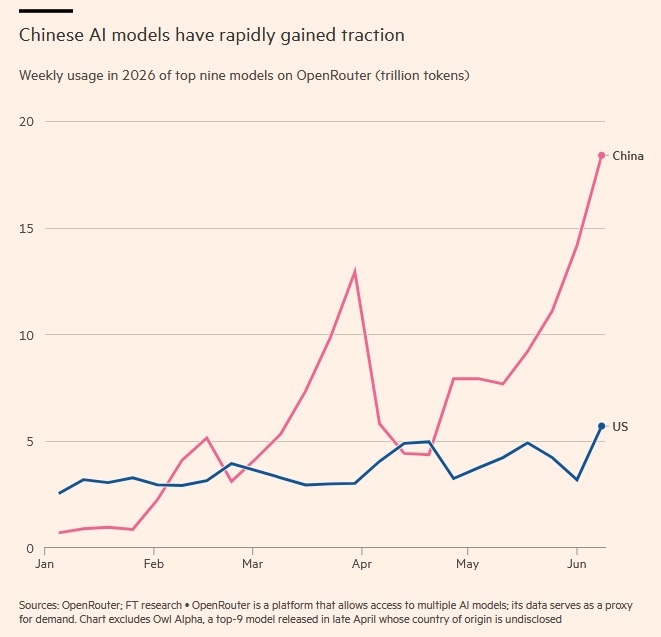
Unsurprisingly, these models have gained tremendous traction, as the chart below illustrates.
Source: Financial Times
This graph tracks AI model usage by country on OpenRouter, a platform that developers utilize to access AI models. It’s worth noting OpenRouter doesn’t count developers who connect directly to American models’ providers.
Therefore, while U.S. AI remains strong, China is unquestionably emerging as a formidable challenger.
The key takeaway is the trend: at the start of the year, U.S. models (blue line) held a commanding lead on OpenRouter, but Chinese models have experienced rapid growth in usage since then.
Intelligence, Commoditized
With increased competition, operating costs for premium AI models are dropping, which benefits users.
I recently read about someone who used DeepSeek V4 to build a fully functional video game for just seven cents—and it looked impressive.
This marks uncharted territory. Creating digital products is now cheaper and easier than ever before, promising remarkable innovations in the near future.
Coding is only the beginning; soon, AI agents will be capable of managing most white-collar jobs.
This shift represents the commoditization of intelligence, and we’re still within the first four years of this transformation.
Extreme Options
If China’s AI improvements continue at this rapid pace, the situation could become problematic. A complete ban on Chinese AI models by the U.S. is conceivable, especially since China prohibited access to American models early on.
The dilemma is that many of China’s leading AI systems are open-source and freely downloadable. Enforcing bans against their use would be highly complex and invasive.
Without a total embargo—which seems unlikely—this competition will place intense pressure on American AI companies.
Today, AI drives much of the U.S. economy’s growth, and any slowdown in investment or failure to meet expected returns could have serious consequences.
As Chinese AI advances, pressure mounts on U.S. leadership to maintain innovation momentum.
A silver lining to this East-West rivalry is that it spurs innovation for both sides.
Over the coming years, remarkable—and potentially unsettling—developments will unfold as intelligence costs continue to decrease.
For the first time in quite a while, China stands as a genuine technological competitor. This rivalry enhances innovation and promotes a healthy ecosystem, yet it could pose challenges for leading American AI firms, many valued at over $1 trillion.
Eventually, this may also impact AI hardware companies like Nvidia, since China is barred from purchasing their GPUs and is focused on building its own hardware ecosystem.
While increased competition benefits the industry in the long term by keeping everyone alert, China’s growing presence as a peer competitor could bring significant short-term disruptions.
About the Author