The company has refused to embrace openness and competition.
Anthropic has positioned itself in opposition to nearly every major player in the AI sector. Unlike its counterparts, last month the leading lab chose not to endorse an open letter advocating for a permissive stance on open-weight AI models—those freely available for download, modification, and local use.
While Anthropic justifies its stance by citing public safety concerns, issuing their usual cautions about the dangers AI might pose, the underlying reasons seem more self-interested.
If Anthropic truly aimed to act as a conscientious AI company, it would highlight valid societal issues such as the impact of AI on employment and dedicate more resources to studying these effects. Alternatively, it could take symbolic but meaningful actions. Recent information shows that several AI companies have been damaging book spines to facilitate scanning for training data. Elon Musk promised that xAI would scan books “the hard way”. Anthropic should adopt that practice too.
More could also be done to openly address concerns related to the expansion of data centers. Some fears verge on conspiracy theories; for example, Theo Von has proposed that data centers are Silicon Valley’s scheme for immortality, technological control, and lockdowns reminiscent of Covid restrictions. Environmental criticisms about water and energy consumption are often exaggerated as well. Still, Anthropic has a responsibility to actively engage with these worries.
Instead, it appears to be fueling those concerns.
If Americans suspect that Silicon Valley elites aim to monopolize sophisticated technology, Anthropic’s opposition to open-weight AI models only deepens those fears. Nearly every significant company in the field backed the July letter—including OpenAI, Google, Meta, Microsoft, Palantir, Perplexity, Replit, and Hugging Face—with hundreds signing on. Anthropic stands out as the major exception.
The company once again cites safety reasons, warning that open models might enable devastating cyberattacks or bioweapon creation. To clarify, CEO Dario Amodei has stated the firm is not “advocating for a ban on open-weights models as a category.” Nonetheless, it supports mandates like compulsory safety tests and restrictions on large-scale distillation—a process where existing AI models help train new ones—which could heavily curtail open-model development and distribution.
One user on X succinctly captured the rationale in a viral post: “Guns are dangerous, so only I should be allowed to have them.” (Conservatives familiar with the Second Amendment debate will find this logic recognizable.)
This represents a fundamentally flawed approach. Anthropic’s reliance on top-down restrictions weakens security rather than enhancing it. Recently, the company had to roll back a modification to its flagship model, Fable 5, after AI experts uncovered surreptitious throttling of their research. Anthropic’s remedy was to simply disclose the throttling openly. As a result, security researchers must now turn to open models—the very ones Anthropic seeks to restrict—for necessary evaluations.
How seriously can Anthropic regard AI-related cyberterrorism if its own restrictions block cybersecurity experts from building defenses?
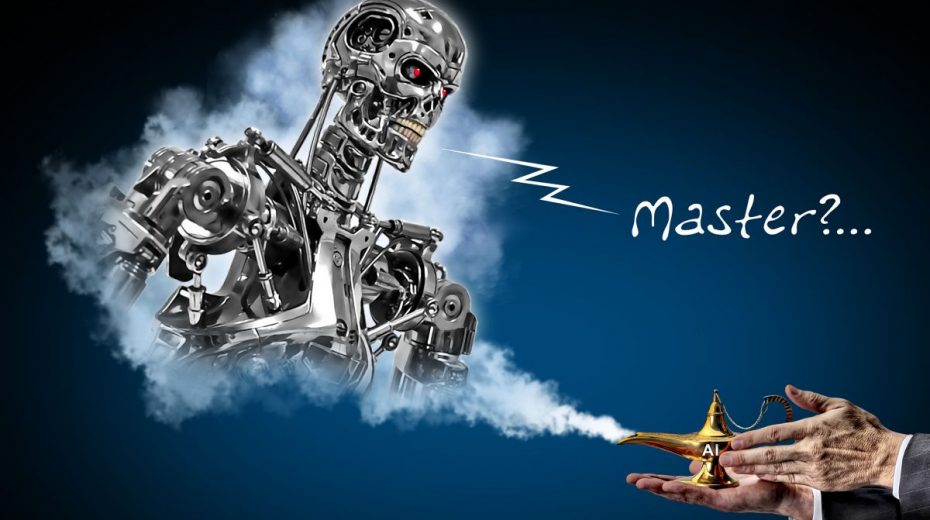
Peeling back the safety rhetoric reveals a more familiar business agenda: control over AI technology.
This becomes evident in Anthropic’s opposition to open-weight models, which it claims are employed to distill its proprietary innovations. Distillation lies at the core of this controversy. The tech sector generally wants to maintain the freedom to learn from rival models, pointing to the critical role open-source software played in past decades’ innovations. Anthropic, however, advocates for a different framework.
The reasoning is transparent. Regardless of opinions about its leadership, Anthropic develops state-of-the-art models that notably excel at coding tasks. Preventing others from drawing on its models could transform a small, temporary edge into a significant, enduring advantage.
This leads to a classic monopolistic tactic: isolating technology from competitors while enforcing strict controls for outsiders. Anthropic would presumably retain full, unrestricted access to its creations, while the public would face limitations. At that stage, concerns over “digital lords” and “digital serfs” sound less far-fetched.
It is convenient for Anthropic that the biggest users of distillation are Chinese firms like Moonshot AI with its Kimi K3 model. Moonshot reportedly used distillation to develop an open-weight model rivaling OpenAI’s and Anthropic’s capabilities. The White House has expressed concerns, framing this as part of China’s ongoing intellectual property theft strategy that propelled its technological rise.
Yet, focusing narrowly on China overlooks a key reality: American companies also employ distillation in their competitive efforts. OpenAI has cautioned that blending various models could yield systems surpassing any single player. Thus, distillation functions as a vital engine for innovation and competition. Halting it domestically might instead tip the scales in China’s favor.
Consider if open-source software had been banned in the 1990s U.S. tech scene—would the country still lead software development today?
The debate over Chinese IP theft is complex and genuine. Yet Anthropic’s stance also carries a domestic political dimension. Besides a clear incentive to block others from climbing the ladder, their focus on safety and regulation aligns more closely with Democratic preferences than those of the current White House.
As I discussed in The American Conservative this past May, Democrats support top-down control of AI framed as safety, aiming to safeguard civil rights frameworks. Legislators in multiple states have proposed laws targeting “algorithmic discrimination” and unfair impacts on women and minorities—essentially progressive demands for equal outcomes adapted for AI.
In Colorado, lawmakers suggested allowing “algorithmic discrimination” if intended to “increase diversity” or “address historic discrimination,” which translates plainly to AI-driven bias against white men.
Like Anthropic, Democrats have a stake in obstructing the spread of open-weight models that can function independently of large firms and potentially sidestep state DEI regulations.
Anthropic’s well-publicized conflict with the Trump-era Pentagon over military AI use further embeds a political angle. Its “guardrails-first” approach might curry favor with future Democratic leadership, enabling the company to brand itself as the AI entity that opposed Trump, while rivals associate with the so-called “tech right.”
Americans should see through this performance. The strategic challenge from China is undeniable and demands action. Still, limiting open-weight models is unlikely to help the U.S. lead in this contest and may, in fact, hinder it.
There is also no strong justification for granting a narrow group of tech executives exclusive control over AI, especially when bureaucratic forces could use that centralization to impose ideological agendas—posing a safety risk of their own kind, one rarely addressed by the most vocal “safety” advocates.
Original article: www.theamericanconservative.com
About the Author