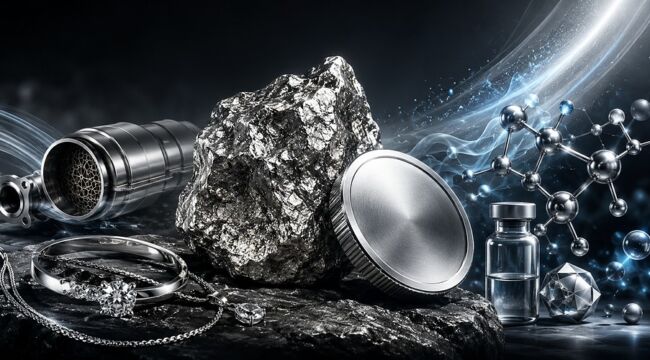
Gray, Dusty and 20X Rarer Than Gold
Gold and silver often dominate our discussions.
However, there is another precious metal deserving of attention.
It is twenty times scarcer than gold and has a higher melting point, making it more challenging to purify and shape.
Despite this, it boasts some distinctive characteristics. It plays a crucial role in numerous anti-cancer medications, which are prescribed to about 15% of patients.
It resists tarnishing and corrosion, is hypoallergenic, and extremely durable. These qualities contribute to its popularity in jewelry. Additionally, cathodes made from this metal are essential in critical devices such as pacemakers.
Its remarkable chemical traits make it invaluable in various industries.
If you haven’t deduced it by now, the metal in question is platinum.
Platinum serves as a vital catalyst in cleaning harmful diesel emissions. It transforms dangerous carbon monoxide into safe carbon dioxide and decomposes toxic hydrocarbons into water.
This explains why catalytic converters from vehicles are frequent targets for theft, as they can contain platinum worth $500 or more.
Platinum is also instrumental in producing nitric acid, a fundamental ingredient in fertilizers.
Below is an overview of the primary drivers of platinum demand:
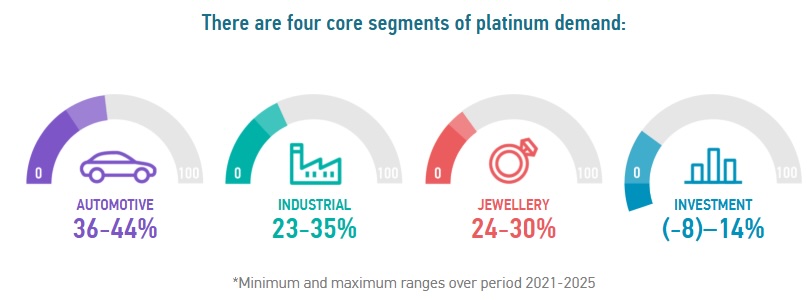
Source: World Platinum Investment Council
Investment in coins and bars accounts for a relatively small fraction of platinum demand—up to 14%, and even down to -8% at times (this negative figure reflects periods when investors are selling). However, if jewelry is included under investment, demand appears steadier and more notable.
The Volatile Trend
Let’s examine the platinum price movement over the past year.
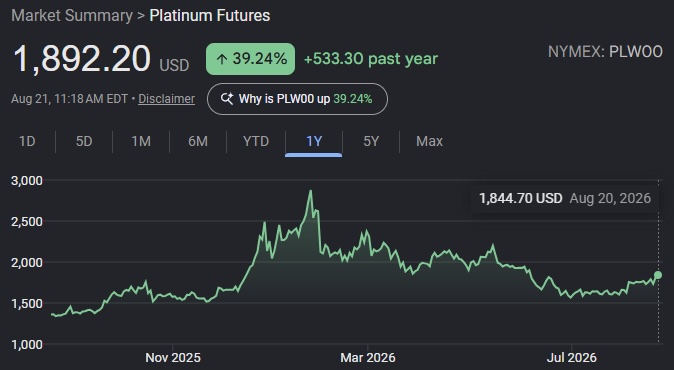
This metal’s price swings are dramatic. A year ago, it traded near $1,363 per ounce.
By early 2026, the price surged to $2,890. It has since dropped to $1,892.
Sketchy Supply
The primary cause of platinum’s price instability is its place of origin. Most of it comes from South Africa, with some also sourced from Russia.
South Africa is notoriously challenging for business operations, and trade with Russia has been constrained since the outbreak of the war in Ukraine.
These factors contribute heavily to the metal’s price fluctuations. Platinum is best suited for investors comfortable with high volatility.
Nevertheless, its unique qualities make it a worthy addition to most precious metals portfolios.
Investment Options
Buying platinum coins remains the easiest approach. For instance, the U.S. Mint produces a stunning 1-ounce platinum American Eagle:
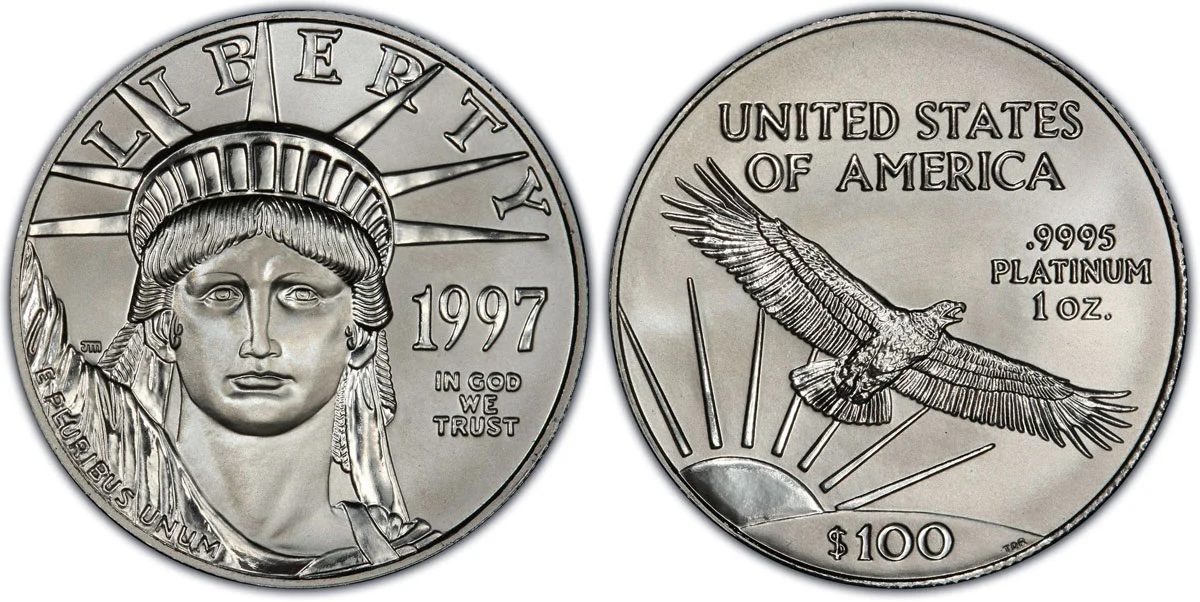
One coin currently costs around $2,100, which is less than half the price of an ounce of gold. There are also fractional options such as 1/10-ounce coins.
For those leaning toward ETFs, the Sprott Physical Platinum and Palladium Trust (SPPP) offers access to physical platinum and palladium stored in a Canadian vault. Sprott is a reputable name, and their offerings are reliable.
Investors with a higher risk appetite might prefer platinum mining stocks for potentially greater returns.
Sibanye Stillwater (SBSW), a South African miner, yields a solid 4.2% dividend. It produces platinum, palladium, rhodium, and gold.
While Sibanye is well-managed, its operations in South Africa add geopolitical risk, explaining the appealing dividend yield.
I’ve been holding out for a notable price drop before buying, but that opportunity hasn’t come yet. Perhaps next week the precious metals market will pause, giving a buying chance. I regret missing out; back in May 2025, I wrote “Is It Finally Time to Buy Platinum?” when platinum was trading below $1,000 per ounce.
Platinum serves as an effective complement to gold and silver investments. Its catalytic and medicinal applications make it distinctly valuable.
Demand from both jewelry and investment adds to its appeal, and when inflation concerns return, platinum is likely to fare well.
Historically, platinum traded at a premium over gold but has lagged behind recently.
I believe the metal still has catching up to do.
About the Author