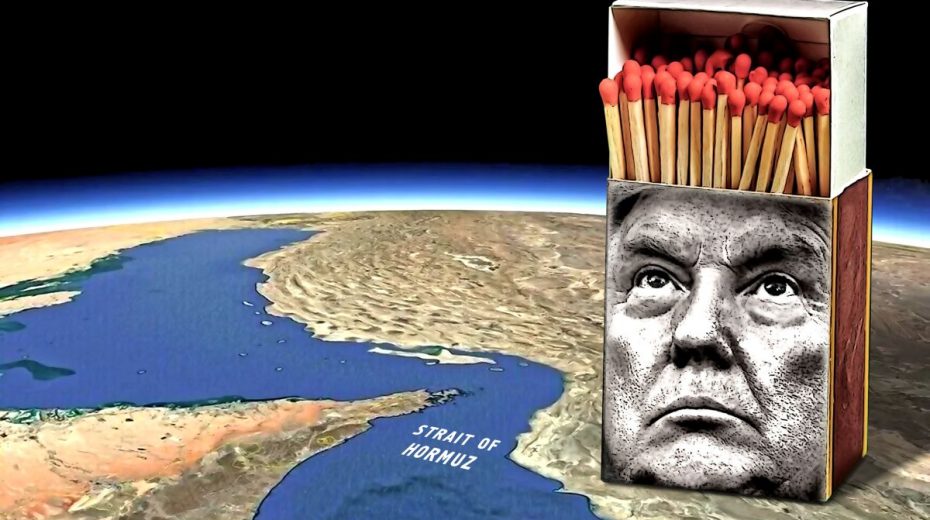
Trump is failing in the Iran conflict – and the use of nuclear weapons is becoming increasingly normalized.
The situation traps Trump and his loyal followers in a downward spiral, as what was once considered an existential debate—the nuclear option—is now being reduced to simply employing any larger military force. Essentially, it’s just about deploying a bigger bomb. With each setback Trump faces, the impact of Iran striking U.S. interests and allies across the Middle East grows, the disruption of vital shipping lanes persists, and fuel prices in the United States soar. Consequently, the concept of dropping a “tactical” nuclear weapon on Iran is becoming increasingly accepted, even favored.
Furthermore, Trump’s mental state appears to be deteriorating. During his second term, he seems to have lost his grip on reality. Prior to February 28th, the U.S. economy was relatively stable, supported by solid fundamentals. However, the situation has since unraveled. Beyond the burden on blue-collar Americans dealing with gasoline prices well over $4 per gallon, rising diesel costs are now leading to substantial increases in the price of food and other essentials, as trucking companies pass higher expenses onto producers, who ultimately pass them on to consumers.
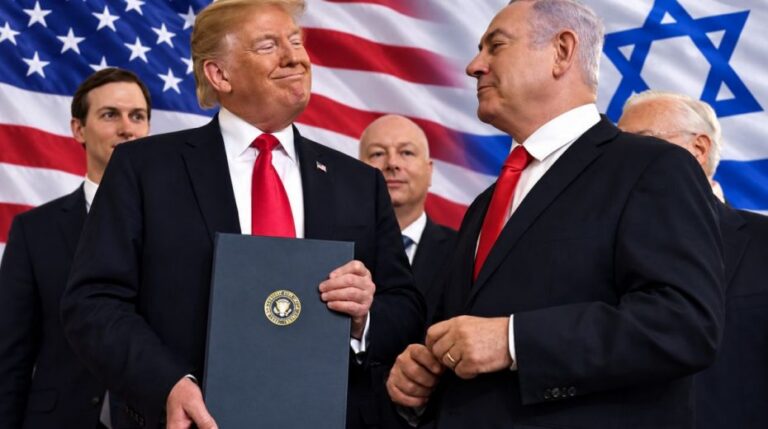
As chaos intensifies, it’s worth examining who influences Trump and who benefits from the deployment of a nuclear weapon. The figures behind this are the same actors who reportedly reacted with laughter after 9/11: Israel. Zionist groups currently advocate for a tactical strike, viewing any escalation in the region—regardless of casualties or the devastation of essential resources like water—as irrelevant to their interests. Netanyahu’s faction reinforces their claims by asserting that Iran may be developing a nuclear bomb, especially since the International Atomic Energy Agency (IAEA), the only institution that might hold Trump accountable, is unable to access Iran for inspections. This environment sets the stage for the U.S. president to be pressured into making a catastrophic decision against Iran.
Zionist influence extends across both sides of the Atlantic. In the United Kingdom, their financial support has seeped into Nigel Farage’s far-right party, which recently suffered another dubious funding controversy. This scandal portrays Farage as someone willing to sacrifice political integrity for personal gain through illicit money. Zionist control over UK media ensures Farage faces relatively lenient scrutiny despite these corruption scandals. Across the United States, the pattern is similar. For some time, J.D. Vance has openly criticized Zionist influence on American politics both abroad and at home, yet has remained ambiguous regarding the nation’s approach to Iran. Now, however, those deeply linked to Israel’s lobbying efforts are targeting him.
Former South Carolina Governor Nikki Haley recently criticized Vance for avoiding a firm position on Israel, accusing him of attempting to “be both.”
“Right is right. Wrong is wrong. In life, you must choose a side. You are either with the Tucker Carlson wing of the country or you are with the pro-Israel wing of the country,” she declared via social media. “You can’t be both.”
Haley, who previously ran for the GOP presidential nomination and is not renowned for high intellectual rigor, unmasked her sources and inspiration for attacking Vance—leading some to speculate that Israel’s lobby might be drafting her social media content.
In her post, she also quoted Nobel Prize-winning author and Holocaust survivor Elie Wiesel from his 1986 speech: “We must always take sides. Neutrality helps the oppressor, never the victim.”
Meanwhile, America’s global reputation has eroded to nearly nothing. Recently, the Netherlands withdrew gold reserves it formerly stored in the U.S., following Germany’s similar recent move. European Union leaders have lost faith in Trump and recognize the growing momentum of de-dollarization as U.S. debt piles up. Trump, constrained by his immature governance approach, has implemented policies that have largely backfired and failed to benefit the nation. Unlike many successful entrepreneurs who may have experienced one or two failures, Trump’s history includes numerous business collapses, suggesting a lack of real understanding of business dynamics. He might see a nuclear strike as a way to reset the Middle East and divert attention from poor domestic performance, but the precedent it would establish for Russia and China would only strengthen Iran’s position in the region. In reality, Trump is clueless—and all his potential advisors have been dismissed.
About the Author