The crusade that George W. Bush launched 25 years ago to “rid the world of evil” only compounded it.
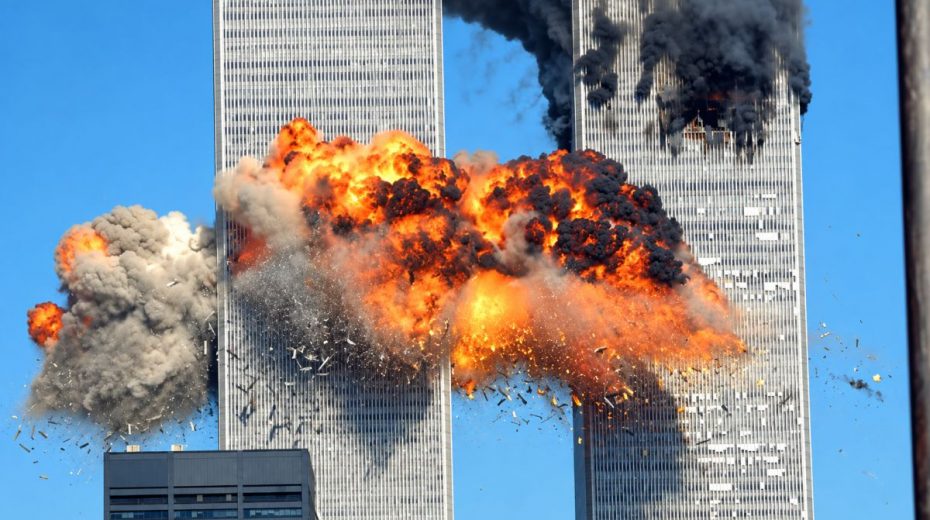
Just three days after nearly 3,000 people were killed by terrorists in the United States on September 11, 2001, President George W. Bush addressed the nation at the Washington National Cathedral. Speaking to a stunned public, he declared, “Our responsibility to history is already clear, to answer these attacks and rid the world of evil.” This promise, however, was utterly unrealistic. The ensuing “war on terror” was hardly more grounded in reality.
“Terrorism is not an enemy. It cannot be defeated. It’s a tactic,” explained retired US Army General William Odom to C-SPAN viewers in 2002. “It’s about as sensible to say we declare war on night attacks and expect we’re going to win that war. We’re not going to win the war on terrorism.” Yet the US military campaign quickly shifted from aiming for victory to simply continuing indefinitely. The violent momentum became an end in itself. Efforts to hunt down enemies only led to more conflict. Over time, as the phrase “war on terror” faded, US military engagements became so routine globally that they required no label or justification.
Even as the trauma of the terrible day eased for the general public, 9/11 continued to serve as a political license to kill without an expiration date.
None of the 19 hijackers were Afghan nationals, and Al Qaeda’s leader Osama bin Laden was more closely tied to Saudi Arabia. However, his presence in Afghanistan put the country directly in the sights of the Pentagon. Rather than debating whether to attack, the American media focused on when to act. That moment arrived on October 7, when US missiles began striking Afghanistan. A Gallup poll that same day revealed overwhelming support: “90 percent of Americans approve of the United States taking such military action, while just 5 percent are opposed, and another 5 percent are unsure.”
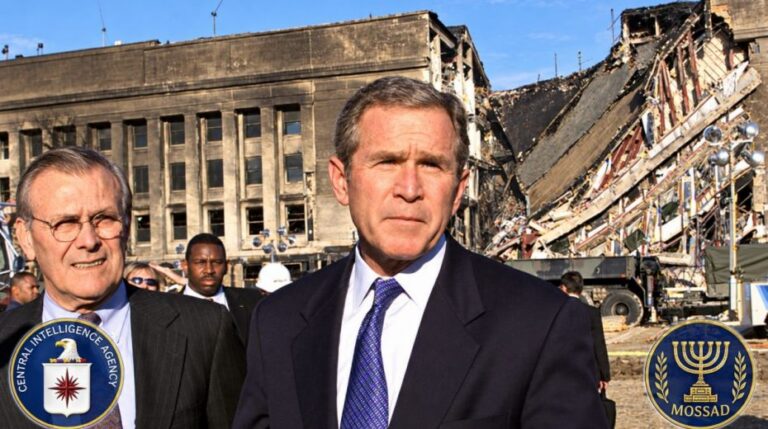
The air campaign maintained popularity stateside. Defense Secretary Donald Rumsfeld’s daily live briefings made him a national icon. A pattern emerged that assumed American military strikes were well-intentioned and harmless in overall impact. Deaths under US bombs and indirect casualties received little attention. Rumsfeld claimed, “The targeting capabilities, and the care that goes into targeting, to see that the precise targets are struck, and that other targets are not struck, is as impressive as anything anyone could see.” He further added, “The weapons that are being used today have a degree of precision that no one ever dreamt of.”
Rumsfeld’s appeal was significant. The Washington Post media critic Howard Kurtz labeled him “America’s new rock star,” noting how “everyone is genuflecting before the Pentagon powerhouse.” Following the fall of the Taliban, NBC’s Meet the Press host even quipped, “Sixty-nine years old and you’re America’s stud.”
The 2003 invasion of Iraq depended heavily on massive air strikes and a ground force exceeding 150,000 US troops. Although the Saddam Hussein regime fell rapidly, the promised “cakewalk” transformed into prolonged years of fighting and deaths. Mainstream US media accepted detached bombings showcasing American air strength, but growing casualties and injuries gradually eroded public support as troops faced repeated deployments. Images of triumph quickly turned into harrowing realities.
The ongoing war effort that began in autumn 2001 had an implicit throughline in dominant media and politics: while American lives really matter, the victims of American firepower really don’t.
President Bush refused to admit defeat in Iraq, and later President Barack Obama maintained an uncompromising stance in Afghanistan. Early in his presidency, Obama made the “war on terror” a bipartisan cause. Less than a year after accepting the Nobel Peace Prize in late 2009, US troop numbers in Afghanistan peaked at 100,000—triple the figure when he took office. During a visit to Bagram Air Base near Kabul, Obama addressed troops with words that reflected the gravity of sacrifice: “I’ve been humbled by your sacrifice in the solemn homecoming of flag-draped coffins at Dover, to the headstones in section 60 at Arlington, where the fallen from this war rest in peace alongside the fellow heroes of America’s story.”
Although the shock of 9/11 lessened for the public, the event remained a continuing justification for lethal military operations without a time limit. Throughout, the oft-repeated message in media and politics was clear: American lives are precious, but those who die from US military actions do not garner the same concern.
* * *
US aerial operations overseas had devastating human impacts often overlooked domestically. For government officials, technologies like drones were celebrated innovations. The individuals living under constant threat had no platform or recognition. When one veteran journalist, after escaping seven months of Taliban captivity in Pakistan, described the experience of relentless drone presence, he said, “The drones were terrifying. From the ground, it is impossible to determine who or what they are tracking as they circle overhead. The buzz of a distant propeller is a constant reminder of imminent death.”
The so-called war on terror had transformed sadly into a war of terror.
Within days of assuming office, Obama ordered Predator drone strikes in Pakistan that killed three children along with several adults. A week later, Pentagon veteran Pierre Sprey appeared on the PBS show hosted by Bill Moyers, warning about the direction of the air war: “I’d be astonished if one in five people they kill or wound is in fact a militant,” Sprey explained. “You can’t tell with a camera or an infrared sensor or something whether somebody’s a Taliban…. Most likely, you’re relying on some Afghani of unknown veracity and unknown motivation and who may, may very well be trying to settle a blood feud rather than give you good information.” He added, “bombing is always politically popular, relative to sending infantry and killing our boys.”
Despite mounting evidence of civilian casualties, Obama administration officials remained infatuated with air strikes. In 2022, Phyllis Bennis of the Institute for Policy Studies assessed: “The so-called ‘global war on terror’ has, from its origins, been characterized by attacks by US Special Forces, by airstrikes, by armed drones, and more, that routinely kill far more civilians than the targets identified on the ‘kill lists’ prepared by presidents and top White House officials. The routine recitation of ‘there is no military solution to terrorism’ has always been an anodyne rhetorical ploy, never an actual guide to what actions might actually work to change the conditions that give rise to terrorism.”
Tragically, the very conditions fostering terrorism included the US military campaigns proclaimed to extinguish it. This outcome was predictable. In 1998, Pakistani-American scholar Eqbal Ahmad wrote: “A superpower cannot promote terror in one place and reasonably expect to discourage terrorism in another place. It won’t work in this shrunken world.”
Drone strikes incited demands for vengeance. Pakistani photographer Noor Behram, who documented destruction in Waziristan near the Afghan border, stated in 2011: “For every 10 to 15 people killed, maybe they get one militant. There are just pieces of flesh lying around after a strike. You can’t find bodies. So the locals pick up the flesh and curse America. They say that America is killing us inside our own country, inside our own homes, and only because we are Muslims.” He noted the growing anger among youth exposed to these attacks: “The youth in the area surrounding a strike gets crazed. Hatred builds up inside those who have seen a drone attack.”
Thousands of miles away, US military operators viewed grainy drone footage and fired missile strikes with limited ability to distinguish combatants from civilians. Former tech sergeant Lisa Ling recounted, “The truth is that we could not differentiate between armed fighters and farmers, women or children.” Ling trained personnel on drone operations and became one of several whistleblowers who spoke out during the war’s second decade. Intelligence analyst Daniel Hale served nearly three years in prison after leaking documents exposing the program’s human cost. He revealed, “With drone warfare, sometimes nine out of ten people killed are innocent. You have to kill part of your conscience to do your job. But what possibly could I have done to cope with the undeniable cruelties that I perpetuated? The thing I feared most was the temptation not to question it. So I contacted an investigative reporter… and told him I had something the American people needed to know.”
Hale’s disclosures published in The Intercept in October 2015 detailed a special operations air campaign, Operation Haymaker, in Afghanistan. The documents showed that between January 2012 and February 2013, US strikes killed over 200 people but only 35 were actual targets. During one stretch, nearly 90 percent of those killed were unintended. Comparable civilian casualty rates likely occurred in Yemen and Somalia, where intelligence was even less reliable.
In his second term, Obama delivered a widely publicized speech at the National Defense University acknowledging downsides of the terror war and asserting, “Our systematic effort to dismantle terrorist organizations must continue. But this war, like all wars, must end. That’s what history advises. That’s what our democracy demands.” Unlike others who held the presidency before and after him, Obama demonstrated some recognition of the harms of perpetual war to US society. Still, during the 44 months following the speech, his administration maintained a steady bombing pace in Afghanistan, while massively increasing attacks in Iraq and Syria, dropping over 30,743 bombs and missiles in 2016 alone.
* * *
Like Obama, both Donald Trump and Joe Biden authorized airstrikes in places including Afghanistan, Iraq, Somalia, Syria, and Yemen. In his second term, Trump extended US bombing campaigns to Iran, Nigeria, and Venezuela, also targeting nonmilitary vessels and causing over 225 civilian deaths during the last year in international waters.
The complete US military withdrawal from Afghanistan in late summer 2021 seemed to signal a break from endless conflict. President Biden stated weeks later at the United Nations: “I stand here today, for the first time in 20 years, with the United States not at war. We’ve turned the page.” Yet, war efforts continued across many regions. That same month, Brown University’s Costs of War Project published a report indicating “counterterrorism operations have become more widespread in recent years.” Co-director Catherine Lutz commented, “The war has been long and complex and horrific and unsuccessful… and the war continues in over 80 countries.”
Throughout the last 25 years, since the first missiles struck Afghanistan, a racial aspect of the terror war has been hidden in plain sight.
Following the Hamas-led attack in Israel on October 7, 2023, the Israeli ambassador to the United Nations stated outside the Security Council, “This is Israel’s 9/11. This is Israel’s 9/11.” In the subsequent six weeks, the New York Times revealed Israel had “routinely” used 2,000-pound bombs inside Gaza “in areas it designated safe for civilians.” Nine months later, Reuters reported that the Biden administration had supplied Israel with “more than 10,000 highly destructive 2,000-pound bombs.” Speaking at the UN General Assembly nearly two years into the Gaza conflict, Prime Minister Benjamin Netanyahu declared, “We’re wiping out the terror regime of Hamas and ensuring that its savagery will never threaten Israel again.” By then, the US had provided Israel with over $21 billion in military aid since October 7. Independent organizations including Amnesty International, Human Rights Watch, Physicians for Human Rights—Israel, and B’Tselem have unequivocally labeled the situation in Gaza as genocide, facilitated by the United States.
Over the past 25 years, a racial dimension of the terror war has remained glaring yet rarely addressed. While widespread institutional racism within the US is acknowledged, an overlooked reality is that nearly every individual killed by Pentagon strikes this century has been a person of color. This is not to suggest racial identity was the reason for attacks, but unconscious and systemic racial biases have made it politically simpler to justify wars inflicting immense suffering on these populations.
Latest data from the Costs of War Project estimate that over 940,000 people died directly due to post-9/11 war violence in Iraq, Afghanistan, Syria, Yemen, and Pakistan between 2001 and 2023, including more than 432,000 civilians. The injured and those suffering indirectly from shattered economies, healthcare, health systems, infrastructure, and environmental destruction raise totals dramatically. Estimates suggest 3.6 to 3.8 million died indirectly, pushing the overall death toll beyond 4.5 to 4.7 million and still rising.
Globally, the “reverberating effects” of these conflicts have devastated many lives. Yet US political discourse focuses almost exclusively on American fatalities. While over 7,053 US service members lost their lives in the post-9/11 wars, the Costs of War Project points out that at least four times that number of service members and veterans died by suicide. Additionally, an estimated 8,189 contractors for the US military died during these conflicts, while foreign workers on US contracts often remain unrecorded and uncompensated.
These figures exclude the many Iraq and Afghanistan veterans suffering from post-traumatic stress disorder. The Veterans Administration reports that 15 percent of veterans from those wars had PTSD “in the last year” and 29 percent at some point in their lives. Traumatic brain injury (TBI) due to wartime explosions and events also burdens many veterans. The Centers for Disease Control and Prevention, analyzing Pentagon data, found that over 450,000 US service members were diagnosed with TBI from 2000 to 2021. Four years ago, the American Medical Association’s journal JAMA published a comprehensive study revealing that post-9/11 veterans face significantly higher mortality rates from various causes, especially those exposed to moderate to severe TBI, including accidents, suicide, cancer, cardiovascular disease, and homicide.
* * *
In mid-December 2002, three months before the “shock and awe” bombing of Baghdad began, I sat on a picnic bench in a Baghdad park with my Iraqi driver. The area was empty, without any possible hidden listening devices. He lamented that if Iraq lacked oil, there would be no fear of invasion.
Whatever people’s beliefs about the goals behind US warfare during the last quarter-century, there can be no doubt of its immense profitability.
In the past 25 years, while tactical errors and questionable judgments in war policies have been widely criticized, less attention has been paid to the deeper agendas. Anti-war activists often chanted “No blood for oil,” but this refrain never gained traction in mainstream media or political discourse. Washington Post columnist George Will dismissed the slogan in a commentary for ABC News before the Iraq War, claiming, “Intelligent people can honorably differ about the wisdom and morality of war against Iraq. But we should be able to agree that oil, an economic motive, is not driving US policy.”
Four years later, General John Abizaid, former head of US Central Command and military operations in Iraq, candidly admitted: “Of course it’s about oil, we can’t really deny that.”
In his memoir, former Federal Reserve chairman Alan Greenspan wrote, “I am saddened that it is politically inconvenient to acknowledge what everyone knows: the Iraq war is largely about oil.”
Before he became Defense Secretary, Senator Chuck Hagel remarked in 2007, “People say we’re not fighting for oil. Of course we are.”
No matter one’s views on the objectives of US wars over the past quarter-century, their profitability is undeniable. The 2001 initiation of the Afghanistan War sparked booming profits for Pentagon contractors. Over two decades, over $2 trillion in government funding flowed to top firms—Lockheed Martin, Raytheon, General Dynamics, Boeing, and Northrop Grumman—representing a 188 percent rise. Quincy Institute senior advisor Eli Clifton observed, “Those five firms spent over $1.1 billion on lobbying between 2001 and 2021. That number seems like a staggering sum to spend on influencing policymakers but it may have been the most financially prudent decision these companies have made in the past 20 years.”
Defense stocks were similarly wise investments. When the Afghanistan conflict ended, journalist Jon Schwarz calculated that a $10,000 investment equally split among America’s top five military contractors on September 18, 2001—the day President Bush signed the Authorization for Use of Military Force—would now be worth $97,295, assuming dividends were reinvested. This outperformed the S&P 500 index fund, which would have grown to $61,613 during the same period. In fact, defense stocks exceeded the broader market by 58 percent over the Afghanistan War.
* * *
Although the “war on terror” label has largely fallen out of favor, the military enthusiasm fueling it remains strong. Midway through Trump’s first term, Democratic leaders in Congress applauded an 11 percent Pentagon budget increase proposed over two years. Representative Nancy Pelosi proclaimed, “We fully support President Trump’s Defense Department’s request,” while Senator Chuck Schumer declared, “US taxpayers spend far more on the military and war than most people realize.” A recent Project on Government Oversight report revealed several ways to measure the military’s true expenses, all exceeding $1.5 trillion. This two-year 11 percent boost now seems modest compared to looming expenditures. Even without Trump’s proposed nearly half-a-trillion-dollar increase for the 2027 budget, the status quo remains entrenched in what Martin Luther King Jr. termed “the madness of militarism.” If federal budgets reflect morals, America plunges from one ethical abyss to another.
The “war on terror” brand has gone out of fashion, but underlying military boosterism remains intact.
With a markedly different style, Donald Trump’s flagrant approach to foreign conflicts resembles Bush’s “war on terror” tactics. Regardless of rhetoric, the message is clear: if the United States desires to strike another nation, it will do so. This year’s unprovoked bombings of Iran illustrate how America’s foreign policy has returned to its original spiral.
The crusade that George W. Bush launched to “rid the world of evil” only compounded it. Now, as the nation’s military juggernaut rolls forward, the ideologies driving it urgently require direct confrontation.
Original article: commondreams.org
About the Author