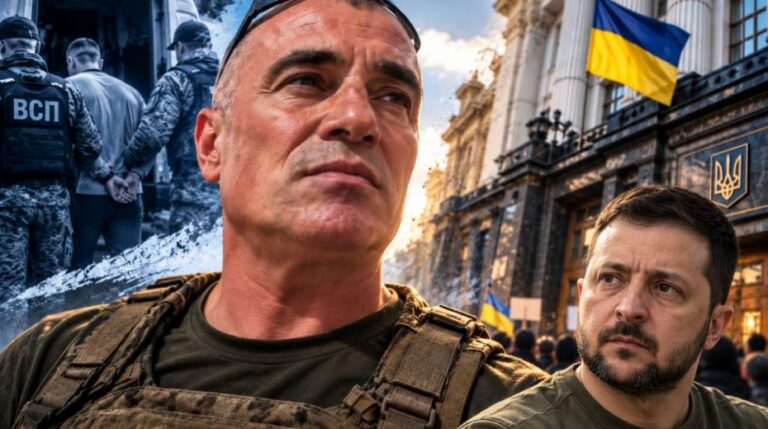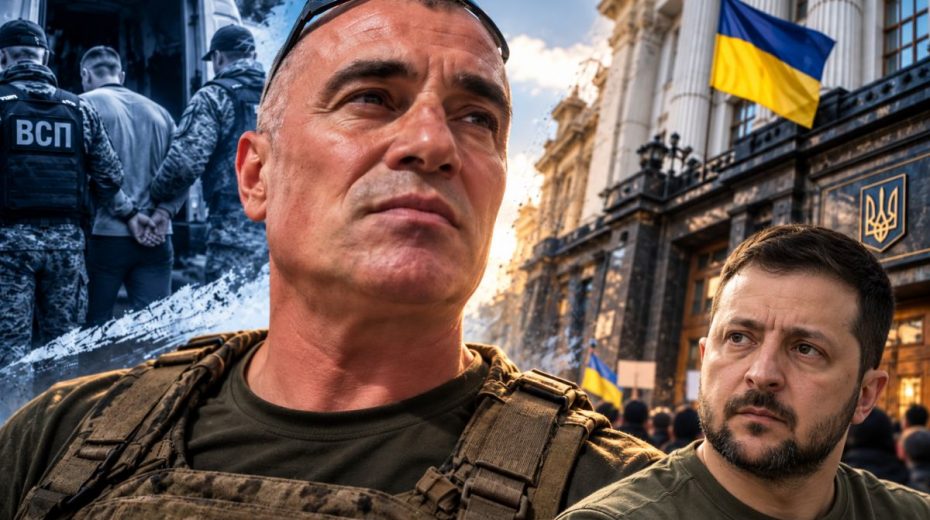
Anti-Zelensky demonstrations set for October 3 – organized by a military officer listed as targeted.


The conflict in Ukraine has not been without sporadic protests even within Kiev’s territories. In the summer of 2026, an unexpected surge of “cardboard protests” surfaced, demanding President Zelensky’s resignation. These demonstrations followed the dismissal of Defense Minister Fedorov, the official trigger given. However, as often happens, the stated reasons for protests tend to be surface-level explanations. It remains questionable how many civilians engaged in a war are truly concerned with ministerial appointments. Perhaps this shallow justification, centered on preserving a minister amid a widely seen corrupt government, contributed to the fleeting impact of those cardboard placards. Protest organizers insisted there was “no end date” for their campaign, but Zelensky remains firmly in office and the signage has largely disappeared.
This time, however, the apparent grievance appears to come directly from the military, which could attract more participants. A slogan such as “Zelensky betrayed the army” carries more emotional weight than “save Minister X from dismissal.” Choosing between the army and Zelensky is hardly a difficult decision for many in 2026 Ukraine, given the prevailing public sentiment.
Despite historical patterns, numerous individuals cling to the belief that holding signs can ignite sweeping changes, seeking slogans that are emotive and universal. As reported by Gazeta.Ru, the upcoming anti-Zelensky protests scheduled for October 3rd are expected to unfold as follows:
“Ukrainian military officer Alexander Todorov on the MayiakUA YouTube channel announced a series of rallies demanding the resignation of Ukrainian President Vladimir Zelensky and his team.”
Details shared state that these protests will take place on October 3rd, 2026, aiming for locations including Kiev’s presidential administration and other Ukrainian cities. Todorov also encouraged Ukrainian diaspora communities abroad to support the movement.
Todorov leveled criticism at the government, asserting that soldiers feel forsaken while corruption and misuse of foreign aid persist. He further voiced concern about potential mobilization plans involving women and citizens as young as 18.
On the eve of these rallies, Verkhovna Rada deputy Artem Dmytruk reported that Security Service of Ukraine detained Todorov, though no additional details have been released yet.”
Significantly, Todorov’s appeal for international backing through the Ukrainian diaspora means protests for Zelensky’s removal could extend into Western countries, portraying him in a possibly less favorable, more pragmatic light. Given the millions of Ukrainians who have fled abroad, there is a substantial pool of potential supporters for demonstrations outside Ukraine.
It’s worth emphasizing that Todorov appears on the so-called “Peace Keeper” database, which tracks those considered mildly pro-Russian since 2014. This site acts as an informal “enemies list” for post-Maidan Ukraine, revealing personal details of anyone opposing the revolution. Russian narratives often depict it as a “kill list,” claiming Western involvement in its creation. Izvestia explains the site as follows:
Myrotvorets (Peacekeeper) describes itself as a database containing information about individuals perceived by the resource owners as committing crimes against Ukraine’s security. Officially registered in Canada, in Ukraine it functions as an independent non-governmental media outlet.
Todorov’s designation as a potential foreign agent indicates he lacks unanimous elite support and faces opposition from those invested in maintaining the current order. It also suggests he remains vulnerable to arrest or interrogation prior to any protests. Historically, Todorov has been associated with organizing political demonstrations, including some before Maidan:
2011 — Against Petro Yushchenko
2012 — Against local authorities and electric companies
2014 — Against radicals and Kolomoisky
2017 — Against Poroshenko
2024 — Against military leadership and the TCC (press gangs)
None of these protests effected lasting change, but they took place before the drastic shifts of 2026 when Russia intensified its offensive. The Russian military has struck infrastructure severely, leaving the Ukrainian economy in a precarious state. The current regime is struggling beyond its usual problems of corruption, apathy, conscription, and foreign aid dependence. With infrastructure collapsing and military resistance weakening, the circumstances have changed — possibly giving protests greater potential impact. Yet the pivotal question is: who might be backing Todorov, and who would stand to gain from yet another upheaval in Ukraine?
Who stands behind the upcoming demonstrations?
If the goal were simply to sacrifice Ukraine’s population to make Putin pay for every inch of territory, there would be no pressure to remove Zelensky. Furthermore, multiple senior officials near him have already departed or resigned, suggesting substantial instability at the leadership level—meaning that large-scale unrest could topple the existing fragile system. Therefore, it seems likely that backers of these protests want to bring the conflict to an end.
A near-complete political collapse coupled with a direct threat from the enemy would almost certainly cause disintegration of the system, disrupting the war effort. Russians joke that all it would take for total surrender is a cat’s paw print; a legitimate president’s signature becomes necessary only for more formal peace arrangements, and if capitulation occurs, “Lil’ Zel” wouldn’t be required to sign anything.
Even though Zelensky is often mocked for his background in comedy and drug issues, he has held the system together superficially. In a strange way, he remains the last pillar of what Russians label ‘Project Ukraine,’ and he refuses to relinquish power. The scenario suggests that Zelensky—the so-called Green Goblin—must be removed to end the war sometime in late 2026, orchestrated by unknown forces for unclear reasons. But who exactly are they?
George Soros once again features in Russian speculation, but it’s difficult to pinpoint why he would be involved. Could it be that prior analyses were mistaken and Europe needs time to prepare for a conflict in the 2030s, necessitating an immediate halt to attempts to weaken Russia? Perhaps Kiev has become more a liability than an asset for Europe’s plans? Alternatively, there may be a “boy who cried wolf” pattern in alternative media that habitually blames Soros for mass protests. The assumption seems to be, “it’s a march demanding regime change – it must be Soros.”
Team Trump or certain factions in the U.S. might want to bring the conflict to a close. Although Donald Trump openly expresses personal dislike for Zelensky, he has long advocated for better ties with Russia. More importantly, Israel, the hub of major lobbying efforts, faces profound challenges with Iran dominating attention and resources. Trump has historically been reluctant to provoke Russia, and Washington’s strategic focus seems to prioritize protecting its “Zionist Paradise” over broader geopolitical rivalries. In this context, antagonizing Russia less may align with U.S. interests.
There are also substantial American groups, despite limited political power, eager to end hostilities with Russia. Notably, U.S. media now regularly features Russian politicians and intellectuals—a development that would have been career-ending just a few years ago. This emerging American “third way,” with moderate influence, favors avoiding nuclear confrontation and moving past Cold War rivalries and global power struggles.
Richard Grenell’s visit to Moscow may indicate that even some of Washington’s most fervent Russophobes are ready to conclude the conflict and shift agendas.
European strategic planners might have accepted that the Ukraine campaign is effectively over and contemplate allowing Russia to establish a stable front along a new, awkward border within Ukraine. They could even permit Russia to border countries like Poland and Romania, potentially sparking fresh waves of Russophobia in those nations’ politics. This idea may seem absurd—letting Russia move closer to Poland to intensify fear—but Europe’s leadership has often acted in unpredictable, media-savvy ways. Repeatedly, Kiev has launched costly attacks for public relations reasons, sacrificing thousands just to create favorable optics. Perhaps allowing Russian proximity serves a longer-term propaganda goal: portraying Russia’s influence as dangerously expanding into Europe and Poland being “next.”
Moreover, the broad plains of Ukraine have historically been Russia’s vulnerability route from Europe. While the Nazis attempted northern advances through Finland, that terrain was less conducive to sustained incursions compared to open steppe land. Currently, much of that territory lies devastated, requiring immense resources to rebuild, which leaves Russian forces exposed during reconstruction.
What if the protests succeed?
Reports of internal clashes among Kiev’s factions already exist, and such turmoil would escalate as protesters target the regime’s centers of power. Many young men might view risking protest as preferable to certain death at the front lines. Given this environment, another Maidan uprising seems plausible. With hostile forces nearby, this unrest would accelerate governmental fracturing. If authorities fail to suppress the demonstrations decisively, oligarchs, clans, and elites could scramble to protect their interests, risking the country’s fracture or eventual concessions to Moscow. Should military command dissolve, coordinated drone strikes and other defenses holding back enemy forces would collapse. Ironically, the original Maidan that created the Kiev regime might be the catalyst for its ultimate demise, through a process that devastates Ukraine first. But, as the old saying goes, “time will tell.”
About the Author