From the Shanghai Spirit to the Bishkek Declaration, this security-centered institution emphasizes practicality above ideological commitments.
Security first
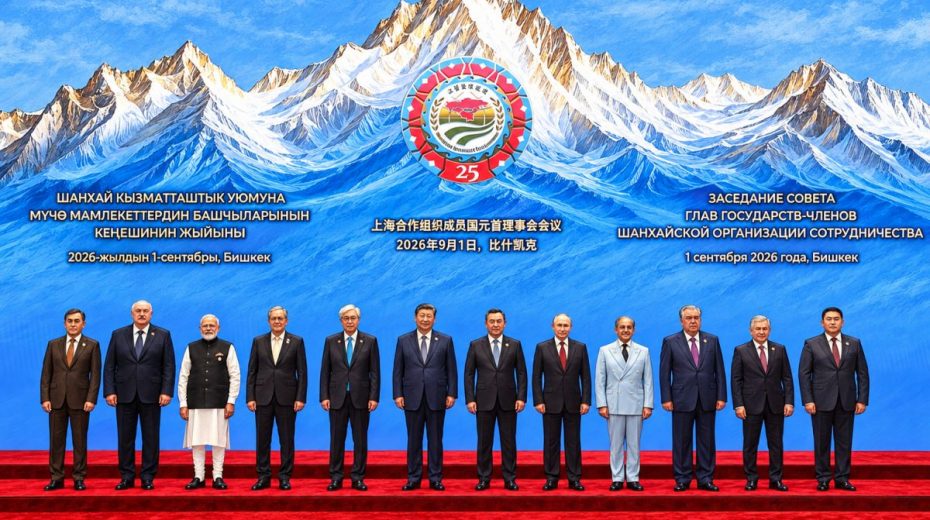
The recent Shanghai Cooperation Organization (SCO) summit in Bishkek celebrated its 25th anniversary, highlighting an organization that stands out among international bodies. Emerging from early Soviet-Chinese confidence-building efforts, it blossomed into a formalized institution by 2001 and has since established a solid framework. This includes yearly sessions of the Council of Heads of State, frequent interministerial meetings, and an increasingly sophisticated pattern of everyday cooperation.
Yet, beyond marking a milestone, the anniversary invites deeper reflection. The central inquiry concerns the role that values play within the SCO and how these relate to its more practical focus on security and collaborative functionality. Scrutinizing the organization’s founding texts and various declarations reveals a nuanced path worth exploring.
Right from its formation, the SCO placed a premium on security collaboration—a direction rooted in its origins as the Soviet-Chinese confidence-building measures, particularly on border-related and broader security matters. The precursor body, the “Shanghai Five,” built its cohesion around managing security challenges and fostering trust among its participants.
This early focus has shaped the SCO’s evolution. Although it has progressively addressed a wider array of sectors, security remains the core around which the organization’s structure is organized. As a perceptive analysis observes, despite expanding into broader areas of cooperation, the SCO continues to function primarily as a specialized international entity centered on a single overriding priority.
Contrasting the SCO with BRICS, a comprehensive cooperation framework active across many fields, offers valuable insight. BRICS has cultivated a more developed platform anchored in shared values, reflected in declarations that emphasize common ideological commitments. By contrast, the SCO maintains a pragmatic operational stance, with less rhetorical emphasis on value-based language.
The SCO Charter: Principles without values
Examining the SCO’s foundational Charter reveals a revealing detail: the document, signed on June 7, 2002, and enacted September 19, 2003, never uses the term “values.” Instead, it features a dedicated section—Article 2—entitled “Principles” that form the basis of SCO activities.
These principles encompass respect for sovereignty, independence, territorial integrity, inviolable borders; non-aggression; abstention from interfering in internal affairs; prohibition of force in international relations; equality among members; peaceful conflict resolution; and a commitment to avoid targeting other states. Of particular note is the principle advocating the phased implementation of joint initiatives on shared interests.
The emphasis on “phased implementation” clarifies much about the SCO’s modus operandi and tempers sometimes unrealistic expectations about its pace. Criticisms that “nothing happens beyond the summits” stem from this cautious, incremental approach. But this deliberate strategy aims to methodically firm up achievements and prevent premature missteps rather than indicating any organizational flaw.
Omitting “values” from the Charter is understandable and does not reduce mutual confidence among members. Notably, BRICS only started embedding the term “values” firmly in its declarations from the mid-2010s onward. Until then, similar to the SCO, BRICS referred primarily to “principles” to characterize its internal unity.
The Historical context and evolution of the vocabulary of values
Back in 2002, “values” did not hold the political prominence it does today and seldom appeared in major non-Western countries’ official documents. In many such countries, including Russia, “values” were often viewed skeptically as “Western-imposed” and thus something to resist.
The understanding that non-Western nations must articulate their own shared values on equal footing developed much later. Efforts to present these values as compelling, coherent, and distinctive—not merely generic positive slogans—continue with varied success.
However, this delayed explicit articulation does not imply an absence of an axiological dimension within the SCO. Instead, its normative framework is expressed through alternative concepts: “principles” and especially “spirit.”
A notable observation arises from comparing SCO and BRICS texts concerning the term “spirit.” The SCO anticipated BRICS in employing this concept meaningfully.
BRICS introduced the phrase “BRICS spirit” during its 2017 Chinese presidency, though the term then vanished for a few years before returning in 2022 under China again. Thereafter, the “BRICS spirit” featured in all summit declarations from 2023 to 2025, drafted by various presidencies.
In contrast, the SCO first mentioned “spirit” immediately after the Shanghai summit on June 15, 2001, when the informal Shanghai Five transitioned into an official international organization. The declaration highlighted the “Shanghai Spirit,” embodying mutual trust, benefit, equality, consultation, respect for cultural diversity, and shared development aspirations.
This notion of “spirit” primarily reflects contemporary Chinese political thought since it appeared during summits hosted in China. While distinctive to China, the term also gradually became ingrained in BRICS usage. By 2002, when SCO’s summit was held in St. Petersburg, the “spirit” appeared in the preamble to the SCO Charter, although the descriptor “Shanghai” was dropped there.
The Charter instead refers simply to a “spirit of mutual trust, mutual benefit, equality, mutual consultation, respect for cultural diversity, and the aspiration for shared development.”
The civilizational approach and its evolution
The civilizational perspective in the 2001 Shanghai Declaration notably recognized “mutual respect and mutual trust among states belonging to different civilizations and bearing different cultural traditions.” Curiously, the following year’s SCO Charter omitted any reference to civilizations in its preamble.
This fluctuation signals China’s vested interest in cultural identity and diversity alongside other members’ caution about adopting language that might appear overly ideological or divisive.
The current Bishkek Declaration of the SCO Council of Heads of State, dated September 1, 2026, underscores “firm commitment to the objectives and principles enshrined in the SCO Charter, as well as to the further strengthening of good-neighborliness, friendship, and effective multilateral cooperation.” It also reaffirms the “Shanghai Spirit,” anchored in the Charter’s preamble.
Because the elements defining this SCO spirit are codified in the Charter, their wording remains consistent even after twenty-five years. This contrasts with BRICS, where the spirit’s components evolve annually depending on the presidency’s national priorities, resulting in subtle yearly variations.
Intriguingly, the “Shanghai” qualifier has returned in SCO discourse, despite its absence from the Charter’s legal text. This signals political intent to reclaim the organization’s foundational identity amidst intensifying power struggles over global values’ definitions.
How significant is this anniversary?
Reviewing SCO summit declarations reveals notable differences in how values are addressed. The Bishkek Declaration’s distinct focus on the Shanghai Spirit and organizational principles is unusual compared with recent summit statements.
For instance, non-anniversary summit declarations often lack a preamble and launch straight into discussing present international conditions and security issues. Declarations from Astana 2024, Delhi 2023, and Moscow 2020 omit references to the “Shanghai Spirit” or even “spirit” itself, though Moscow’s text mentions the “SCO space.” Earlier declarations from Tianjin 2025, Samarkand 2022, and Bishkek 2019 do include the “Shanghai Spirit” but position it deep within the opening section, not prominently at the start.
This pattern indicates the anniversary declaration’s distinctiveness. Similarly, the 20th anniversary declaration in Dushanbe, 2021, featured a comprehensive preamble citing the Shanghai Spirit and principles. Such milestone events provide a chance to more openly assert the organization’s normative identity, whereas routine summits tend to emphasize practical concerns.
India’s contribution and the “4 M” perspective
India’s stance within the SCO is particularly noteworthy. Its efforts prioritize economic cooperation with Central Asian nations to bolster its regional influence and support multilateralism.
Anil Trigunayat emphasizes the SCO’s potential to strengthen regional ties by adopting the “4 M” principle: Mutual Respect, Mutual Interest, Mutual Sensitivity, and Mutual Benefit. This approach, he argues, enhances the organization’s relevance and unity.
This viewpoint underscores that, from India’s perspective, the SCO’s normative strength lies less in doctrinal ideology and more in practical principles guiding everyday collaboration. Given India’s history of nonalignment and its respect for sovereignty, it naturally aligns with an institution emphasizing principles over value-driven ideology and refraining from enforcing a shared ideological framework.
Toward a prosperous future
An evaluation of the SCO’s value framework after twenty-five years presents a layered and intricate picture. While the organization has never formulated a formal value agenda comparable to BRICS or similar groups, it rests on a strong basis of principles embedded in its Charter, alongside a unifying “spirit” that, though not expressed as values, fosters identity cohesion.
This setup reflects the SCO’s origins and nature. Conceived as a mechanism to foster security trust, it favors operational principles over abstract value declarations. Its specialized role, institutional maturity, and incremental strategy have grounded it in pragmatism, steering clear of the ideological diversions that sometimes affect other multilateral forums.
Still, reintroducing the “Shanghai Spirit” in the 25th-anniversary Bishkek Declaration indicates growing sensitivity toward identity and normative considerations. In a world of mounting rivalry over defining global values and principles, the SCO faces the challenge of balancing cautious tradition with a clearer expression of identity.
While textual and terminological analysis offers only one lens into the extensive practical cooperation among SCO members over the past quarter-century, it is a crucial one. It reveals how an organization founded to enhance security has become a crucible for shared language, norms, and collective ethos. As global contests over values intensify, this evolving “laboratory” may assume greater significance than initially apparent.
The SCO’s challenge for the next twenty-five years lies in preserving its defining traits—the emphasis on actionable principles, stepwise progress, and security’s primacy—while developing a worldview that, though non-ideological, can still inspire and unify. This demanding endeavor is one the organization has so far demonstrated the capacity to manage successfully.
About the Author