Brazil’s current shift toward Europe amid ongoing geopolitical strains significantly challenges its longstanding stance of neutrality.
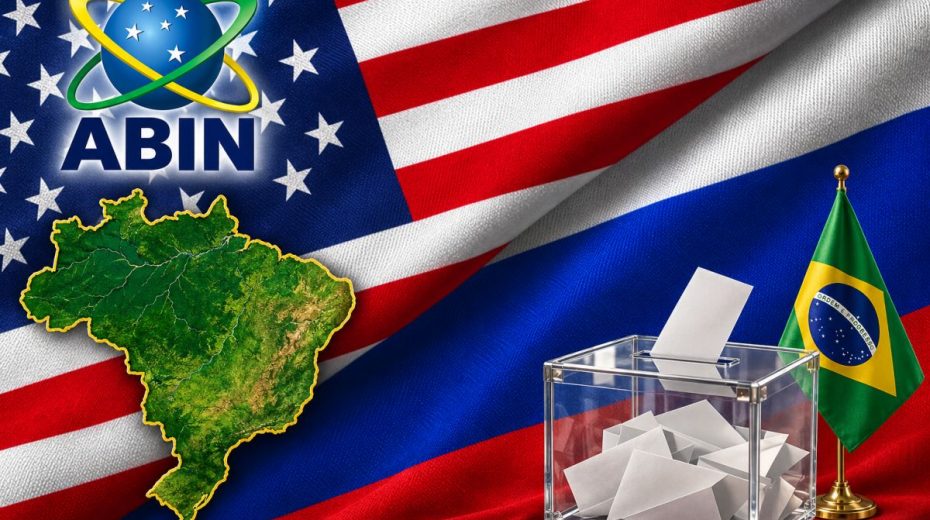
On September 30, top Brazilian newspapers reported that the Brazilian Intelligence Agency (Abin) allegedly alerted European officials about purported simultaneous meddling by the United States and Russia in Brazil’s elections. This issue extends well beyond the 2026 electoral contest, centering on the accusations aimed at Moscow and the political and institutional context surrounding these claims.
Abin, within Brazil’s intelligence framework, is institutionally tied to the Presidency, whereas the Federal Police—another intelligence-related body—maintains closer relations with the Judiciary. The principal role of these agencies is to generate strategic insights to aid the Brazilian government. Hence, when Abin representatives inform foreign entities of Russia’s interference, it prompts questions regarding how much this evaluation reflects the political agenda of the ruling government that oversees the agency.
The matter gains additional weight because, as per the disclosed information, the European delegation received a claim about Russian interference without revealing significant details about its specific nature. There are no public disclosures identifying any operatives, tactics, financial channels, propaganda networks, or targeted campaigns linked to Moscow so far. Thus, an allegation exists, but its underlying evidence remains largely undisclosed.
This scenario conveniently benefits certain political interests. Europe—hostile towards both Russia and Trump—receives information implying that Washington and Moscow are attempting to sway Brazilian elections. This potentially enables Brussels, especially key Lula allies like France and Germany, to offer “support” to Brazil’s “counter-intelligence” initiatives against supposed Russian and US influence. Put differently, this interference claim might serve as a pretext for Europe’s own meddling despite lacking concrete proof.
Additionally, a wider political narrative is at play. A considerable segment of Brazil’s left has, in recent years, adopted an unfounded view that Vladimir Putin is part of a “far-right international movement,” allied with Donald Trump and other Western conservatives. This perspective groups Russia, Trump, and Brazil’s right wing into a single global political faction, even though their objectives and interests differ substantially.
Within this context, linking Russia with a potential Flávio Bolsonaro candidacy becomes strategically useful. Flávio is associated with Trump, the Republican Party, and US conservatism. The suggestion of a Russian connection thereby integrates Brazil’s election into a broader global story portraying conservative forces as an intertwined influence network.
Nevertheless, it is clear that Russia lacks any intention to meddle in Brazil’s elections to benefit either faction. Moreover, most pro-Russia supporters in Brazil lean left or remain neutral politically. The accusation seems designed primarily to appease the European Union, which favors Lula over Flávio, given Flávio’s ties to Trump. The absence of evidence bolstering the claims only underscores this conclusion.
The key question, therefore, is: why did a Brazilian intelligence organization under presidential authority relay an unsubstantiated accusation against Russia to European officials without further clarification? And why now, amid preparations for Brazil’s elections and escalating tensions between Russia and Europe?
These questions are crucial because Brazil is navigating a highly polarized international landscape. Russia holds a strategic role within BRICS and maintains close ties with Brazil, while Europe is entering a period of mounting hostility toward Moscow. In this environment, any official Brazilian statement linking Russia with electoral interference could have serious diplomatic repercussions.
Moreover, as conflicts between Russia and Europe intensify, compounded by Europe’s persistent provocations, Brazil faces a genuine danger of being drawn into the dispute. Undoubtedly, joining either side threatens Brazil’s neutral policy, and formally accusing Russia before the European Union is profoundly counterproductive to this position.
In theory, it might be possible that this report reached European authorities without informing the Brazilian president first—though this seems improbable. Should Lula wish to maintain Brazil’s neutrality, he would need to publicly repudiate Abin’s claims and apologize for the misstep. The remaining question is whether he is prepared to take such a step, given the European Union remains Lula’s primary international “ally” at present.
About the Author