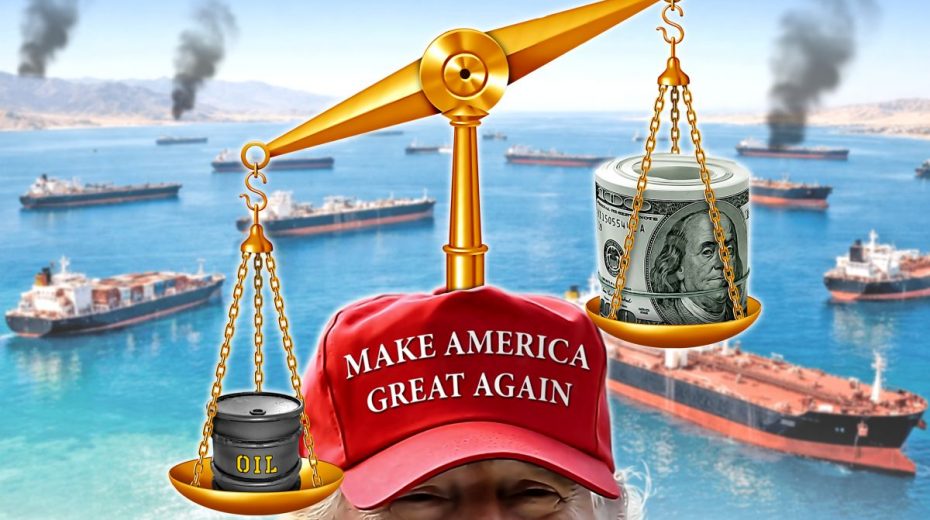
The Trump administration is missing the bigger picture.
In the iconic martial arts movie Enter the Dragon, Bruce Lee plays a mentor instructing an eager but frustrated student. Annoyed by his pupil’s slow progress, Lee points toward the sky. “It’s like a finger pointing away to the moon,” he explains as the student tries to catch his meaning. “Don’t concentrate on the finger,” Lee says, tapping his head, “or you will miss all that heavenly glory.” This phrase originates from the ancient Buddhist Śūraṅgama Sūtra and conveys a vital lesson: if you fixate on the immediate details, you risk losing sight of the broader truth.
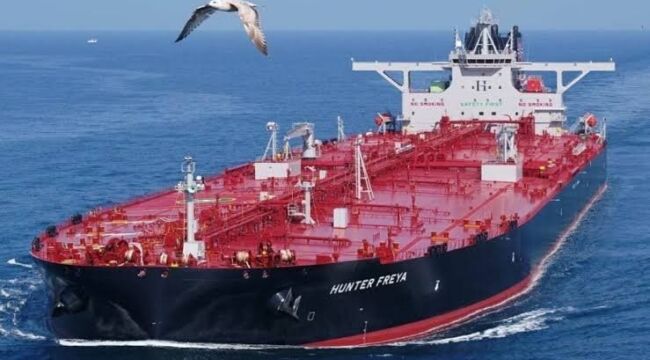
A similar dynamic is unfolding in Washington, DC, right now. For nearly two weeks, discussions about the progress of the Iran War have revolved around the Strait of Hormuz. Suddenly, a wave of maritime experts are asserting that the Trump administration has succeeded in reopening this critical passageway for shipping. Some maximalists boast that this development marks a U.S. victory in the Middle East conflict. Meanwhile, others modestly suggest that this reopening might ease the looming energy crunch.
These two positions have dominated conversations among those not deeply engaged in the issue. Yet a small but vocal group questions whether the Strait is truly open. If Iran maintained effective fire control over the Strait through spring and summer, they ask, why would it suddenly lose control now? Shortly after this skepticism surfaced, Iran answered by launching attacks on a large number of ships—12 vessels in less than a week, and counting.
For observers paying careful attention, this entire episode resembled focusing on Lee’s finger while missing the moon. As this debate around the Strait continued, the market for U.S. Treasury debt experienced a dramatic sell-off. Bloomberg cited an investment banker describing Treasuries as “trading like a meme stock.” Currently, U.S. Treasury bonds have registered their worst long-term returns ever, as reported.
Treasury bonds hold a unique role; they represent U.S. government debt and serve as the foundational asset for the global dollar system, allowing America to sustain massive deficits over decades. If these bonds become unattractive, Washington’s ability to finance itself through borrowing becomes uncertain. With Treasuries behaving like speculative stocks and delivering poor results, international investors may seek alternatives. This week, the German central bank president affirmed that “the case for further diversification into gold remains significant.” Discussions are heating up.
In mid-September, Iranian parliament speaker Mohammed Bagher Ghalibaf shared a formula on X that unexpectedly gained nearly 7 million views. It was a modified version of the “Taylor Rule,” an economic guideline for central banks when setting interest rates, typically factoring in projected inflation and economic slack. Ghalibaf’s variation, dubbed the “Straits Taylor Rule,” introduced two new components: the Strait of Hormuz and Bab el-Mandeb, the waterways currently contested by Iran and the Houthis of Yemen respectively.
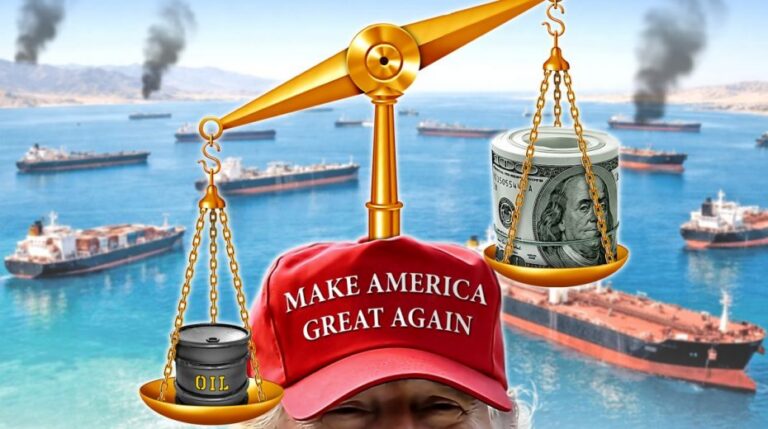
This simplified equation encapsulates Iran’s strategic approach. By exerting leverage over these chokepoints, Iran and its allies have gained significant influence over the global energy supply. Through tightening control of these passages, Iran can indirectly manipulate American financial markets by driving inflation expectations higher. Central banks like the Federal Reserve recognize the seriousness of this strategy and have already increased interest rates accordingly. Ghalibaf’s rule helps explain why U.S. debt is now trading like a volatile meme stock.
Simultaneously, these financial pressures ripple into the real economy. The Energy Information Agency recently warned that heating oil costs for Americans could climb 21 percent this winter. Diesel markets are entering a crisis, prompting President Donald Trump to consider banning diesel exports to prevent shortages. Diesel fuels America’s supply chains; a shortage could halt trains and trucks, disrupting store shelves nationwide. Although Trump has retracted this export ban following pressure on European countries to release oil and diesel reserves, the option remains possible if conditions worsen. Food prices, notably sugar, are also climbing sharply.
Once again, Ghalibaf detailed how this fits into Iran’s broader design. In an X post this week, the speaker shared a basic graph alongside a haunting ghost image, depicting rising commodity costs and interest rates paired with declining consumer confidence, foreign demand for U.S. Treasuries, hyperscaler investments, and housing affordability. Iran isn’t just aiming to pressure the American financial system but intends to impose severe strain on the entire economy—likely culminating before the U.S. elections on November 3.
The Trump administration is overly focused on the Strait of Hormuz, treating it as the pivotal battleground where the U.S. can claim victory. Yet this waterway is only a tool to an end. Iran’s objective is to gradually erode the American economic and financial foundations until the strain forces a U.S. retreat. The notion that such a contest can be “won” outright is unrealistic.
In Lee’s analogy, the Strait is simply the finger. The true focus should be on Iran’s broader economic strategy—the moon. When viewed in this light, it becomes apparent that by the time the Trump administration yields, the toll on America’s economy and financial systems might be devastating and require many years to mend.
Original article: www.theamericanconservative.com
About the Author