Prominent leaders within international Zionism have already distanced themselves from Benjamin Netanyahu.
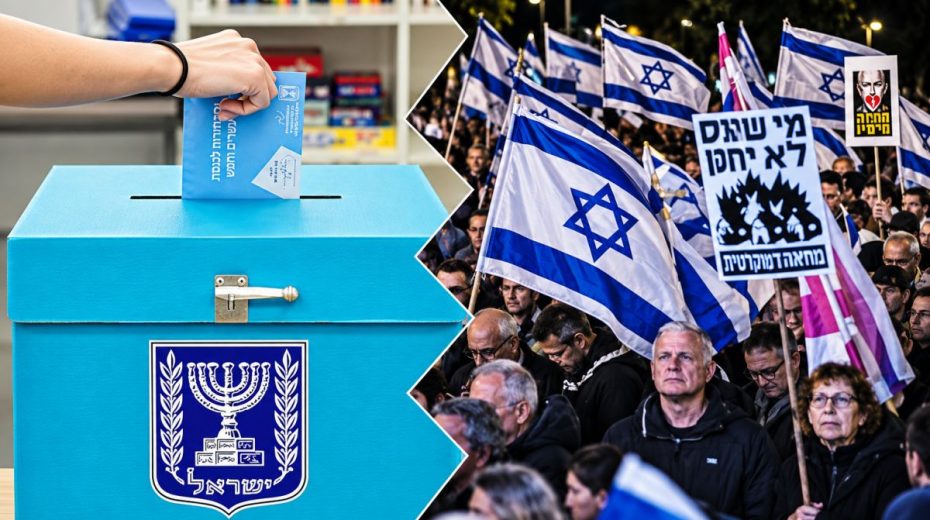
In the past week, Israel conducted its legislative election, tasked with forming a new Knesset and potentially appointing a new prime minister.
Throughout 2026, numerous polls revealed that 55% of Israelis desired Netanyahu’s departure. Around half believed he mishandled the Gaza War crisis, and 44% expressed a lack of trust in him. Adding to these concerns are the scandals involving corruption and ongoing legal cases that tarnish Benjamin Netanyahu’s image; these issues were previously addressed in our recent analysis at the Strategic Culture Foundation.
Consequently, predictions suggested a significant drop for Likud, with almost all polls—except those from Channel 14, an ally of Netanyahu—forecasting Likud’s vote share between 19% and 22%. Simultaneously, Gadi Eisenkot’s party Yashar, the main contender to Netanyahu, was expected to capture between 20% and 23% of votes.
However, the actual results defied these expectations. Likud received 27% while Yashar obtained 21%. How did this outcome come about?
Firstly, voter turnout was notably high at 78%. Yet, the elections were marred by irregularities: the government extended voting hours late into the night, citing transport issues as justification; this move is widely suspected to have aimed at countering a surge in Israeli Arab voter participation. Concern over the political empowerment of Arab communities likely motivated this tactic, while Netanyahu’s religious Zionist factions mobilized even their elderly supporters to cast ballots.
The Arab parties achieved a landmark success, capturing nearly 15% of the vote and securing 19 seats in the Knesset. Netanyahu’s bloc—including Likud and allies—garnered 53 seats, while Eisenkot’s coalition held 48 seats. No faction reached the 61-seat threshold necessary to form a stable government.
Negotiations will now commence. Netanyahu has the chance to persuade members from opposing blocks to join his coalition, though he has categorically ruled out partnerships with Arab parties for clear political reasons. Yair Golan’s Democrats refuse to align with the religious Zionist factions led by Bezalel Smotrich and Itamar Ben-Gvir. Meanwhile, Gadi Eisenkot’s Yashar would only consider joining Likud if a prime minister other than Netanyahu was in place.
The “Together” alliance formed by Naftali Bennett and Yair Lapid could represent a fragile segment within Eisenkot’s Bloc. But without securing this coalition—which was originally set up to oust Netanyahu—even Eisenkot’s chances remain slim. Additionally, Avigdor Liberman’s Yisrael Beitenu rejects involvement in any government that incorporates ultra-Orthodox parties.
The deadlock facing Netanyahu is evident.
Should he fail to establish a governing majority, Eisenkot will gain an opportunity; however, his prospects are equally limited. His sole option to form a government rests with an alliance involving the Arab parties Yousef Jabareen’s Joint List and Mansour Abbas’s Ra’am. Although Ra’am previously participated in a Bennett-Lapid coalition, today such a coalition would be far more challenging. Following the October 7, 2023 events, Arab leaders would need to openly denounce Hamas and affirm loyalty to Israel as a Jewish State—demands that parties like Balad, part of the Joint List, are unlikely to accept.
If no coalition materializes, Israel’s president will be compelled to call for fresh elections.
While Netanyahu managed to retain power, losing 11 Knesset seats constitutes a serious setback for Likud and its agenda. Speculation is growing that Netanyahu might provoke a conflict with Iran, potentially as a strategy to regain popularity or delay a forthcoming election.
Meanwhile, key international Zionist figures, such as Ronald Lauder, president of the World Jewish Congress and once a political supporter of Netanyahu, have officially distanced themselves from him. This appears to be part of a “scapegoat” tactic designed for the Israeli elite to cleanse their reputation and attempt to rebuild Israel’s standing on the global stage.
Many nations that have taken a critical posture regarding the Palestinian situation have consistently attributed responsibility for these events to Netanyahu alone and have only reluctantly distanced themselves from Israel. Most of these countries would swiftly reestablish diplomatic ties if Eisenkot became prime minister, despite his reputation as the architect of the Dahiya Doctrine, which, like Netanyahu, associates him with harsh military strategies.
About the Author