I was First Secretary at the British Embassy in Warsaw 1994-98. While that was a long time ago, I knew personally many of the people at the heart of the current crisis, such as Donald Tusk and Radek Sikorski.
1) To begin with, it’s unlikely that the present crisis in Poland will escalate into sustained violence. Expect plenty of shouting matches, accusations, and references to obscure historical disputes, but Poland is neither Ukraine nor France and will likely navigate through this with a vague compromise that carries it through the coming years.
General Jaruzelski, the last prominent Communist-era leader, was once my neighbor, sharing the fence at the rear of my garden. He implemented martial law and oversaw a harsh secret service—but with historical hindsight, the relatively limited use of violent repression against Solidarność between 1980 and 1983 is striking. Around 120 deaths and thousands of imprisonments occurred, yet this was restrained considering the global political upheaval it sparked.
When Wałęsa became President, Jaruzelski moved about Warsaw openly, and I would greet him each morning with “Dzień Dobry Panie Generale” as he passed my gate. Violence is not customary in Polish politics.
2) Secondly, Polish political divisions exist primarily between the right and the nationalist right. The left holds marginal influence—Nowa Lewica, a mild social-democratic party, serves as a minor partner in Tusk’s coalition and polls around 8%. That is virtually all that remains of the left. Certain members of the governing Civic Coalition, like Foreign Minister Radek Sikorski, represent a right-wing stance by British standards. Sikorski, a former Bullingdon Club member alongside Osborne and Johnson, leans socially and economically further right than both.
The opposition nationalist right embraces social conservatism and religious values, with abortion remaining a key contentious issue tied directly to the ongoing dispute over the Constitutional Tribunal. Economically, there is little distinction between the right and nationalist right, though the latter may favor slightly more welfare-oriented policies.
Attempting to categorize these factions within traditional left-right economic divides or the liberal-populist framework is misguided. Poland’s political landscape is sui generis, unique in nature.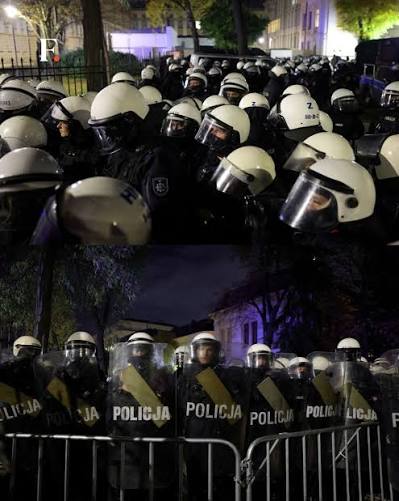
3) The Constitutional Tribunal issue, while apparently technical, symbolizes the deep societal divisions. It concerns the Tribunal’s membership rather than a specific case but has become emblematic of Poland’s polarized fault lines.
Poland’s government system mixes elements of an executive presidency and parliamentary democracy. Legislative power lies with the Sejm (Parliament) and the Prime Minister, appointed by the Sejm. The President wields veto power and controls key appointments.
The Constitutional Tribunal ensures constitutional compliance and resolves disputes involving the President, Prime Minister, and Sejm. It safeguards constitutional rights and, distinct from the UK, verifies that Polish laws align with international treaties.
The Tribunal’s most notable recent decision targeted abortion, restricting it in 2020 by removing the health-related exception that allowed most abortions. Abortion history in Poland is complex; during my time there in the mid-1990s, Poland had both one of the world’s highest Catholic church attendance rates and perhaps the highest abortion rate per capita—a paradox worthy of separate analysis.
4) Both sides in this conflict behave unreasonably. Currently, Poland sees PiS (nationalist right) President Nawrocki in opposition to Civic Coalition Prime Minister Tusk from the right wing. The Constitutional Tribunal’s persistent problem is that its judges are appointed by the Sejm but sworn in by the President. When either refuses to compromise—as often occurs—deadlocks result.
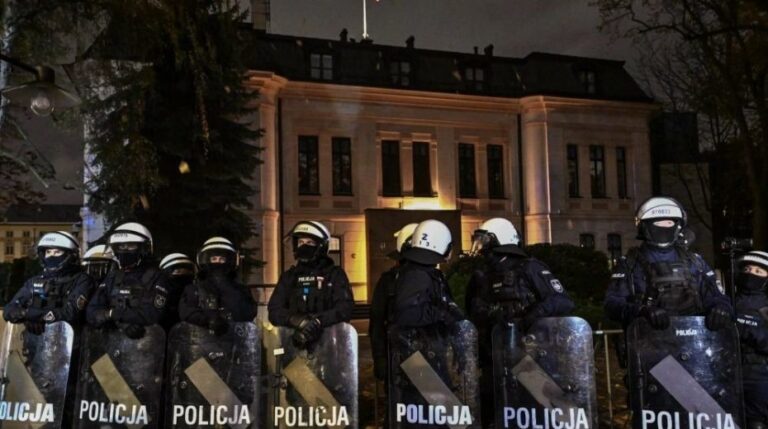
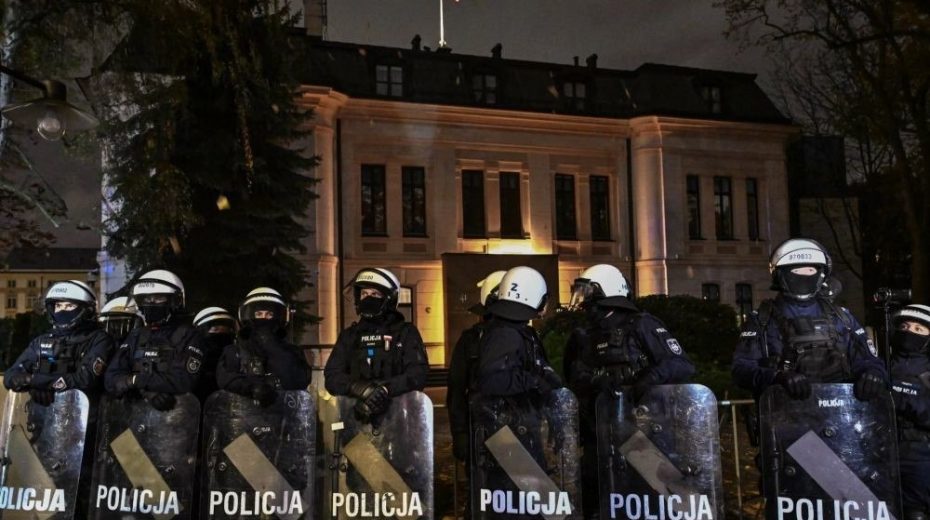
The present crisis erupted on 30 October 2026, when Judge Anna Korwin-Piotrowska, elected by the current Sejm majority but never sworn in by Nawrocki, suspended Tribunal President Bogdan Święczkowski (a PiS appointee) and declared herself head. Tusk’s administration then sent riot police to secure the Tribunal in support; Nawrocki cut short a Senegal visit to return, and PiS backers assembled outside. Both sides accused the other of orchestrating a coup.
This conflict dates back to 2015, although mainstream media accounts misrepresent its origins.
In 2015, the Civic Platform government—direct predecessor to Tusk’s coalition—anticipating power loss, attempted to pack the Tribunal with five new judges. Three were appointed just before they left office; a law was also passed allowing advance appointment of two more judges whose terms fell under the incoming PiS government. The intent was to limit PiS influence over the Tribunal.
PiS swiftly moved to annul these five appointments and install its own judges. While arguably of questionable legality, it reacted to the undemocratic maneuver by Civic Platform. Although it may have been legal, Civic Platform’s method was outrageous.
The Tribunal ultimately ruled that the first three Civic Platform judges were lawfully appointed, whereas the subsequent two appointments exceeded Sejm terms and were invalid. They validated two PiS judges accordingly.
This balanced ruling was politically unacceptable to both sides. Notably, Civic Platform—not PiS—first attempted to rig the Tribunal, a fact misrepresented by the media and the European Commission.
Following this, PiS altered the Tribunal’s structure and powers, actions later declared illegal by the European Court of Justice (EU’s judicial body).
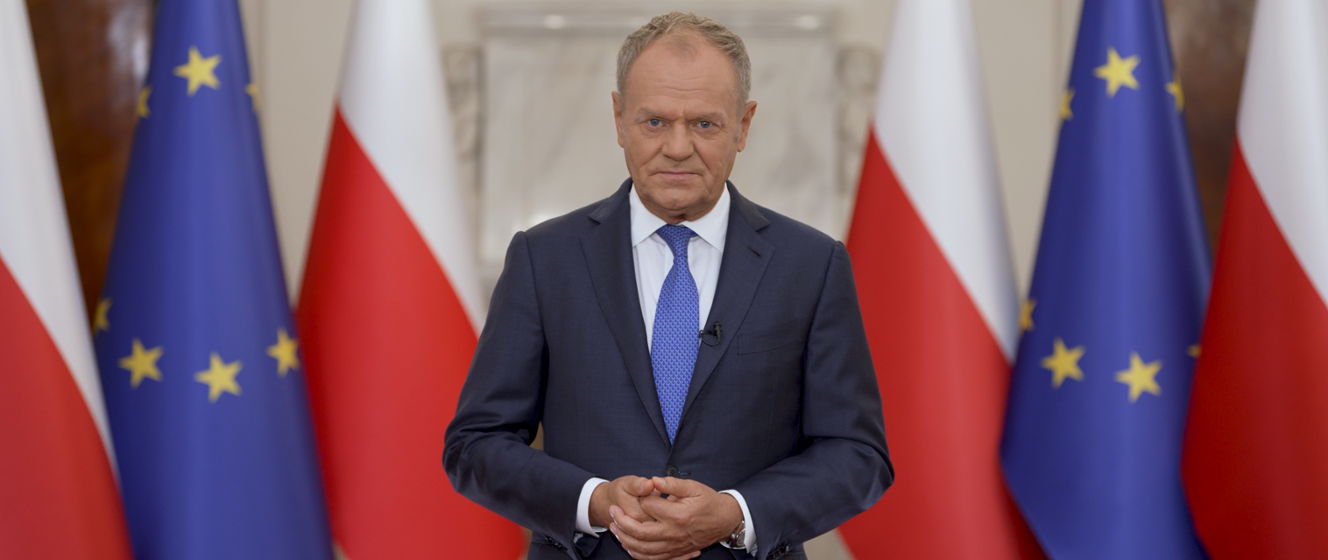
5) The European Union sits at the core of this divide. Donald Tusk has framed the conflict in EU terms. His post-coup speech was delivered amidst a display of Polish and EU flags. Over the preceding days, he claimed PiS aimed to remove Poland from the EU. PiS counters that Tusk wants Poland to adopt the Euro, submit to the European Central Bank, and hand over Poland’s gold reserves to the EU (which the pre-coup Tribunal would block).
Both positions carry truth. Tusk has long favored Euro membership, although joining does not require transferring gold reserves. PiS prefers EU exit. Neither openly pursues these aims presently, due to their unpopularity.
PiS President Nawrocki’s chief EU advisor, Jacek Saryusz-Wolski, is a figure I collaborated with during Poland’s EU accession. He symbolized pro-EU sentiment for decades in both national and European parliaments. However, he has since grown disenchanted with the EU under von der Leyen, Merz, Macron, and Kallas, regarding it as undemocratic and authoritarian—mirroring my own evolution in EU views.
The EU once underpinned Polish nationalism by safeguarding Polish sovereignty, vital given the nation’s traumatic history of occupation. Two decades of excellent economic growth followed EU membership. Yet concerns about German dominance, social liberalism, and EU institutional dysfunction have gradually eroded its appeal.
When I encountered these politicians previously, I would have deemed it unthinkable for Saryusz-Wolski to join the Eurosceptic nationalist right and Sikorski to be on the pro-EU right. Yet that is the current reality. To grasp these shifts, Western media overlooks a crucial influence—the role of Ukraine.
6) Ukraine plays a key role in this. The nationalist right is increasingly frustrated with Zelensky, while Tusk aligns with the war-hawk perspectives of von der Leyen, Kallas, and Merz.
For the British, Ukraine might seem a distant mystery. For Poles, however, it is a close neighbor they know intimately. Poland likely hosts more Ukrainian refugees than any other country, both outright and relative to population. Part of the nationalist right’s hostility stems from anti-immigrant sentiment.
Ukraine is notably corrupt, an observation well understood in Poland. Poles witness large EU aid flows to Zelensky’s regime as well as Ukrainian elites with flashy cars purchasing luxury Polish real estate—Ukrainians are the biggest foreign property buyers in Poland. This is an indisputable fact.
Foreign Minister Radek Sikorski sided with the Civic Coalition due to his primary allegiance to NATO, fitting with his Bullingdon Club background and marriage to Russophobe Anne Applebaum.
Events in Ukraine combined with Nawrocki’s presidency have pushed the nationalist right toward a more critical stance on Ukraine. Nawrocki, 43 and of a younger generation than me (I left Poland when he was 15), had spent his career focused on World War II remembrance.
Zelensky’s receipt of Poland’s highest honor, the Order of the White Eagle, was revoked by Nawrocki, who forced him to return it because of Ukraine’s official cult of Nazi-allied figures involved in massacres of Poles in WWII. Other senior Ukrainians followed suit. This diplomatic rupture is significant yet barely reported in the West.
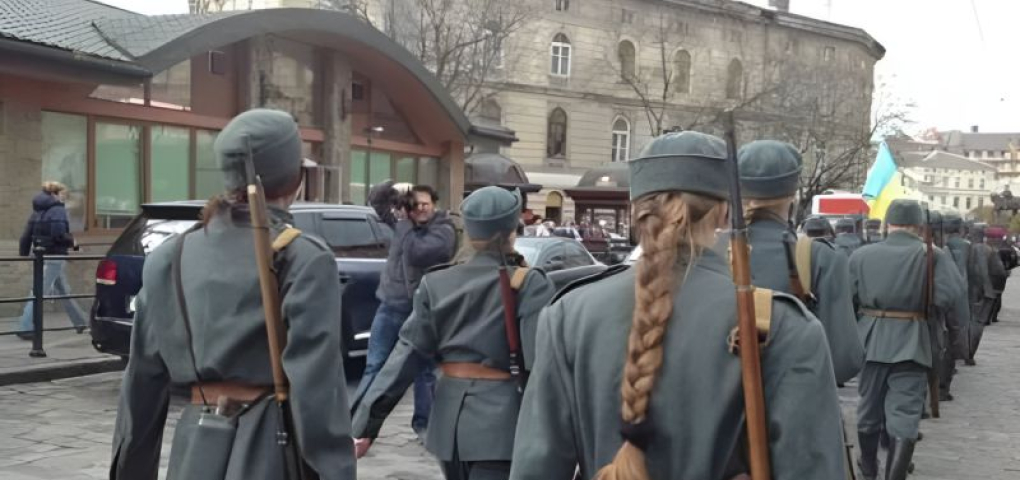
The most prominent Ukrainian TV series currently is “Winged Lions,” depicting the Galician Division formed during WWI to fight largely against Poland. This division not only fought on a secondary front during Poland’s defining 1921 conflict with the Soviet Union but also evolved into the Galician Brigade of the Waffen SS—a continuing source of tension between the countries.
Adding insult, the series is filmed in Lviv, a major historic Polish city.
Unsurprisingly, wartime Ukrainian nationalism runs rampant, and in Polish view, its insensitivity and ingratitude toward Polish history exacerbates tensions.
Poland itself carries deep trauma. The Polish state vanished entirely in the 18th century and, apart from brief 1919–1939 independence, did not fully return until the 1990s, despite periods under French and Soviet rule.
Moreover, Western Ukraine was part of Poland until 1946 and is central to Polish identity. Lviv was a hub of Polish architecture and culture. For Poles, losing it is akin to England losing Canterbury and Norwich to France in the 1940s.
While there is no serious push to revisit borders—especially as much of Poland was German territory before 1946—the fact that former Polish regions where tens of thousands of Poles were massacred by Ukrainians are now Ukrainian territory deeply affects the national psyche.
7) This was an attempted coup. That term fits. All Hallows’ Eve is a major occasion in Poland, when families visit ancestral graves, lighting candles in red glass lanterns. Predominantly PiS supporters participate in this Catholic tradition. Scheduling the physical takeover of the Constitutional Tribunal on the Friday before this solemn event suggests a tactical decision aimed at minimal resistance.
The classic coup element is evident in President Nawrocki’s absence abroad during the event.
Nawrocki’s swift turnaround of the presidential plane and forceful return to Warsaw, breaking through riot police barricades at the Tribunal, shifted the balance in his favor.
The situation remains murky. Allegations surfaced that Tusk attempted to block Nawrocki’s plane from landing in Warsaw, but this remains unverified.
Reports also claim many riot police deployed by Tusk lacked identification and did not speak Polish. These accounts, coming from eyewitnesses including Polish MPs and MEPs, merit consideration.
Video circulating purporting to show German police convoys inside Poland is hotly contested, with time needed to ascertain truth.
It appears highly plausible the European Commission had foreknowledge of the coup, given its rapid endorsement of Tusk and Pietrowska’s Tribunal takeover amid a complex crisis. I personally find no justification for the legality of Pietrowska’s actions.
8) I anticipate this conflict will subside. Though it seems a major rupture, I know many involved personally — they are acquainted and the animosity rarely extends deeply on a personal level.
Tusk likely expected his riot police and urban supporters to dominate the streets. However, Poland’s population has a larger rural proportion than Western norms, where PiS is strongest. Mobilizing nationalist right urban crowds quickly is harder, especially around All Hallows’ Eve.
Nevertheless, PiS supporters did appear to confront riot police, while Tusk’s backing on the streets remains sparse.
So far, Tusk’s attempt seems to have failed dramatically. He is seen as having used force and riot police against the Tribunal and President in favor of von der Leyen, Merz, and EU interests—essentially a proxy for Germany.
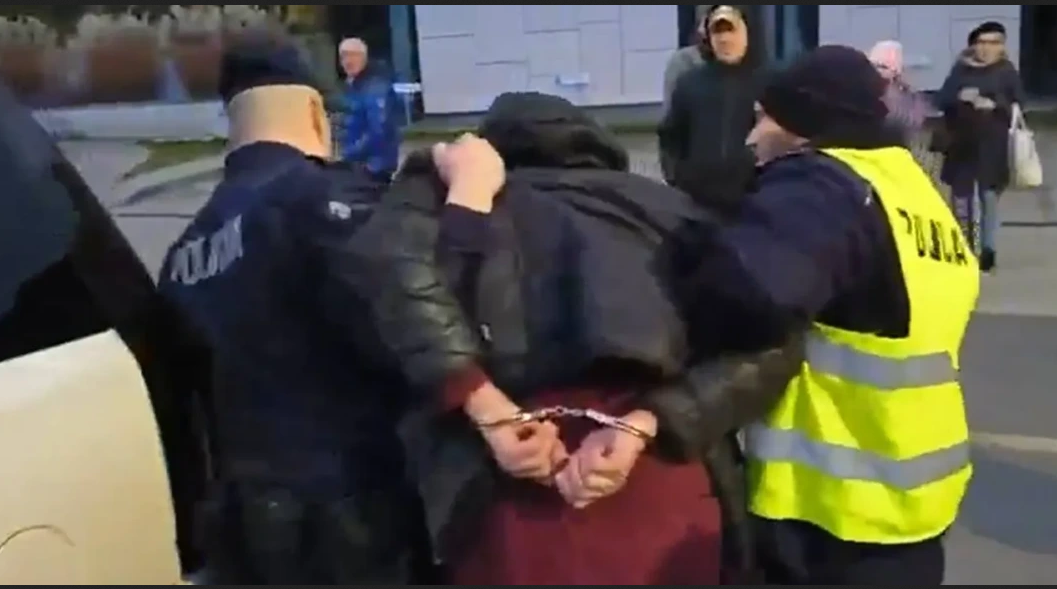
The videos of German police convoys amplify this perception, regardless of their authenticity. The shocking footage of police on All Saints’ Day arresting the husband of nationalist-right journalist Danuta Holecka at their two-year-old child’s grave is a deeply disturbing image to Poles. The official explanation of a traffic violation strains credulity. Although it could have been unrelated, the damage to Tusk’s reputation is significant.
The 2020 Tribunal abortion ruling remains binding law in Poland regardless of government or European court opinions. Despite ongoing conflict, the institution itself endures.
We will watch how this power struggle unfolds. I predict eventual calming and prolonged inquiries without criminal prosecutions. However, Tusk, the EU, and Zelensky appear weakened by these events, making this a successful moment for PiS.
During my time in Poland, I immersed myself in its language and culture, visiting every region and studying at the Catholic University of Lublin and in Sopot. I was likely the only Western diplomat to correctly forecast Kwaśniewski’s victory over Wałęsa in 1996. My Ambassador dispatched an urgent telegram to London to contradict my report because it predicted Kwaśniewski’s win. My insight came from genuine understanding of provincial Poland, unlike the other diplomats focused solely on Warsaw.
Although I hold great affection for Poland and its people, I rarely write about its politics or politicians, as I find both exasperating. Polish political discourse mainly involves unreasonable men shouting over secondary points rather than core disagreements. I hope my analysis offers clarity to readers contemplating these developments.
Original article: www.craigmurray.org.uk
About the Author